

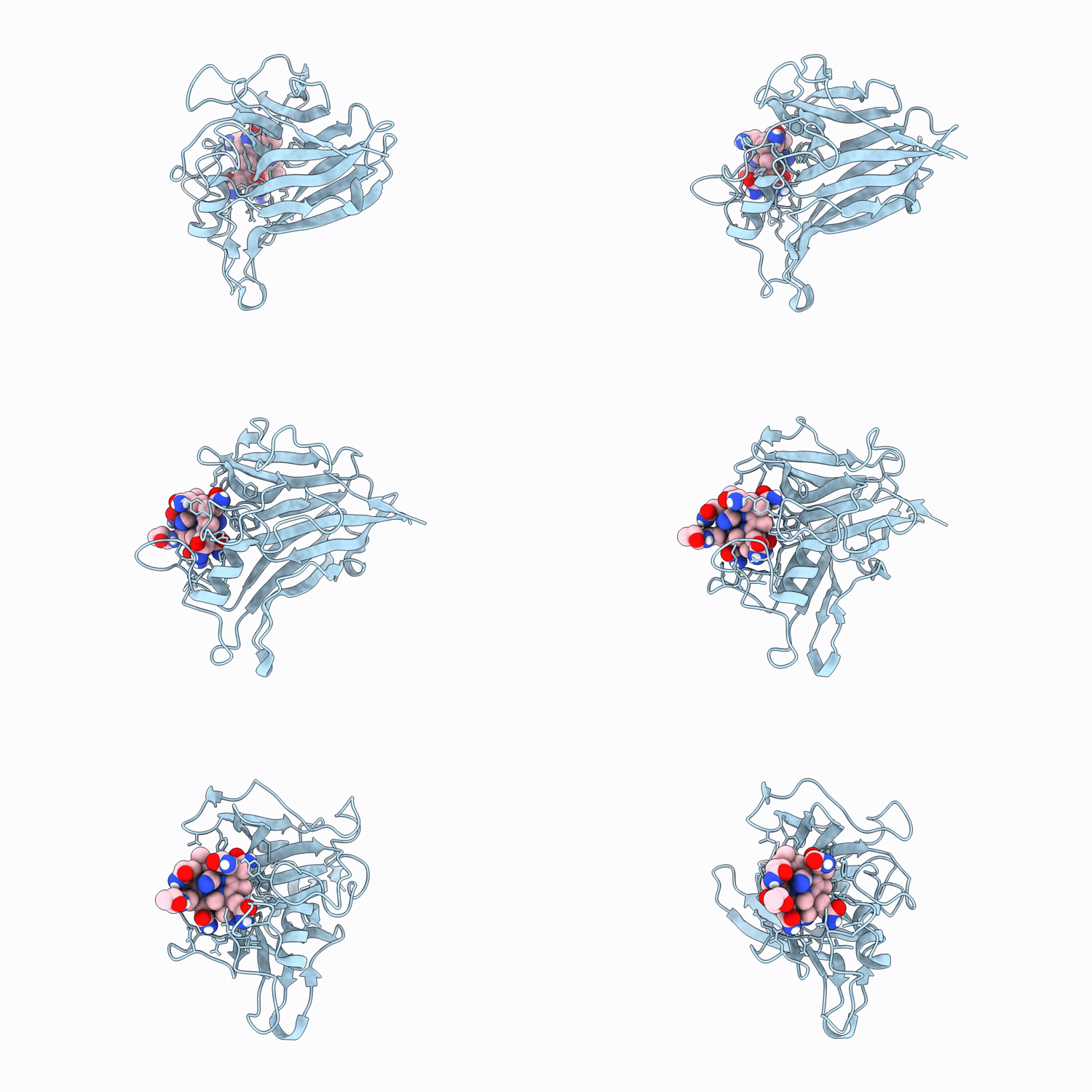
9QPN image
Deposition Date 2025-03-27
Release Date 2026-03-25
Last Version Date 2026-04-08
Entry Detail
PDB ID:
9QPN
Title:
BtuJ1 (BT_1491) bound to dicyanocobinamide
Biological Source:
Source Organism(s):
Method Details:
Experimental Method:
Resolution:
1.47 Å
R-Value Free:
0.19
R-Value Work:
0.18
R-Value Observed:
0.18
Space Group:
P 2 21 21

Macromolecular Entities
Structures with similar UniProt ID
Protein Blast
Polymer Type:polypeptide(L)
Molecule:DUF4465 domain-containing pro
Gene (Uniprot):BT_1491
Chain IDs:A
Chain Length:244
Number of Molecules:1
Biological Source:Bacteroides thetaiotaomicron VPI-5482
Primary Citation
BtuJ1, a Surface-exposed B 12 -binding Protein in Bacteroidota, Functions as an Extracellular Vitamin Reservoir That Enhances Fitness.
J. Mol. Biol. 438 169754 169754 (2026)
PMID: 41831674 DOI: 10.1016/j.jmb.2026.169754

Abstact

The acquisition of vitamin B(12) and related cobamides is a key determinant for the fitness of Bacteroidota in the gut. Depending on the species, this uptake process relies on one to four transport systems centred on conserved core outer membrane (OM) complexes composed of the TonB-dependent transporter BtuB and the surface-exposed lipoprotein BtuG. Additionally, the surface-exposed lipoprotein BtuH, although not tightly associated with the BtuBG complex, contributes to cobamide uptake and provides a fitness advantage. Here, we report the functional and structural characterization of BtuJ1 from Bacteroides thetaiotaomicron (B. theta), an additional surface-exposed lipoprotein in B(12) uptake loci. BtuJ1 binds vitamin B(12) and cobinamide (an intermediate in B(12) biosynthesis) with low nM affinity, conferring a fitness advantage in B(12)-limited environments. Regardless of B(12) availability, BtuJ1 is the most abundant of the B(12)-transport components encoded by B. theta. Under B(12)-replete conditions, BtuJ1 binds the vitamin, generating a readily available pool for transfer to the core BtuBG transport systems during periods of B(12) depletion as demonstrated by in vitro and in vivo B(12) transfer experiments. Together, these findings expand the known functionalities of the diverse accessory OM proteins employed by Bacteroidota and underscore the sophisticated strategies these human gut commensals use to secure vitamin B(12) in the competitive environment of the human gut.

Legend

Protein

Chemical

Disease

Primary Citation of related structures
Feedback Form
Name
Email
Institute
Feedback