

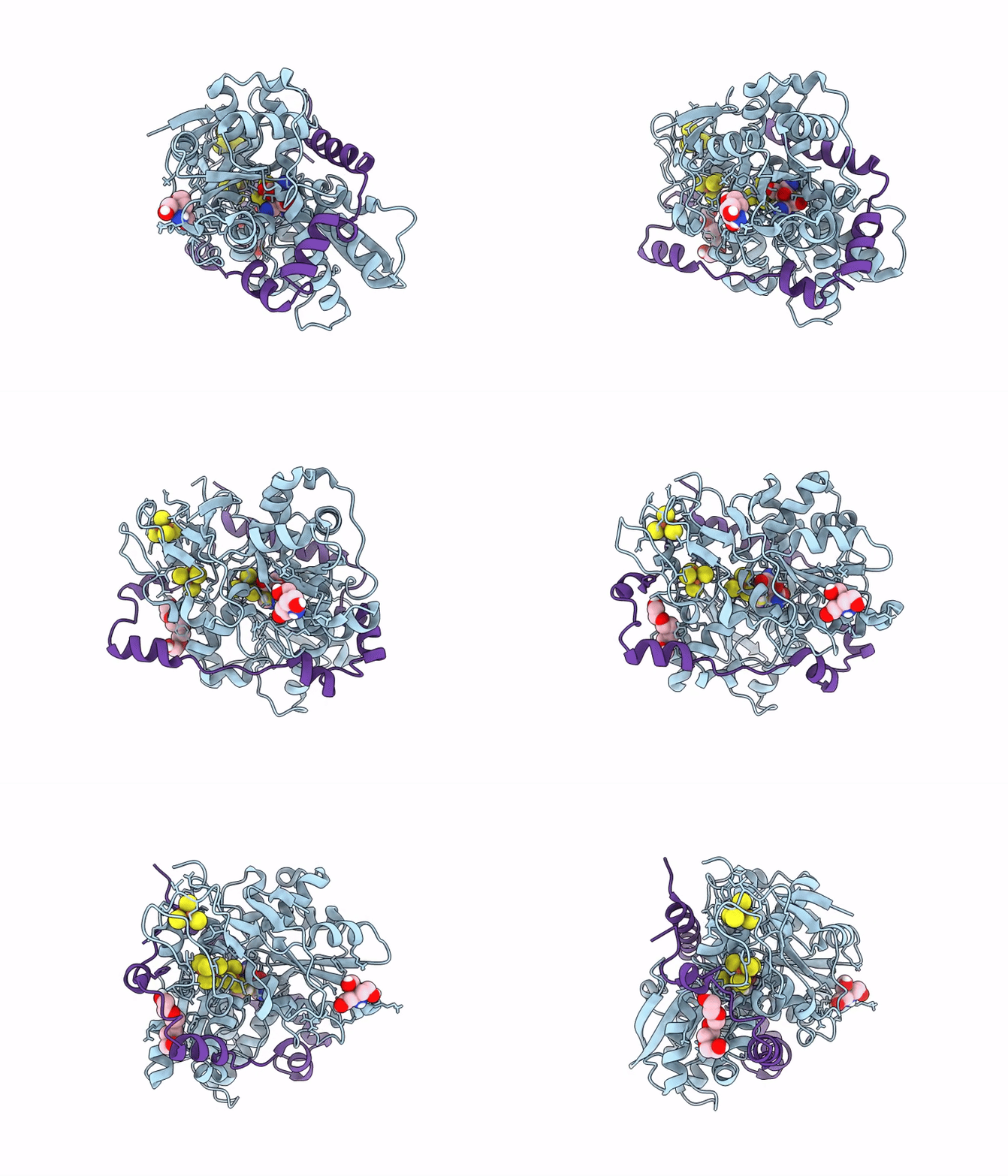
9QD6 image
Deposition Date 2025-03-06
Release Date 2026-02-25
Last Version Date 2026-05-06
Entry Detail
PDB ID:
9QD6
Keywords:
Title:
High resolution structure of the artificially maturated [FeFe]-hydrogenase from Nitratidesulfovibrio vulgaris str. Hildenborough
Biological Source:
Expression System(s):
Method Details:
Experimental Method:
Resolution:
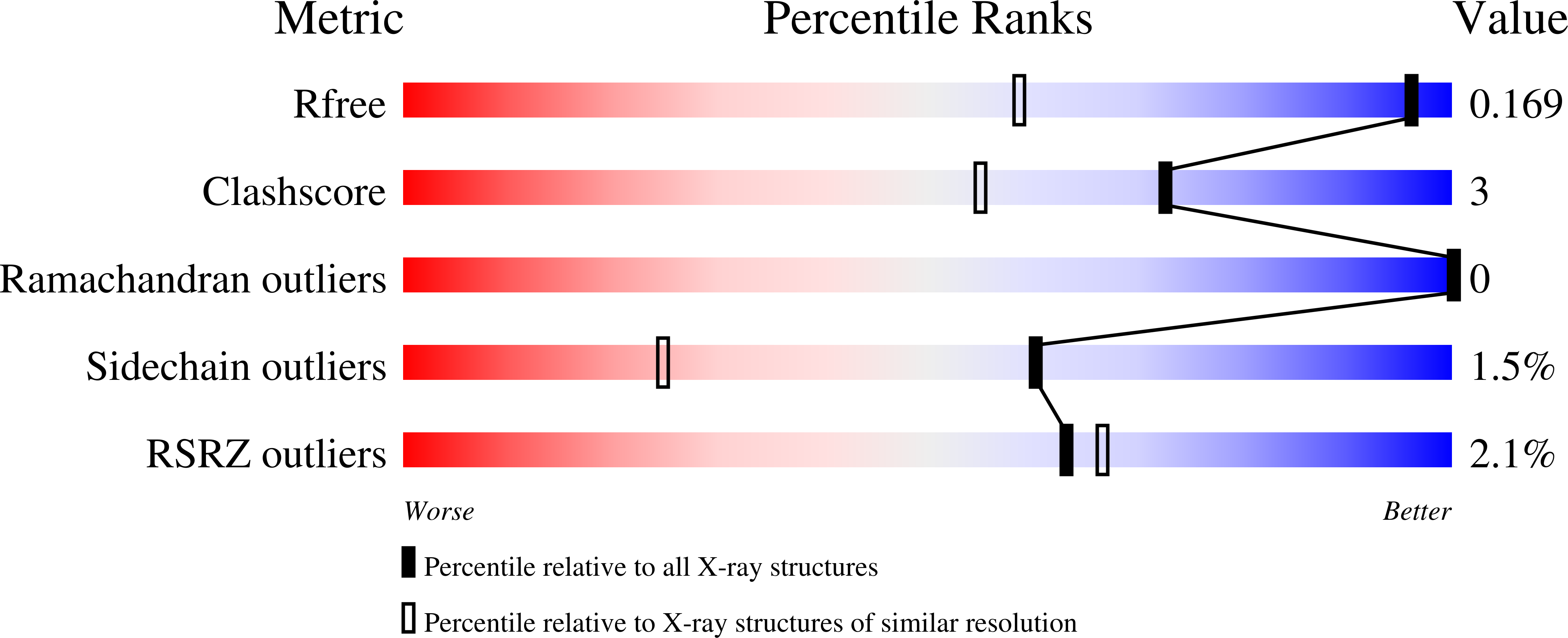
1.18 Å
R-Value Free:
0.16
R-Value Work:
0.15
Space Group:
P 21 21 21
Macromolecular Entities
Structures with similar UniProt ID
Protein Blast
Polymer Type:polypeptide(L)
Molecule:Periplasmic [Fe] hydrogenase
Gene (Uniprot):hydA
Chain IDs:B (auth: A)
Chain Length:405
Number of Molecules:1
Biological Source:Nitratidesulfovibrio vulgaris str. Hildenborough
Structures with similar UniProt ID
Protein Blast
Polymer Type:polypeptide(L)
Molecule:Periplasmic [Fe] hydrogenase
Gene (Uniprot):hydB
Chain IDs:A (auth: B)
Chain Length:88
Number of Molecules:1
Biological Source:Nitratidesulfovibrio vulgaris str. Hildenborough
Primary Citation
Subunit fusion unlocks rapid in vitro maturation for slowly activating heterodimeric [FeFe]-hydrogenases.
Chem Sci 17 7678 7689 (2026)
PMID: 41756151 DOI: 10.1039/d5sc07299a

Abstact

Hydrogenases offer a sustainable alternative to noble metals for catalyzing H(2)-oxidation and H(2)-production. The heterodimeric [FeFe]-hydrogenase of Desulfovibrio desulfuricans ATCC 7757 (DdHydAB) is most promising due to its exceptional catalytic activity and high-yield heterologous expression of its apo-form. Scalable production of the holo-form relies on in vitro maturation of the apo-enzyme using a chemically synthesized 2Fe(H) cofactor mimic. However, the unusually slow in vitro maturation of DdHydAB raises mechanistic questions and limits its scalability. Through structural and sequence analysis, we identified the cause of this slow maturation and redesigned the enzyme via subunit fusion, inserting short peptide linkers near the active site. This modification facilitates the rearrangement of a critical locking element after cofactor uptake, increasing the maturation rate by up to 41-fold without compromising catalytic performance. Our findings elucidate a key step in the plug-lock-lid mechanism underlying maturation and promote the industrial applicability of DdHydAB.

Legend

Protein

Chemical

Disease

Primary Citation of related structures
Feedback Form
Name
Email
Institute
Feedback