

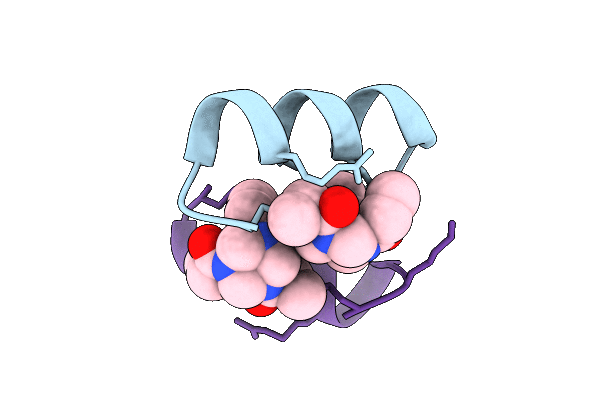
9Q8K image
Deposition Date 2025-02-25
Release Date 2026-03-11
Last Version Date 2026-09-23
Entry Detail
PDB ID:
9Q8K
Keywords:
Title:
Synthetic bicyclic peptide
Biological Source:
Source Organism(s):
Method Details:
Experimental Method:
Resolution:
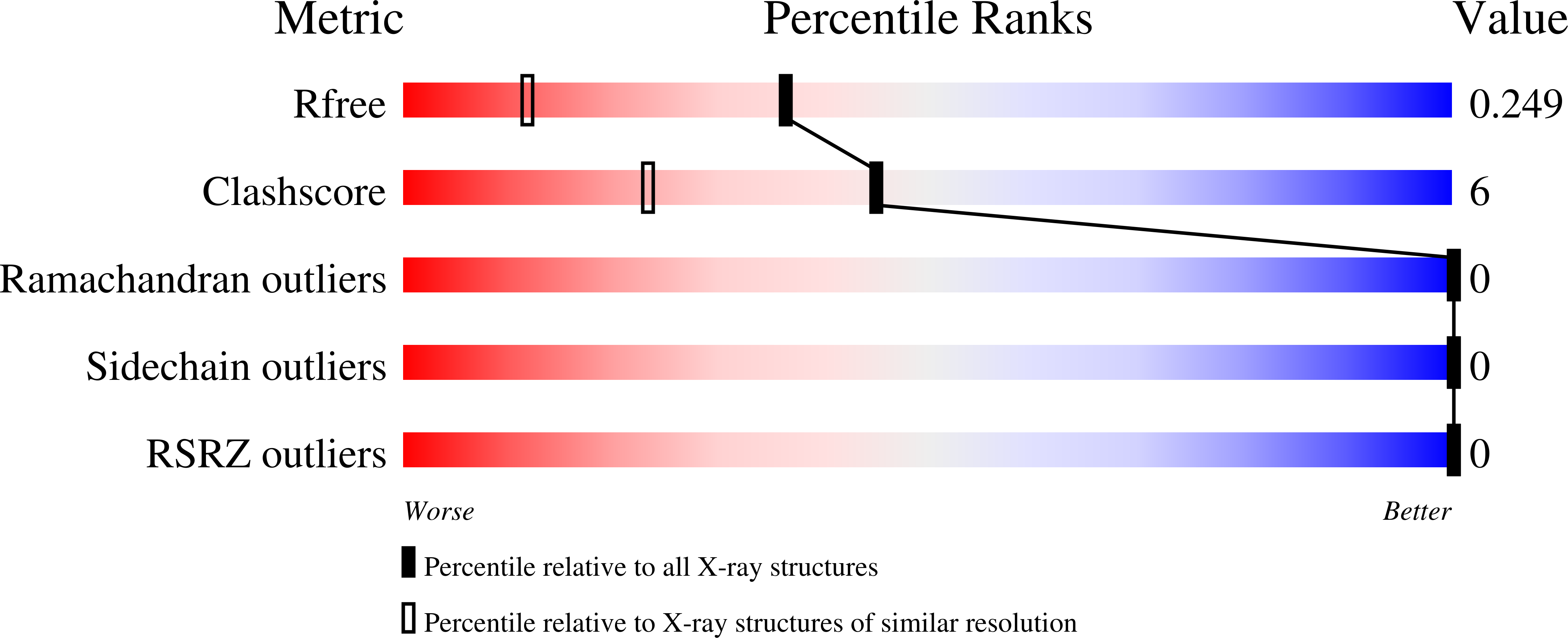
1.67 Å
R-Value Free:
0.26
R-Value Work:
0.23
R-Value Observed:
0.23
Space Group:
I 21 3
Macromolecular Entities
Polymer Type:polypeptide(L)
Molecule:Synthetic bicyclic peptide (C
Chain IDs:A, B
Chain Length:0
Number of Molecules:2
Biological Source:synthetic construct
Ligand Molecules
Primary Citation
Design of Bicyclic Peptide Tandems Mimicking the Homodimeric GDF15 Protein to Inhibit GDF15-GFRaL-RET Complex Cell Signaling.
J.Med.Chem. 68 21441 21457 (2025)
PMID: 41066664 DOI: 10.1021/acs.jmedchem.5c01378

Abstact

The GDF15-GFRaL-RET signaling complex is involved in a broad range of disease states, with agonistic action of GDF15 affecting metabolism and body weight control, while inhibition is indicated in cancer and wasting disorders like cachexia. Here, we describe the discovery of the peptide inhibitors of the GDF15-GFRaL protein-protein interaction to prevent RET-induced signaling using both a structure-guided design and a phage display approach. Phage display provided bicyclic peptide hits with high affinity for GFRaL, and these were dimerized to mimic the bidentate interaction of homodimeric GDF15. Guided by structural data, the monomeric peptides were converted into tandem Bicycle molecules with picomolar affinities, similar to that of the endogenous GDF15 ligand. These dimerized protein mimetics inhibited cell signaling in a functional assay and showed improved pharmacokinetic properties compared with their monomeric counterparts. This is the first example of a homodimeric Bicycle molecule inhibiting receptor complex formation, thereby antagonizing the intracellular signaling response.

Legend

Protein

Chemical

Disease

Primary Citation of related structures
Feedback Form
Name
Email
Institute
Feedback