Abstact
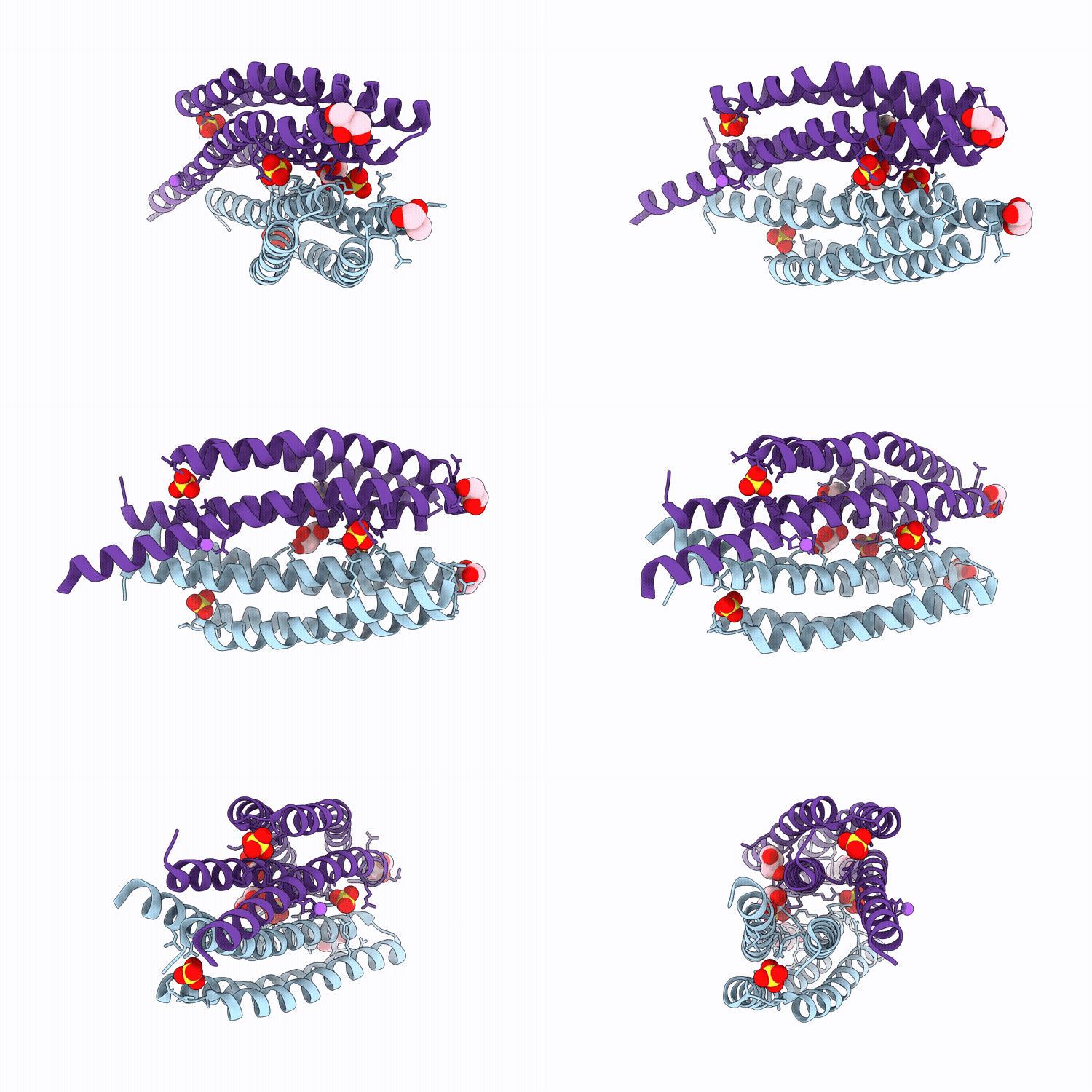
Plant pathogens possess about twice as many chemoreceptors as the bacterial average, suggesting broad chemotactic capacities. The signals recognized by most phytopathogen chemoreceptors are unknown, and the reasons for this elevated chemoreceptor number is unclear. We identified the signals recognized by three chemoreceptors, PacH, PacI and PacG, in the global phytopathogen Pectobacterium atrosepticum. The ligand-binding domains (LBDs) of these chemoreceptors share modest sequence similarity, but the signals they recognize are structurally similar, and their biosynthetic pathways are interwoven. Whereas PacH and PacI recognized benzoate derivatives, including salicylate, vanillin and p-hydroxybenzoate, PacG bound agmatine, feruloylagmatine and p-coumaroylagmatine. These compounds are known plant defense compounds, their production is induced by pathogen attack, and they typically accumulate at infection sites. All compounds, except agmatine, induced chemoattraction, which was abolished by mutations in the corresponding genes. Agmatine competed with feruloylagmatine and p-coumaroylagmatine for PacG-LBD binding in vitro and antagonized chemotaxis in vivo. A mutant in pacG, but not in other chemoreceptor genes, showed reduced virulence in planta. We report high-resolution structures of PacG-LBD that were used for ligand-docking experiments to identify its binding pocket. PacH, PacI and PacG homologs were identified in other important phytopathogens belonging to the Burkholderia, Erwinia, Ralstonia, Pectobacterium and Dickeya genera. This is the first report of chemotaxis to feruloylagmatine, p-coumaroylagmatine and p-methoxybenzoate, expanding the range of chemoeffectors. Bacteria thus exploit plant defense responses by moving to compounds that are secreted at infection sites in response to pathogen attack. Chemotaxis to plant defense compounds may be a means to access infected plants and infection sites.