

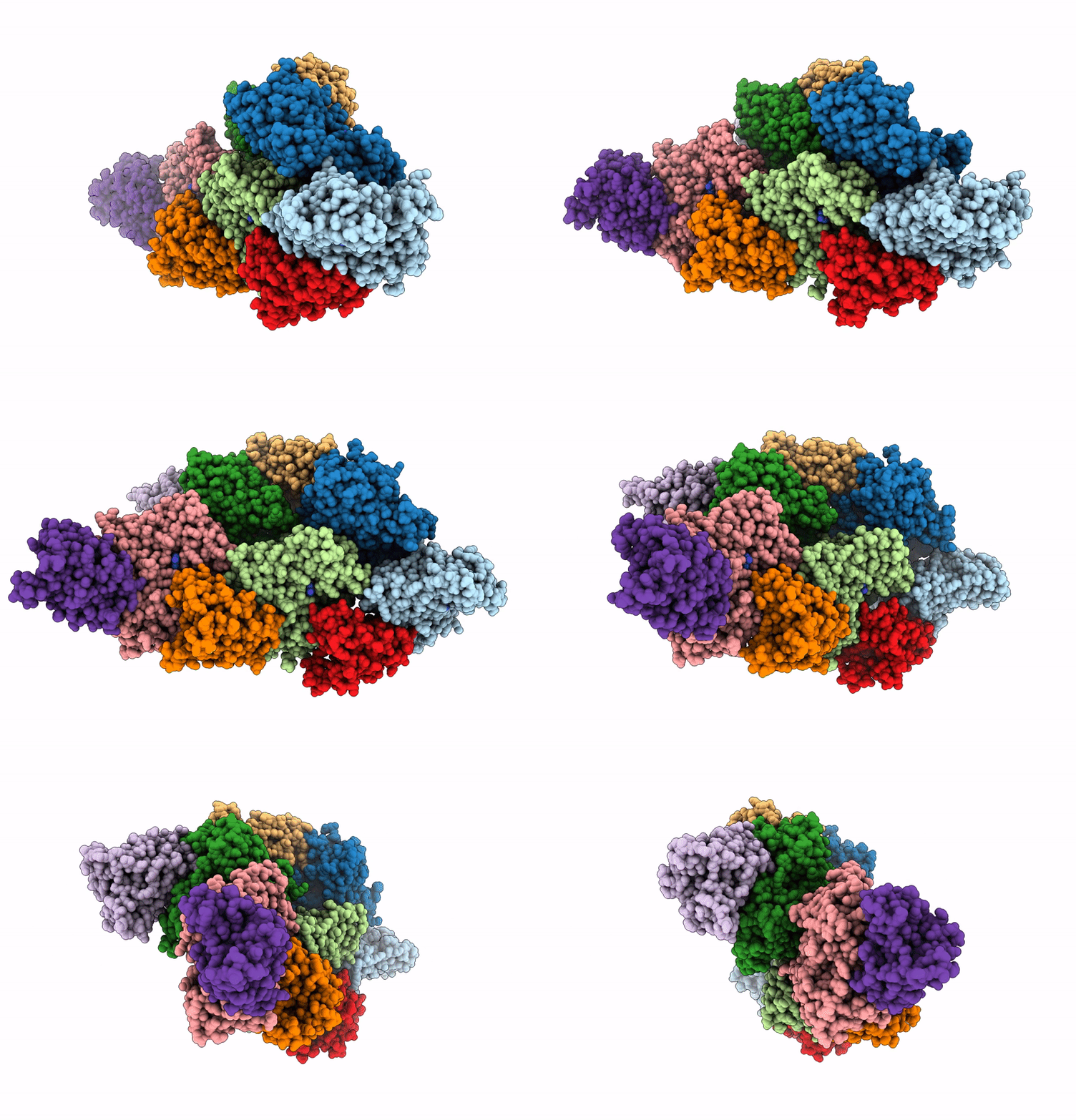
9Q7N image
Deposition Date 2025-08-24
Release Date 2026-03-04
Last Version Date 2026-05-13
Entry Detail
PDB ID:
9Q7N
Keywords:
Title:
Cofilin barbed end, cofilin on the two barbed end subunits
Biological Source:
Source Organism(s):
Expression System(s):
Method Details:
Experimental Method:
Resolution:
3.48 Å
Aggregation State:
FILAMENT
Reconstruction Method:
SINGLE PARTICLE
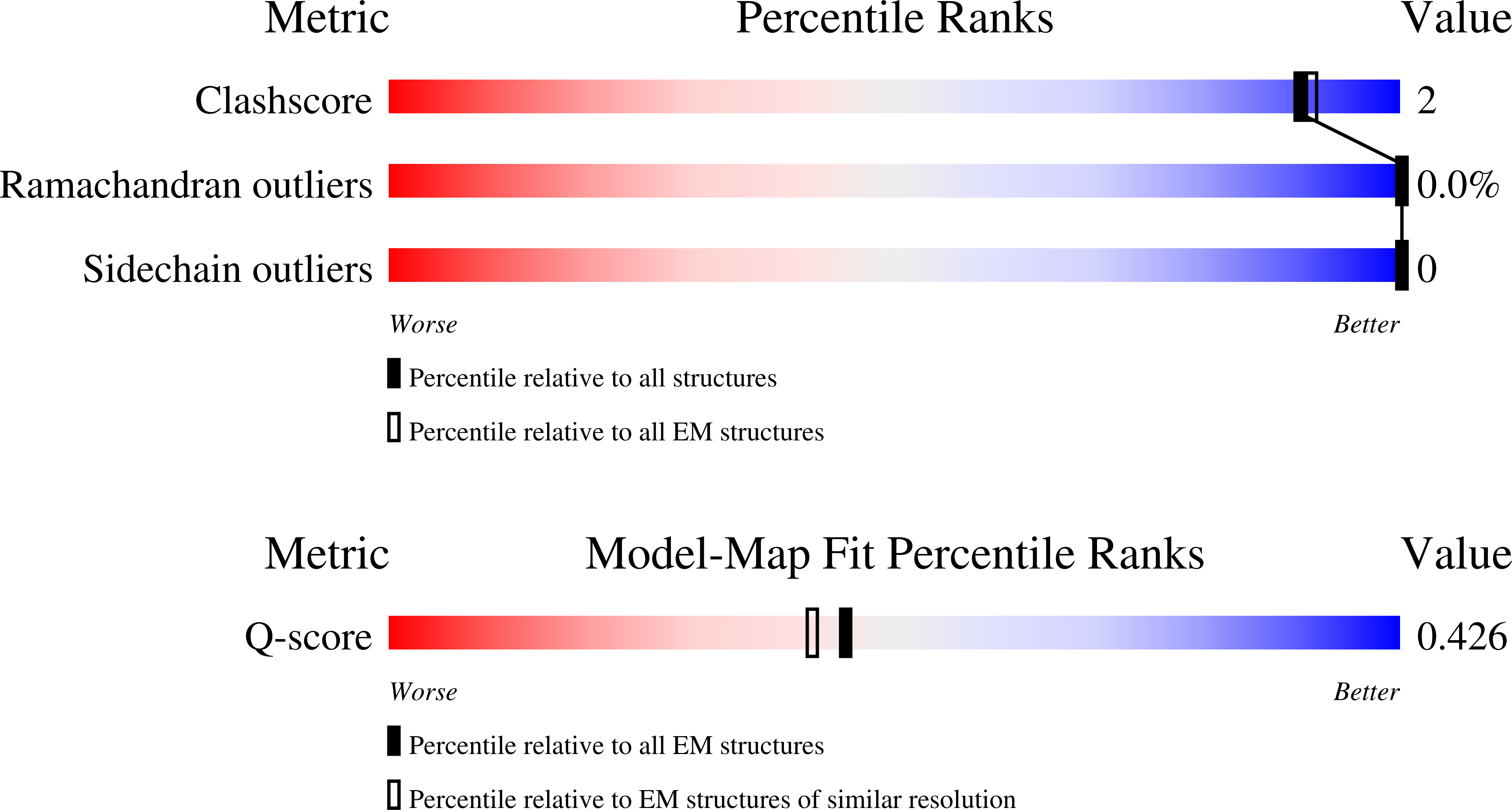
Macromolecular Entities
Structures with similar UniProt ID
Protein Blast
Polymer Type:polypeptide(L)
Molecule:Actin, alpha skeletal muscle
Gene (Uniprot):ACTA1
Chain IDs:A, B, C, D, E
Chain Length:376
Number of Molecules:5
Biological Source:Oryctolagus cuniculus
Structures with similar UniProt ID
Protein Blast
Polymer Type:polypeptide(L)
Molecule:Cofilin-2
Gene (Uniprot):CFL2
Chain IDs:F (auth: a), G (auth: b), H (auth: c), I (auth: d), J (auth: e)
Chain Length:376
Number of Molecules:5
Biological Source:Homo sapiens
Modified Residue
Compound ID Chain ID Parent Comp ID Details 2D Image
HIC A HIS modified residue
Primary Citation
Mechanisms of disassembly at the actin filament pointed and barbed ends.
Sci Adv 12 eaee5882 eaee5882 (2026)
PMID: 41931606 DOI: 10.1126/sciadv.aee5882

Abstact

Actin cytoskeleton dynamics power processes from cell motility to organelle trafficking, requiring rapid polymerization and depolymerization accelerated in cells by regulatory proteins. While mechanisms of accelerated polymerization are relatively well studied, those of depolymerization remain poorly understood. Here, we present twelve cryo-electron microscopy structures showing how cofilin, cyclase-associated protein (CAP), and capping protein (CP) coordinate their activities to accelerate depolymerization at both filament ends. Alone, CAP produces a ~4.0 A lateral displacement of the first pointed-end subunit, whereas cofilin reverts terminal subunits at the pointed and barbed ends to a G-actin-like conformation and undertwists the filament short-pitch helix. When functioning together, these cofilin- and CAP-induced conformational changes are amplified to accelerate pointed-end disassembly. At the barbed end, the cofilin-induced changes trigger stepwise CP dissociation and favor depolymerization. These findings support end-specific mechanisms of filament disassembly through accelerated subunit dissociation, slowed subunit addition, and barbed-end uncapping.

Legend

Protein

Chemical

Disease

Primary Citation of related structures
Feedback Form
Name
Email
Institute
Feedback