

9Q6O image
Deposition Date 2025-08-22
Release Date 2026-06-10
Last Version Date 2026-06-10
Entry Detail
PDB ID:
9Q6O
Title:
Cryo-EM Structure of MgtA in the E2-P State at 2.7 A Resolution
Biological Source:
Source Organism(s):
Expression System(s):
Method Details:
Experimental Method:
Resolution:
2.65 Å
Aggregation State:
PARTICLE
Reconstruction Method:
SINGLE PARTICLE
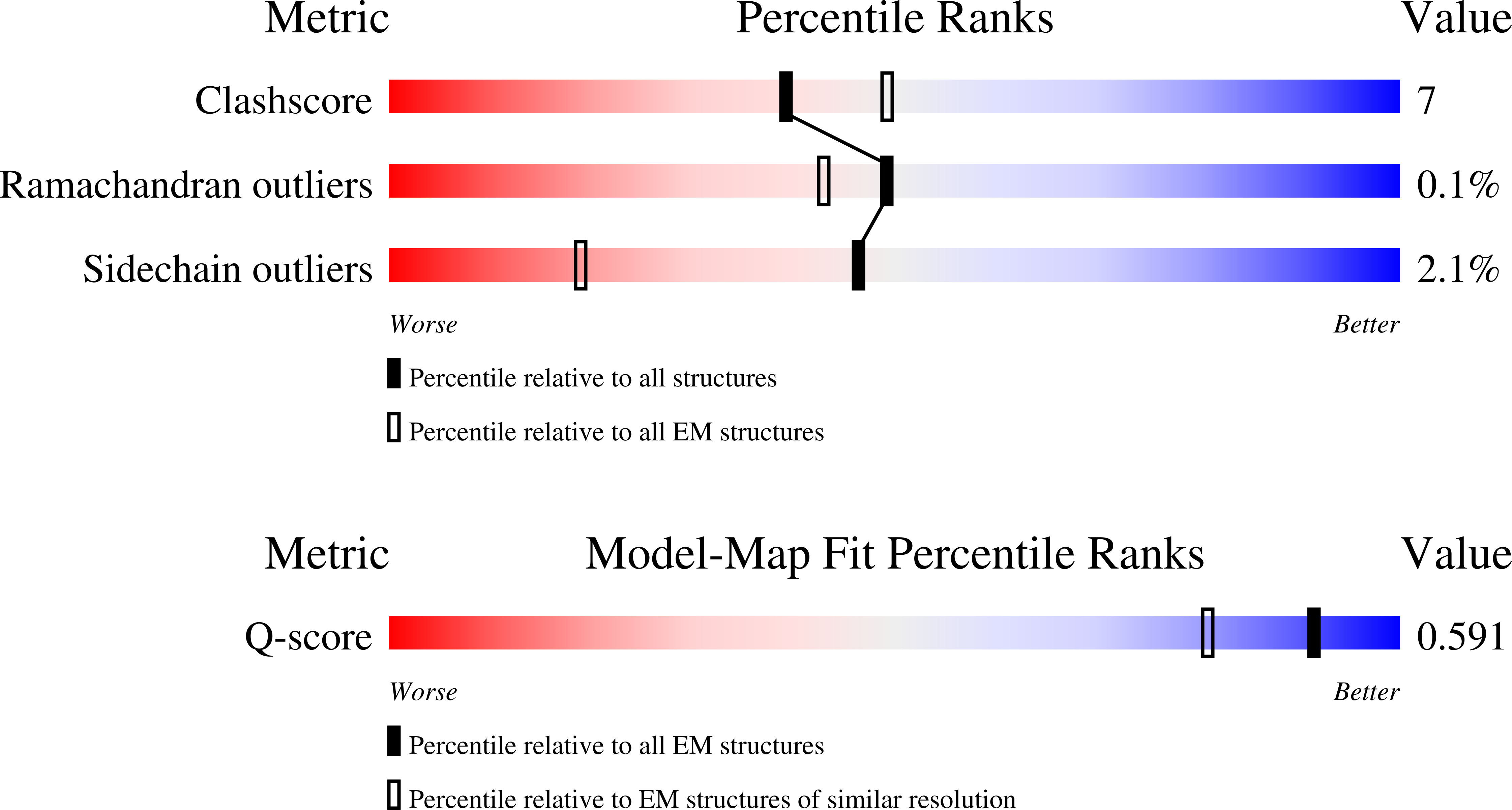
Macromolecular Entities
Structures with similar UniProt ID
Protein Blast
Polymer Type:polypeptide(L)
Molecule:Magnesium-transporting ATPase
Gene (Uniprot):LL275_1350
Chain IDs:A
Chain Length:921
Number of Molecules:1
Biological Source:Lactococcus lactis subsp. lactis
Primary Citation
Distinct transport cycle and lipid regulation of a Mg2+-transporting P-type ATPase, MgtA.
Res Sq ? ? ? (2026)
PMID: 42147146 DOI: 10.21203/rs.3.rs-9173029/v1

Abstact

P-type ATPases represent an evolutionarily conserved superfamily of ion, lipid, and peptide pumps found across all domains of life. Among the substrates transported by P-type ATPases, Mg(2+) is of critical importance in bacterial, fungal, and plant cellular homeostasis. A bacterial P-type ATPase found in Gram-negative bacteria, Mg(2+) transporter A (MgtA), facilitates the transport of Mg(2+) from the periplasm to the cytoplasm under conditions of Mg(2+) starvation. MgtA is a cardiolipin-sensitive integral membrane ion-transporter that scavenges Mg(2+) during bacterial infection and pathogenesis. Here, we determined cryo-EM structures of MgtA capturing three distinct states along the Mg(2+) transport cycle, including a phosphorylated E2-P intermediate (2.6 A resolution), an E1-like conformation stabilized by the peptide regulator MgtR (2.7 A resolution), and an E1-like ATP-bound state (2.8 A resolution). These three conformations reveal the binding of Mg(2+) in the transmembrane domain coordinated in a novel site involving Ser(702) and Asn(706) on M5, Ser(773) and Asp(777) on M7, and Ser(821) and Thr(824) on M8. In the E2-P conformation, the phosphate analog BeF(3) is bound in close proximity to the catalytic aspartate, Asp(361), suggesting that it represents a covalent aspartylphosphate intermediate. In the presence of AMPPCP, Mg(2+) remains bound in the transmembrane domain and the ATP analog is bound in a catalytically competent conformation. Overall, the structures reveal distinct steps in the transport cycle of MgtA compared to other P-type ATPases, as well as lipid binding sites that fill gaps in our understanding of transport regulation.

Legend

Protein

Chemical

Disease

Primary Citation of related structures
Feedback Form
Name
Email
Institute
Feedback