

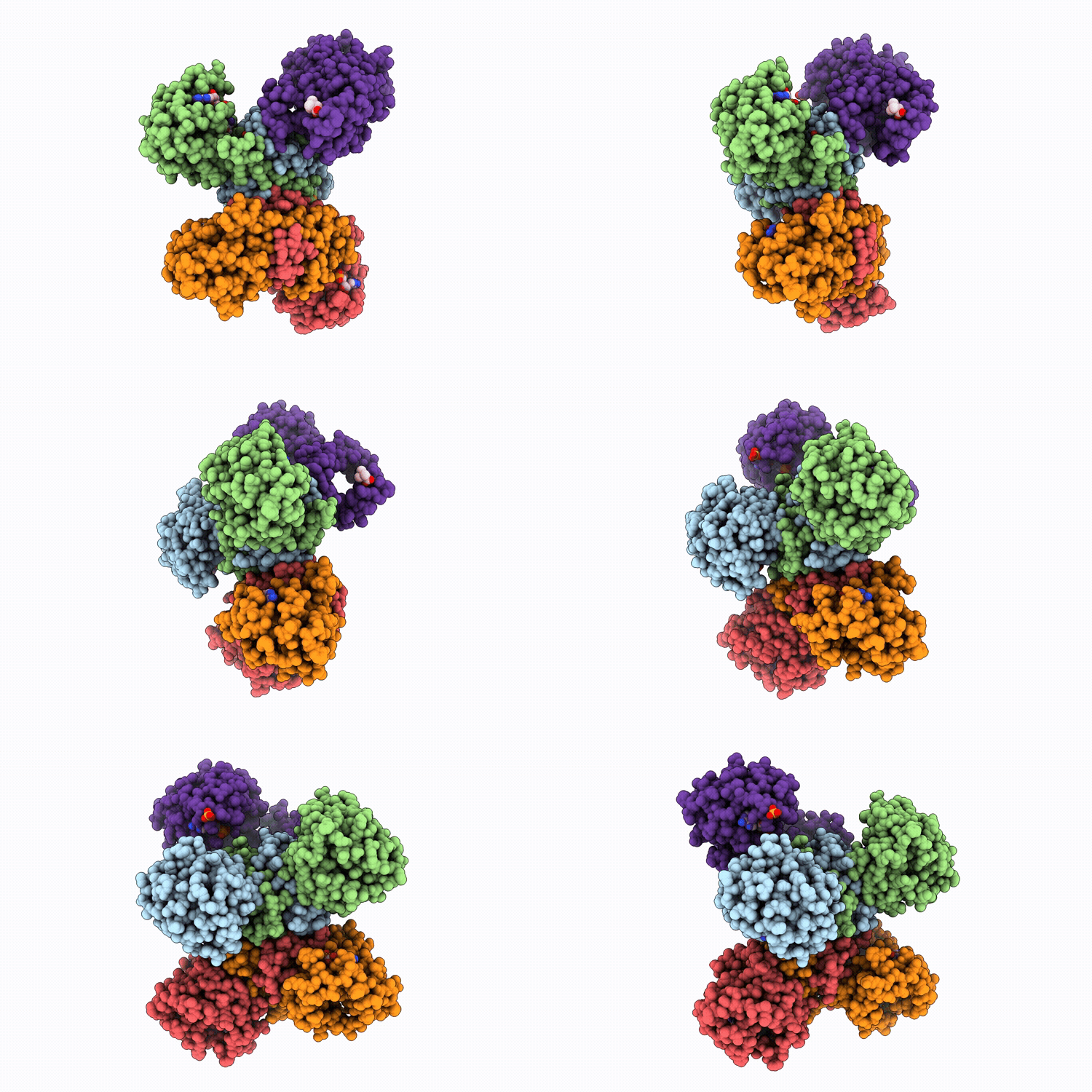
9Q6G image
Deposition Date 2025-08-22
Release Date 2026-05-20
Last Version Date 2026-05-20
Entry Detail
PDB ID:
9Q6G
Keywords:
Title:
PYCR2 complexed with NAD+ and (2S)-2-hydroxy-3,3-dimethylbutanoic acid
Biological Source:
Source Organism(s):
Homo sapiens (Taxon ID: 9606)
Expression System(s):
Method Details:
Experimental Method:
Resolution:
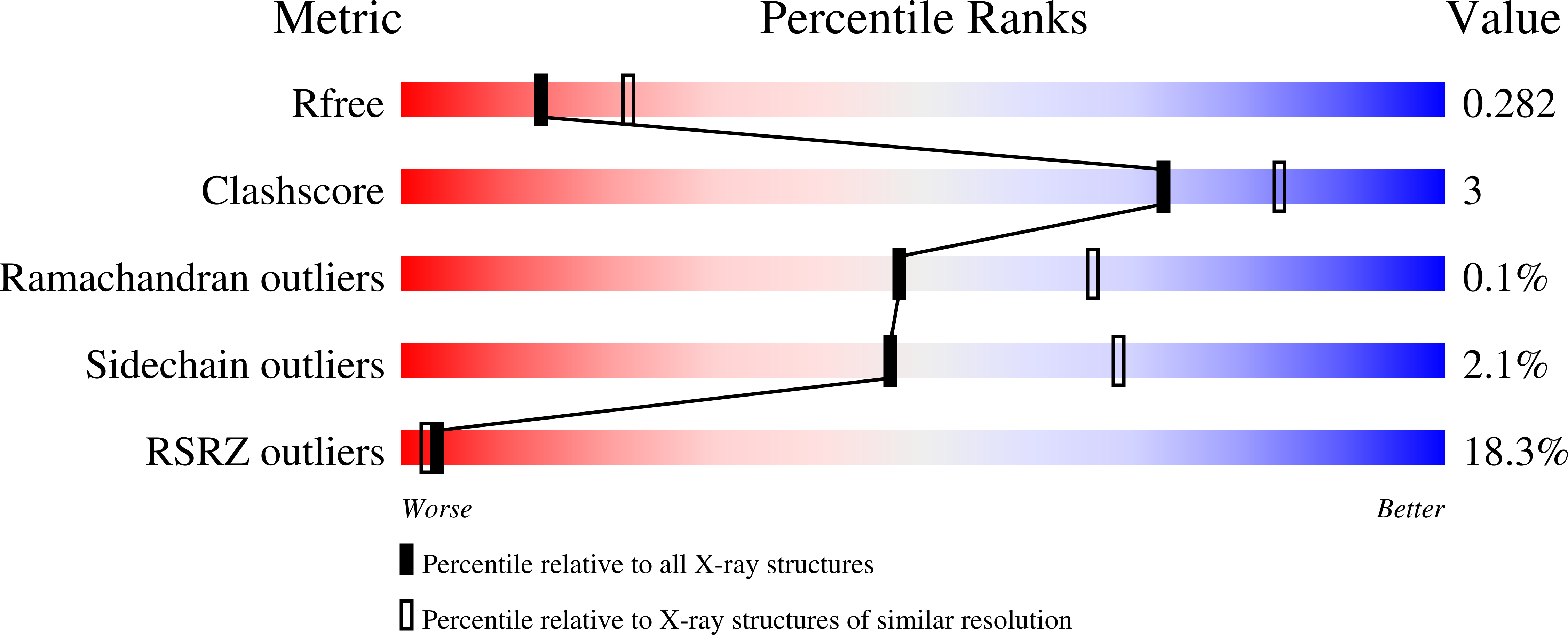
2.65 Å
R-Value Free:
0.28
R-Value Work:
0.26
R-Value Observed:
0.26
Space Group:
P 21 2 21
Macromolecular Entities
Structures with similar UniProt ID
Protein Blast
Polymer Type:polypeptide(L)
Molecule:Pyrroline-5-carboxylate reduc
Gene (Uniprot):PYCR2
Mutagens:K276Q
Chain IDs:A, B, C, D, E
Chain Length:316
Number of Molecules:5
Biological Source:Homo sapiens
Primary Citation
Targeting a Unique Cysteine Residue to Achieve Isoform-Selective Inhibition of the Proline Biosynthetic Enzyme Pyrroline-5-Carboxylate Reductase 2.
Acs Chem.Biol. ? ? ? (2026)
PMID: 42014936 DOI: 10.1021/acschembio.6c00060

Abstact

Proline metabolism is selectively altered in cancer cells, providing ATP, redox balance, and proline for cell growth. The final enzyme of proline biosynthesis is Delta(1)-pyrroline-5-carboxylate (P5C) reductase (PYCR), which catalyzes the NAD(P)H-dependent reduction of P5C to proline. Humans have three PYCR isoforms, PYCR1 and PYCR2 in the mitochondrion and PYCR3 in the cytosol. Interest in developing selective inhibitors of PYCR enzymes has significantly increased over the past decade. Orthosteric inhibitors of PYCR1 have been developed, but they may lack specificity given the near identity of the active sites of PYCR1 and PYCR2. Here, we explored a new strategy of targeting noncatalytic cysteines to gain isoform selectivity. Initial results with iodoacetamide showed higher inhibition of PYCR2 relative to PYCR1, a result that was further explored with the thiol-reactive compound ebselen. Ebselen treatment resulted in a complete loss of PYCR2 activity with an IC(50) value of 22 nM, which is 10-fold more sensitive than with PYCR1. Results from protection assays with dithiothreitol, site-directed mutagenesis, and mass spectrometry implicate Cys232 in PYCR2 as the target of ebselen. A new crystal structure of PYCR2 shows that Cys232 is in the P5C-binding loop, whereas PYCR1 contains a serine at this position. Our study provides new insight into the structural and functional roles of unique cysteine residues in PYCR2. Further, our results demonstrate proof-of-concept for targeting a noncatalytic cysteine as a new approach for selectively inhibiting PYCR2 over PYCR1.

Legend

Protein

Chemical

Disease

Primary Citation of related structures
Feedback Form
Name
Email
Institute
Feedback