

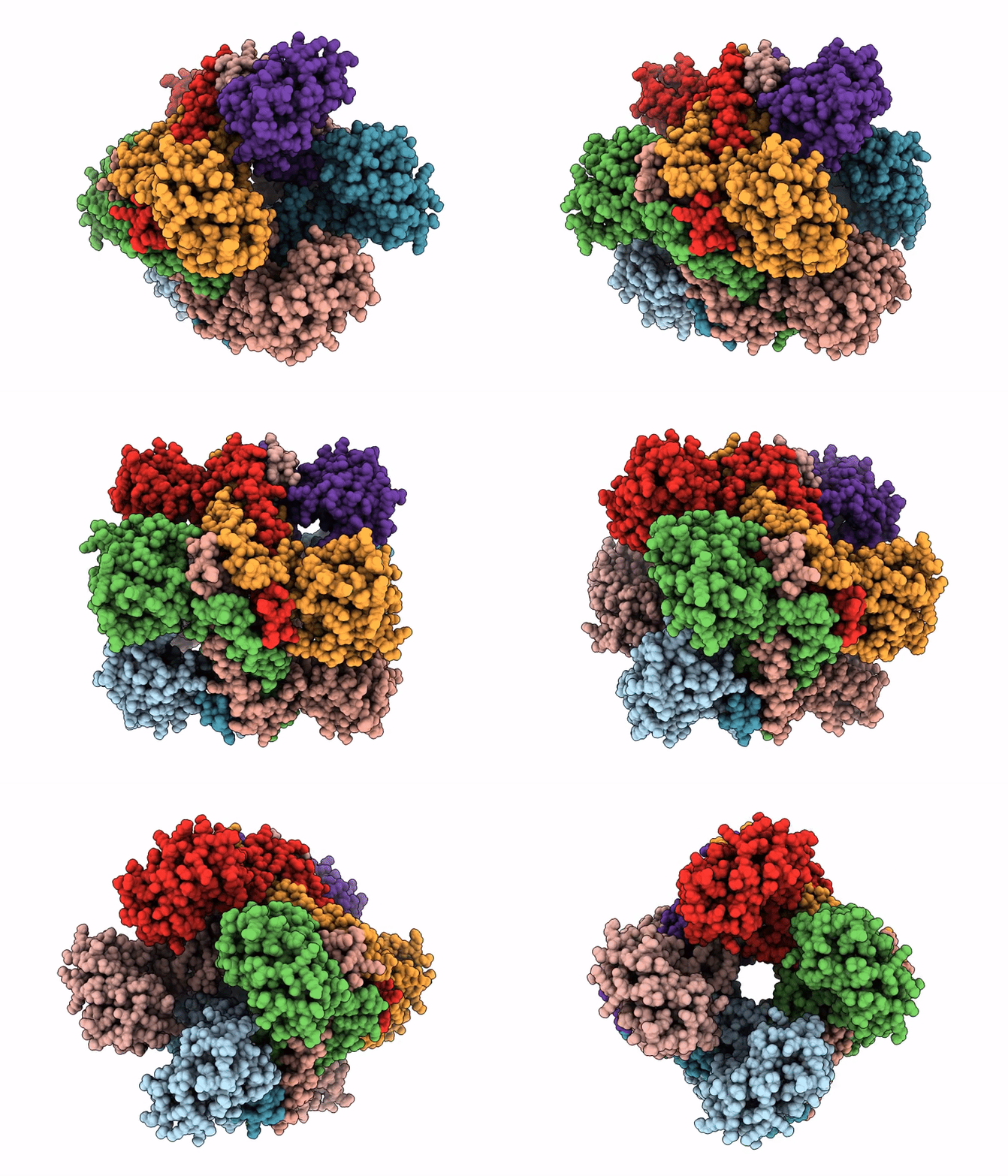
9Q6C image
Deposition Date 2025-08-22
Release Date 2025-10-01
Last Version Date 2026-06-10
Entry Detail
PDB ID:
9Q6C
Title:
Cryo-EM structure of octameric COMMD-like protein MBK5214510 from Flavobacteriaceae bacterium
Biological Source:
Source Organism(s):
Expression System(s):
Method Details:
Experimental Method:
Resolution:
4.22 Å
Aggregation State:
PARTICLE
Reconstruction Method:
SINGLE PARTICLE
Macromolecular Entities
Protein Blast
Polymer Type:polypeptide(L)
Molecule:COMMD-like protein MBK5214510
Chain IDs:A, B, C, D, E, F, G, H
Chain Length:240
Number of Molecules:8
Biological Source:Flavobacteriaceae bacterium
Ligand Molecules
Primary Citation
The prokaryotic origins of the COMMD protein family involved in eukaryotic membrane trafficking.
Nat Commun ? ? ? (2026)
PMID: 42215467 DOI: 10.1038/s41467-026-73536-9

Abstact

The ten eukaryotic COMMD proteins are core components of the Commander complex, with central roles in endosomal membrane trafficking and signalling. Each protein has an alpha-helical N-terminal (HN) domain with a C-terminal copper metabolism gene MURR1 (COMM) domain. These ten family members assemble into a heterodecameric ring composed of five specific heterodimers. In this work we have combined structural homology searches with genome-wide predicted structures to identify ancestral COMMD-like proteins that exist as single genes in Bacteria and Archaea. Although there is limited sequence similarity to the eukaryotic proteins the bacterial and archaeal COMMD-like proteins are predicted to form homomeric ring-shaped assemblies like their eukaryotic counterparts. Our biophysical studies, crystal and cryo-EM structures confirm COMMD-like proteins readily form homooligomeric rings composed of eight or ten subunits assembled from core dimeric building blocks and inter-dimer interactions that are analogous to the heterodecameric core structure of the eukaryotic Commander complex. Phylogenetic analyses using amino acid sequences and FoldSeek structural alphabet (3Di) infer that the closest identified relatives to the eukaryotic COMMD proteins are found in Myxococcota bacteria. These findings indicate that COMMD genes emerged early in eukaryotic evolution through multiple rounds of duplication from a single ancestral gene likely acquired from bacteria.

Legend

Protein

Chemical

Disease

Primary Citation of related structures
Feedback Form
Name
Email
Institute
Feedback