

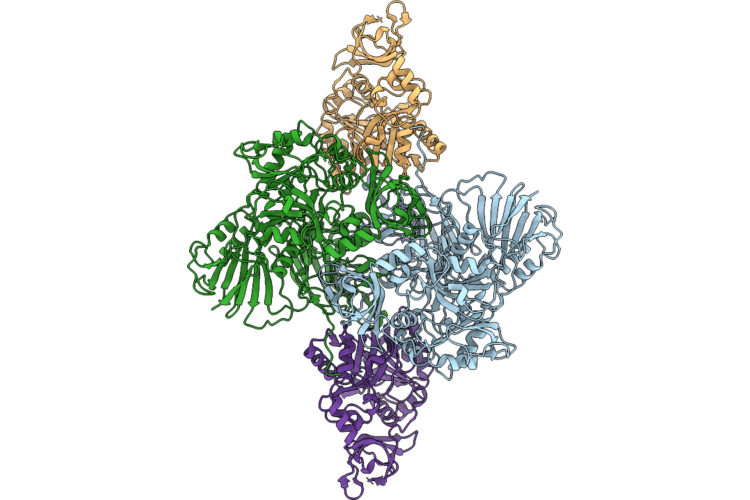
9Q59 image
Deposition Date 2025-08-20
Release Date 2026-08-26
Last Version Date 2026-10-14
Entry Detail
PDB ID:
9Q59
Title:
Cryo-EM structure of Paracoccus Trimethylamine N-oxide Demethylase
Biological Source:
Source Organism(s):
Expression System(s):
Method Details:
Experimental Method:
Resolution:
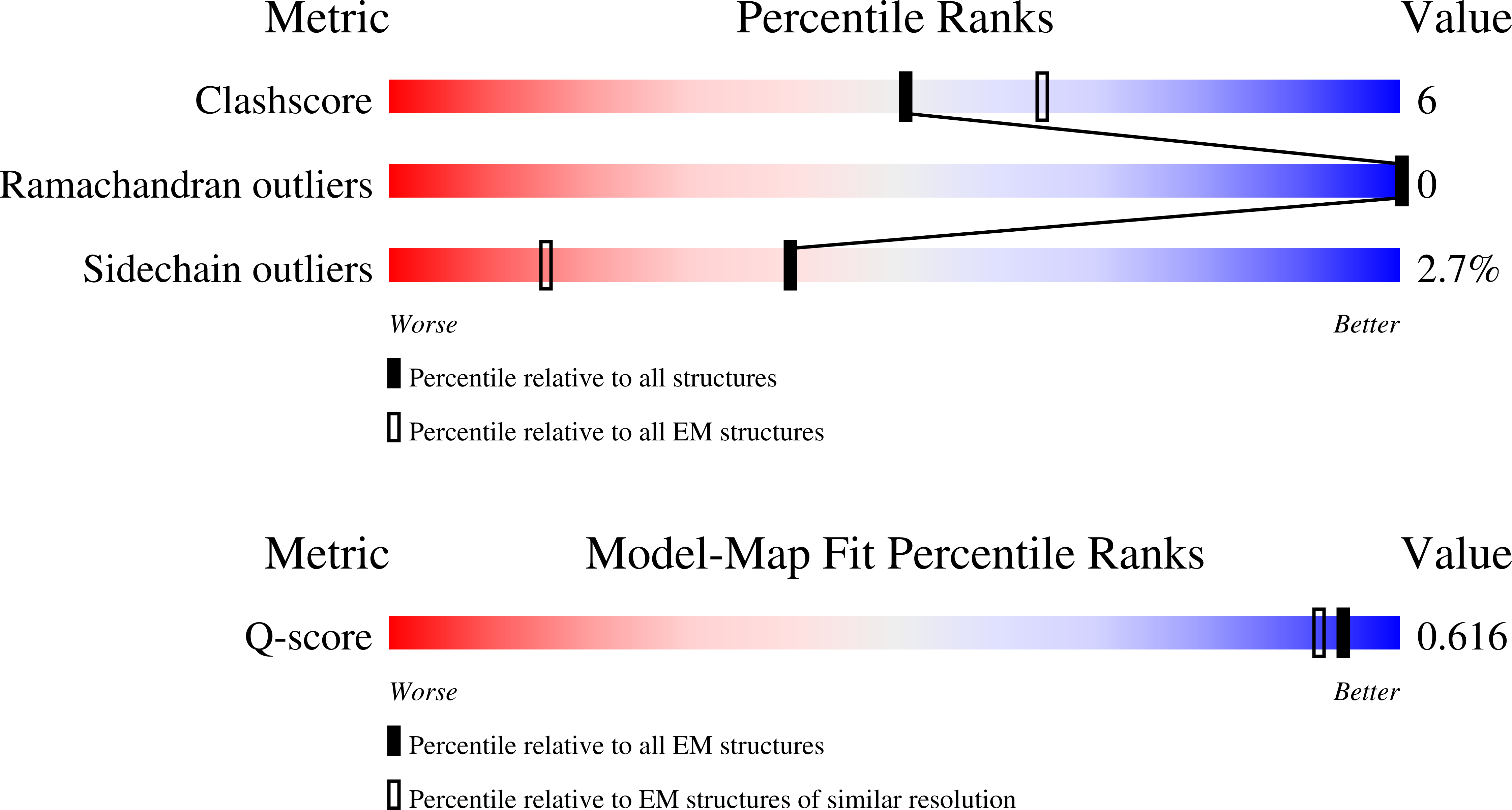
2.76 Å
Aggregation State:
PARTICLE
Reconstruction Method:
SINGLE PARTICLE
Macromolecular Entities
Structural Superimposition Protein Blast
Polymer Type:polypeptide(L)
Molecule:trimethylamine N-oxide demeth
Chain IDs:A, B, C, D
Chain Length:793
Number of Molecules:4
Biological Source:Paracoccus sp. DMF
Ligand Molecules
Primary Citation
Bifunctional architecture enables substrate catalysis and channeling in Paracoccus TMAO demethylase.
Elife 15 ? ? (2026)
PMID: 42803367 DOI: 10.7554/eLife.109964

Abstact

Substrate channeling enhances efficiency and prevents toxicity by directing unstable intermediates between active sites. Trimethylamine N-oxide demethylase (TDM) degrades trimethylamine N-oxide (TMAO) to dimethylamine and formaldehyde (HCHO), but the fate of HCHO has remained unclear. We report cryo-EM structures of TDM in apo, substrate-, and product-bound states that reveal a previously unknown channeling pathway. Combined structural, biochemical, and target molecular dynamics analyses show that HCHO is generated in a catalytic core and guided through a tunnel to a remote tetrahydrofolate (THF)-binding site, where it forms methylene-THF. Thus, TDM emerges as a bifunctional enzyme that unites TMAO demethylation with one-carbon transfer, providing a mechanistic explanation for its role in metabolic efficiency and detoxification.

Legend

Protein

Chemical

Disease

Primary Citation of related structures
Feedback Form
Name
Email
Institute
Feedback