

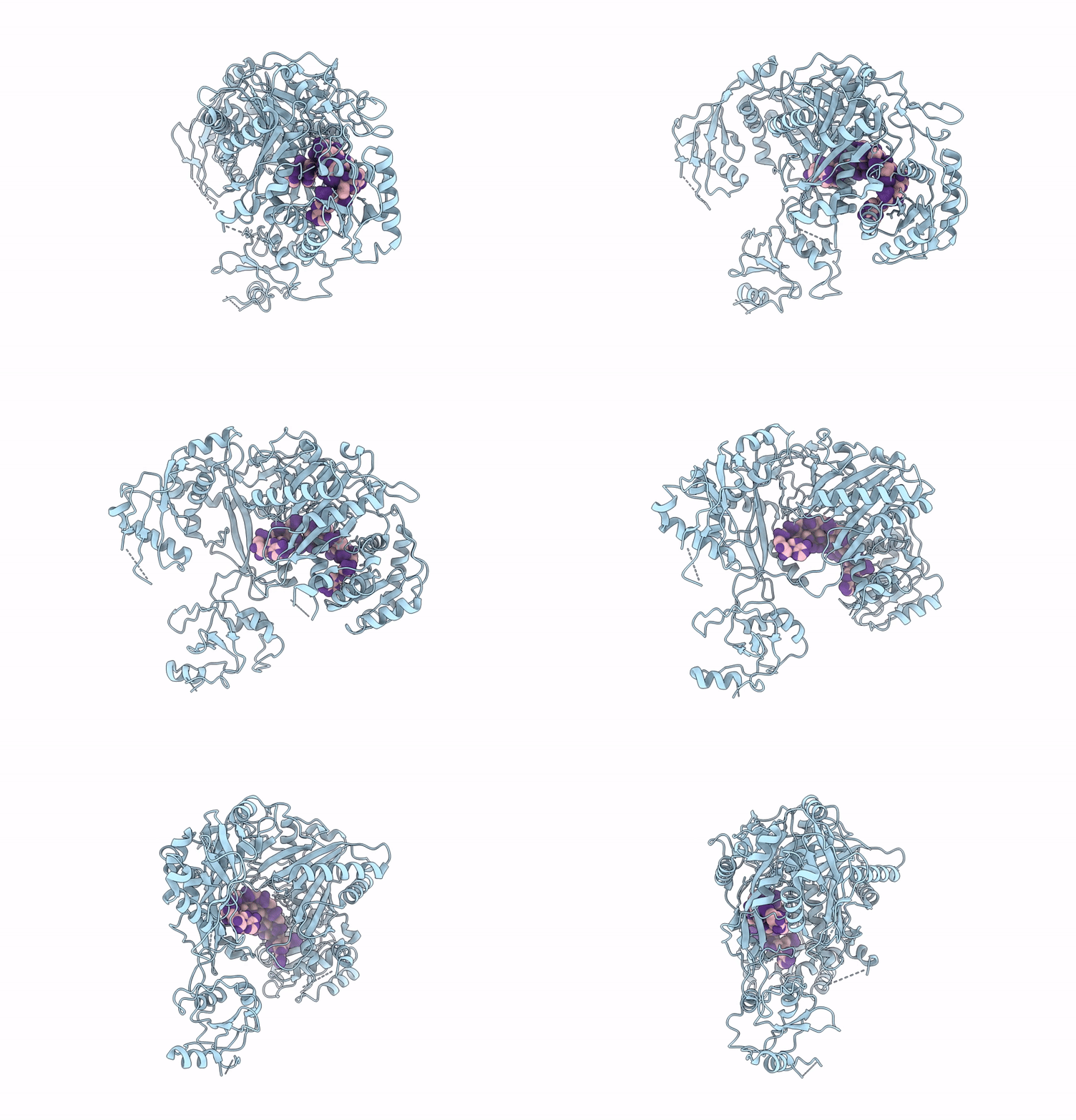
9Q3F image
Deposition Date 2025-08-18
Release Date 2025-11-05
Last Version Date 2026-05-06
Entry Detail
PDB ID:
9Q3F
Keywords:
Title:
Structure of neurodevelopmental mutant AGO1 F180del in complex with guide RNA
Biological Source:
Source Organism(s):
Homo sapiens (Taxon ID: 9606)
Trichoplusia ni (Taxon ID: 7111)
Expression System(s):
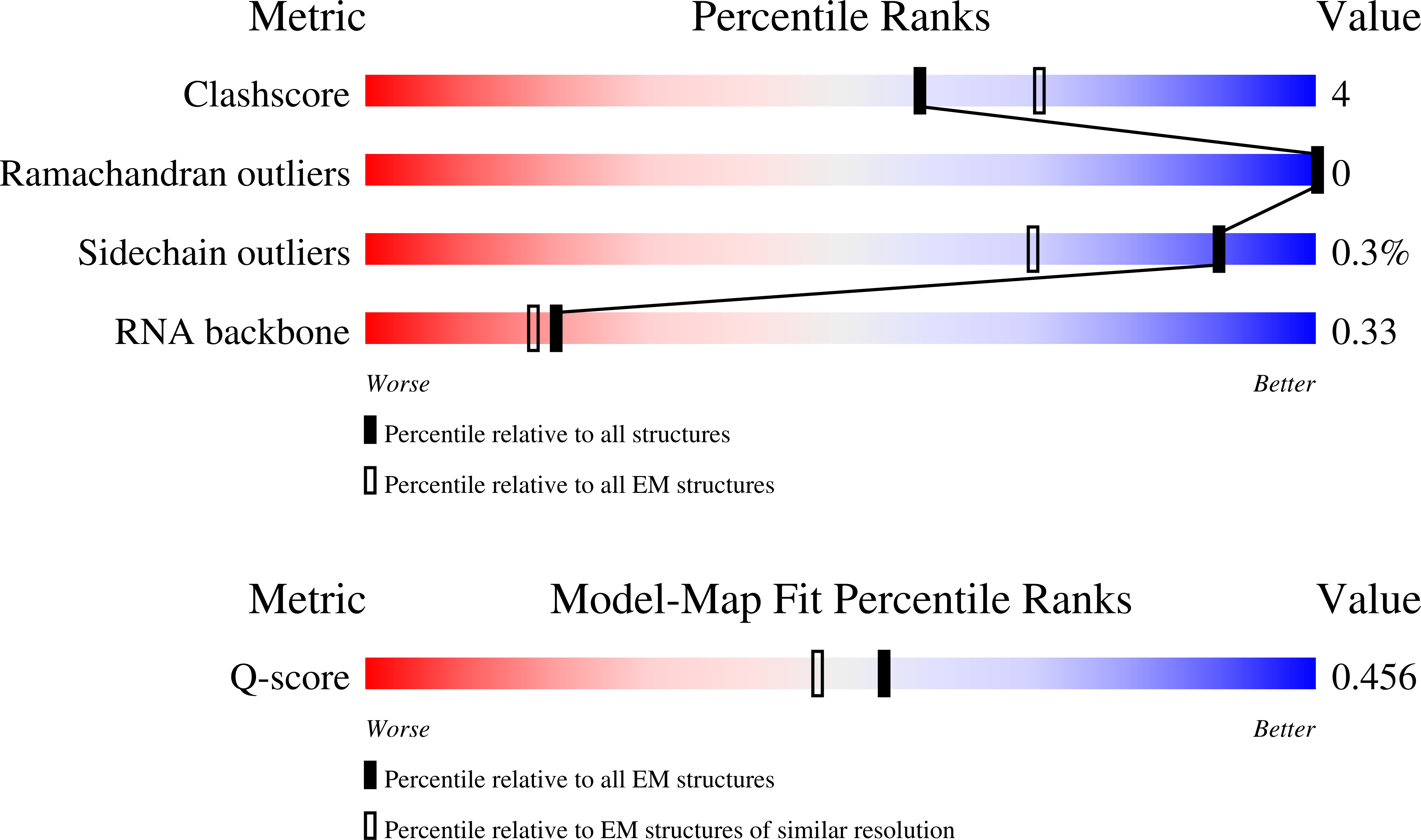
Method Details:
Experimental Method:
Resolution:
3.30 Å
Aggregation State:
PARTICLE
Reconstruction Method:
SINGLE PARTICLE
Macromolecular Entities
Structures with similar UniProt ID
Protein Blast
Polymer Type:polypeptide(L)
Molecule:Protein argonaute-1
Gene (Uniprot):AGO1
Chain IDs:A
Chain Length:870
Number of Molecules:1
Biological Source:Homo sapiens
Polymer Type:polyribonucleotide
Molecule:Non-homogenous guide RNA
Chain IDs:B
Chain Length:8
Number of Molecules:1
Biological Source:Trichoplusia ni
Ligand Molecules
Primary Citation
Neurodevelopmental disorder-linked Argonaute mutations permit delayed RISC formation and unusual shortening of miRNAs by 3'→5' trimming.
Proc.Natl.Acad.Sci.USA 122 e2524644122 e2524644122 (2025)
PMID: 41237208 DOI: 10.1073/pnas.2524644122

Abstact

Mutations in Argonaute proteins (AGOs) cause Argonaute syndrome, a neurodevelopmental disorder (NDD), yet the underlying molecular mechanism remains unclear. We determined cryo-electron microscopy (cryo-EM) structures of wild-type (WT) AGO1 and the recurrent, severe causative DeltaF180 mutant. AGO1(DeltaF180) unexpectedly rearranges the hydrophobic core of the L1 domain to preserve the overall RNA-induced silencing complexes (RISC) architecture and recognize guide RNAs similarly to WT. Functionally, the mutant binds target RNAs like WT but more frequently retains passenger strands, implicating a defect in RISC assembly. Biochemical assays of DeltaF180 and L190P mutants revealed normal duplex loading but impaired passenger ejection, exposing guide 3' ends to 3'-->5' exonucleases and generating abnormally short ~11-nucleotide RNAs. In cells, AGO1(DeltaF180), AGO1(G199S), and corresponding AGO2 mutants likewise produced truncated guides. Together, these findings support a model in which defective passenger ejection underlies the pathology of AGO-associated NDDs by rendering microRNAs bound to AGO syndrome mutants susceptible to aberrant 3' trimming.

Legend

Protein

Chemical

Disease

Primary Citation of related structures
Feedback Form
Name
Email
Institute
Feedback