

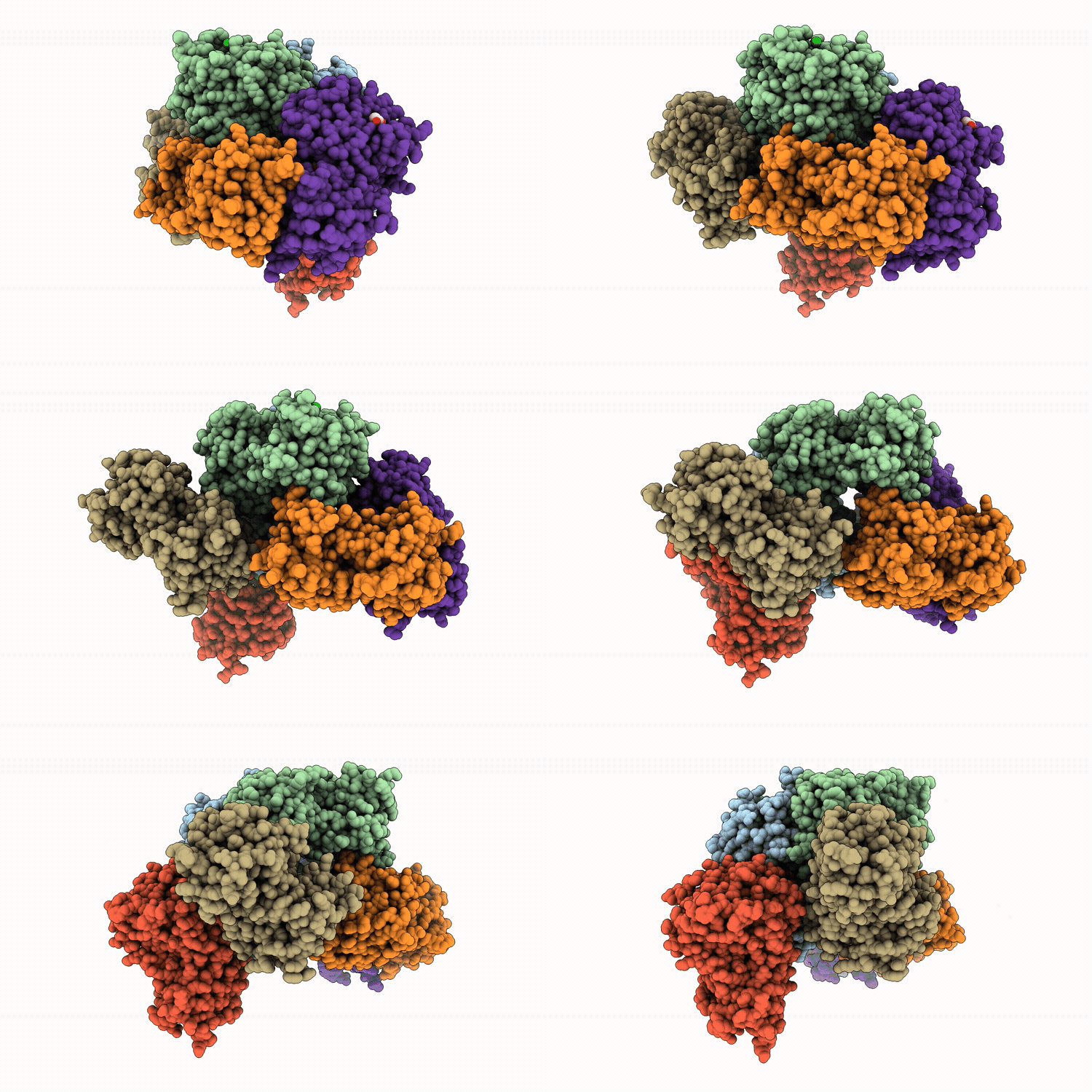
9Q1U image
Deposition Date 2025-08-14
Release Date 2026-06-17
Last Version Date 2026-06-17
Entry Detail
PDB ID:
9Q1U
Title:
Borrelia burgdorferi BmpA bound to thymidine
Biological Source:
Source Organism(s):
Expression System(s):
Method Details:
Experimental Method:
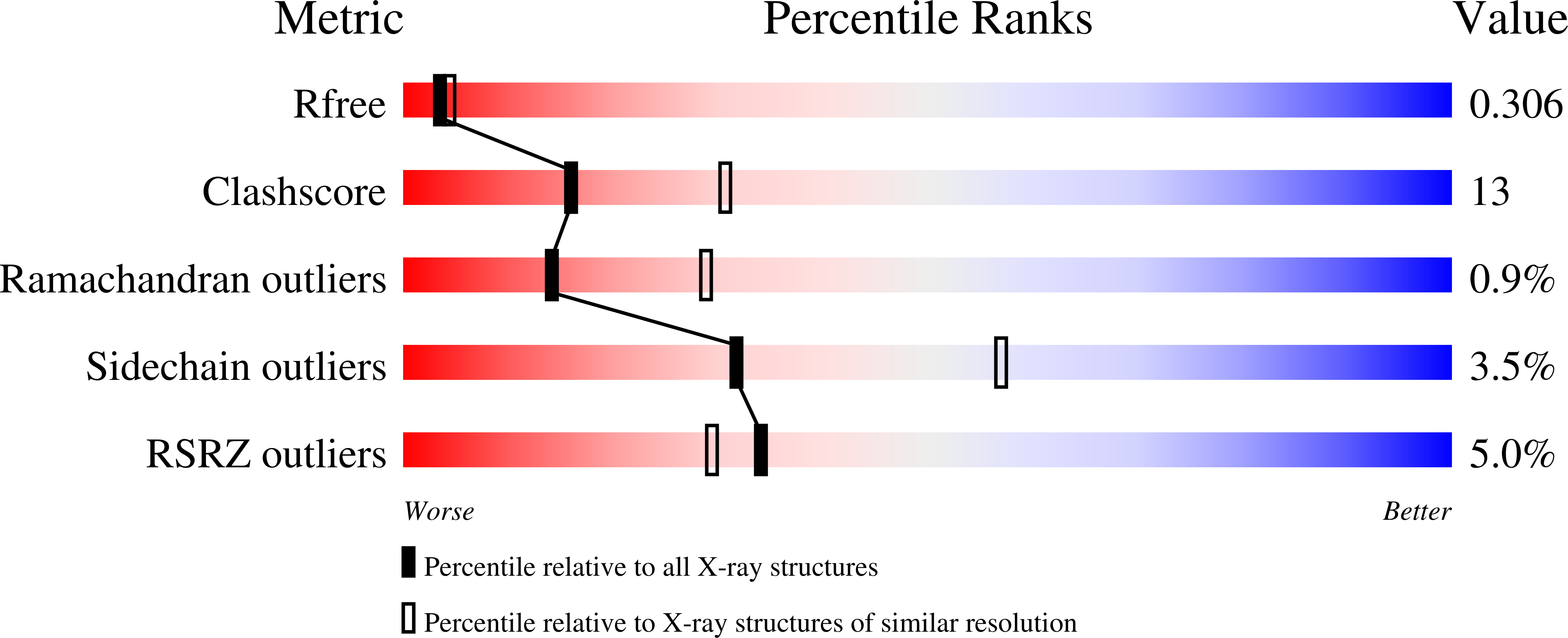
Resolution:
2.58 Å
R-Value Free:
0.30
R-Value Work:
0.25
R-Value Observed:
0.25
Space Group:
P 21 21 21
Macromolecular Entities
Structures with similar UniProt ID
Protein Blast
Polymer Type:polypeptide(L)
Molecule:Basic membrane protein A
Gene (Uniprot):bmpA
Chain IDs:A, B, C, D, E, F
Chain Length:328
Number of Molecules:6
Biological Source:Borreliella burgdorferi B31
Primary Citation
Structural basis for selective thymidine binding by the Borrelia burgdorferi substrate-binding protein BmpA.
J.Biol.Chem. ? 113206 113206 (2026)
PMID: 42208901 DOI: 10.1016/j.jbc.2026.113206

Abstact

BmpA is a putative substrate-binding protein from Borrelia burgdorferi, the causative agent of Lyme disease, an organism with limited metabolic capacity that relies on salvage pathways rather than de novo nucleotide biosynthesis. Here, we determine the crystal structure of BmpA to a resolution of 2.6 A, revealing a conserved substrate-binding protein fold with a deeply buried nucleoside-binding pocket. Using microscale thermophoresis, we show that BmpA binds thymidine with high affinity followed by cytidine and adenosine, whereas binding to ribose, guanosine, inosine, and uridine was not detected. Structure-guided mutagenesis further demonstrates that two conserved aromatic residues (Phe27 and Phe176) are essential for thymidine recognition, as alanine substitution at either position abolishes detectable binding. Additionally, a Foldseek-based structural homology search identified related proteins across diverse bacterial and archaeal species that share a conserved overall fold and binding-site architecture despite low sequence similarity, consistent with an evolutionarily conserved scaffold that can accommodate distinct nucleoside ligands. Together, our work illustrates how conserved binding protein architectures enable selective nucleoside acquisition and provides a foundation for understanding nutrient uptake strategies in organisms with reduced genomes.

Legend

Protein

Chemical

Disease

Primary Citation of related structures
Feedback Form
Name
Email
Institute
Feedback