

9Q0I image
Deposition Date 2025-08-12
Release Date 2026-04-29
Last Version Date 2026-04-29
Entry Detail
PDB ID:
9Q0I
Keywords:
Title:
Structure of dsRNA 16mer containing 4'-C-methyladenosine
Biological Source:
Source Organism(s):
Homo sapiens (Taxon ID: 9606)
Method Details:
Experimental Method:
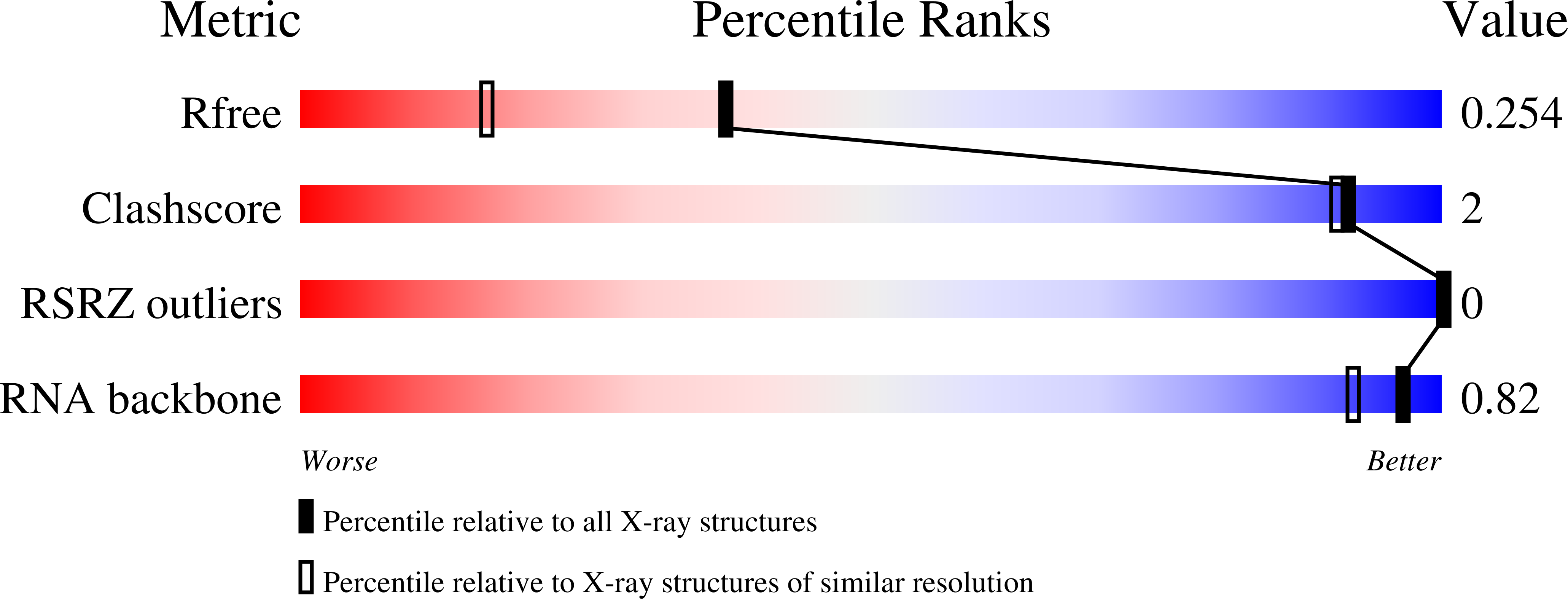
Resolution:
1.80 Å
R-Value Free:
0.24
R-Value Work:
0.21
Space Group:
P 31
Macromolecular Entities
Polymer Type:polyribonucleotide
Molecule:RNA (5'-R(*GP*CP*AP*GP*(AC4)P
Chain IDs:A, B, C, D, E, F
Chain Length:16
Number of Molecules:6
Biological Source:Homo sapiens
Ligand Molecules
Primary Citation
Synthesis of 2'-O,4'-C alpha-Dimethyl Ribonucleoside Analogs and Their Effects on RNA and Modulation of ADAR Editing.
Chemistry 32 e02958 e02958 (2026)
PMID: 41318945 DOI: 10.1002/chem.202502958

Abstact

Oligonucleotides capable of guiding adenosine deaminases acting on RNA (ADARs) to carry out therapeutic adenosine (A) to inosine (I) editing constitute a promising new class of nucleic acid therapeutics. However, our understanding of the impact of different chemical modifications at the various nucleotide positions in ADAR guide strands is limited. While ribose 2' modification is common in ADAR-directing guides, less is known about the impact of modification at the 4' position. Here we describe the synthesis of several 4'-Calpha-methyl and 2'-O, 4'-Calpha-dimethyl derivatives of adenosine, uridine, and cytidine and their incorporation into RNA. In addition, we show that these analogs maintain the base pairing selectivity of their parent nucleoside and modulate duplex thermal stability in an analog-dependent manner. High-resolution crystal structures of RNA duplexes bearing 4'-Calpha-methyl A or U showed that these analogs adopt a C3'-endo sugar pucker and project 4' substituents into the minor groove. Finally, we find that 2'-O, 4'-Calpha-dimethyluridine and 2'-O, 4'-Calpha-dimethyladenosine strategically positioned in ADAR guide strands can increase the selectivity of the editing reaction for target sequences with adjacent off-target adenosines. This work advances our understanding of the ADAR reaction mechanism and informs the design of ADAR guide strands with improved selectivity.

Legend

Protein

Chemical

Disease

Primary Citation of related structures
Feedback Form
Name
Email
Institute
Feedback