

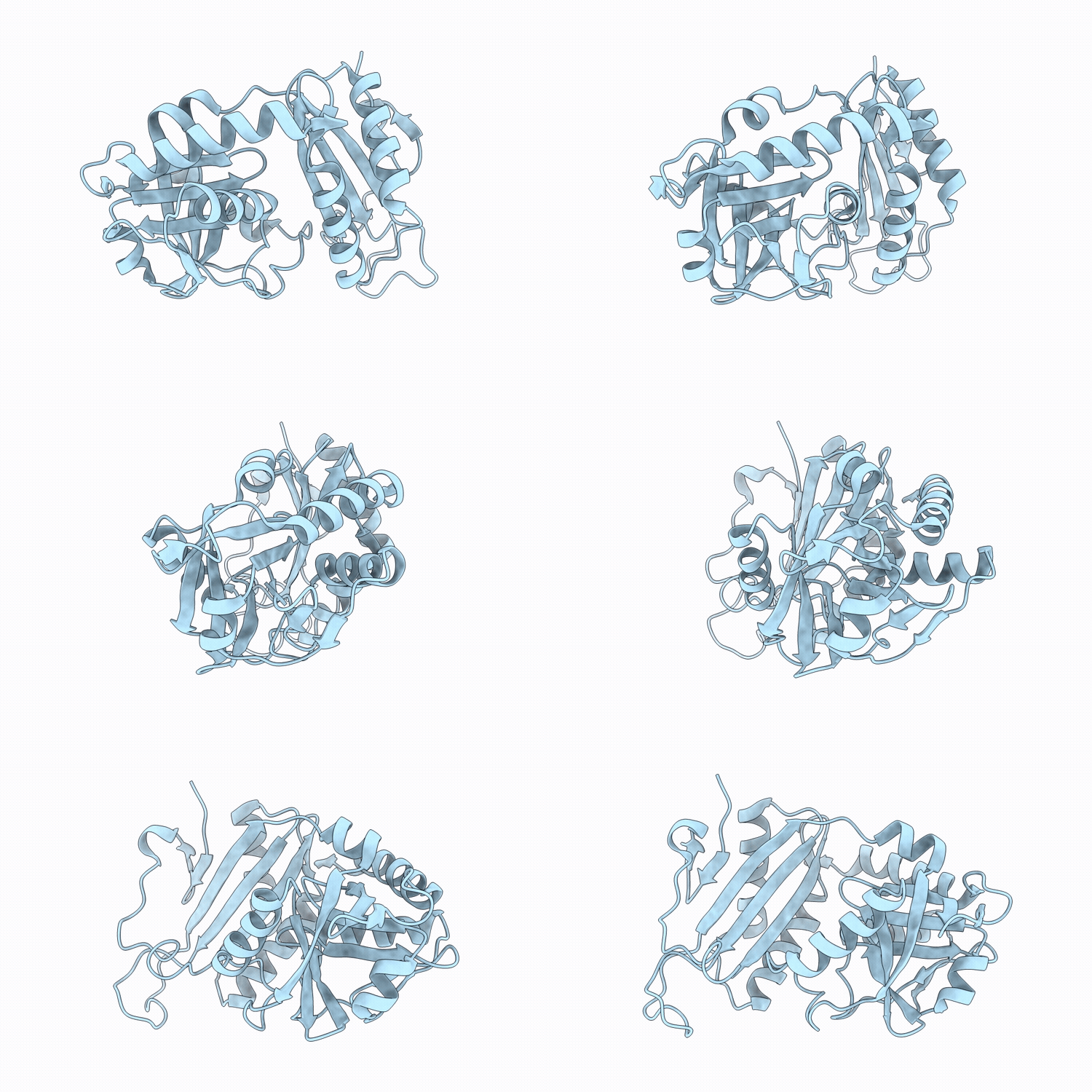
9PXS image
Deposition Date 2025-08-06
Release Date 2026-06-17
Last Version Date 2026-06-17
Entry Detail
PDB ID:
9PXS
Keywords:
Title:
Crystal Structure of Staphylococcus aureus D-alanine aminotransferase in complex with pyridoxal 5'-phosphate
Biological Source:
Source Organism(s):
Expression System(s):
Method Details:
Experimental Method:
Resolution:
2.94 Å
R-Value Free:
0.28
R-Value Work:
0.22
R-Value Observed:
0.22
Space Group:
P 41 21 2

Macromolecular Entities
Structures with similar UniProt ID
Protein Blast
Polymer Type:polypeptide(L)
Molecule:D-alanine aminotransferase
Gene (Uniprot):dat
Chain IDs:A
Chain Length:282
Number of Molecules:1
Biological Source:Staphylococcus aureus
Modified Residue
Compound ID Chain ID Parent Comp ID Details 2D Image
LLP A LYS modified residue
Ligand Molecules
Primary Citation
A S 180 F substitution in D-alanine aminotransferase confers resistance to beta-chloro-D-alanine in Staphylococcus aureus.
J.Biol.Chem. 301 110931 110931 (2025)
PMID: 41232672 DOI: 10.1016/j.jbc.2025.110931

Abstact

beta-lactam antibiotics that target the synthesis of bacterial cell wall peptidoglycan (PG) remain a cornerstone of antimicrobial chemotherapy. The activity of beta-lactams against methicillin-resistant Staphylococcus aureus (MRSA) can be enhanced by the alanine analog d-cycloserine (DCS), which blocks alanine racemase (Alr1) and d-alanine ligase (Ddl) and interferes with the supply of d-alanine for PG synthesis. Here, we report that another alanine analogue antibiotic, beta-chloro-d-alanine (BCDA), also interferes with the d-alanine pathway by targeting d-alanine aminotransferase (Dat), which converts pyruvate to d-alanine. A Dat S(180)F substitution, identified in a BCDA resistant MRSA mutant, resulted in reduced transaminase activity. X-ray crystallographic analysis of S. aureus Dat allowed structural modeling of the Dat-S(180)F variant, which revealed an active-site loop shift that altered PLP co-factor binding. Molecular docking analysis suggests that the S(180)F substitution promotes BCDA-PLP adduct dissociation via a mechanism that releases inactivated BCDA, thereby conferring resistance. These findings reveal a novel mechanism of BCDA resistance in S. aureus and the therapeutic potential of targeting Alr1 and Dat with DCS and BCDA, respectively, as part of an alternative treatment strategy for MRSA infections.

Legend

Protein

Chemical

Disease

Primary Citation of related structures
Feedback Form
Name
Email
Institute
Feedback