

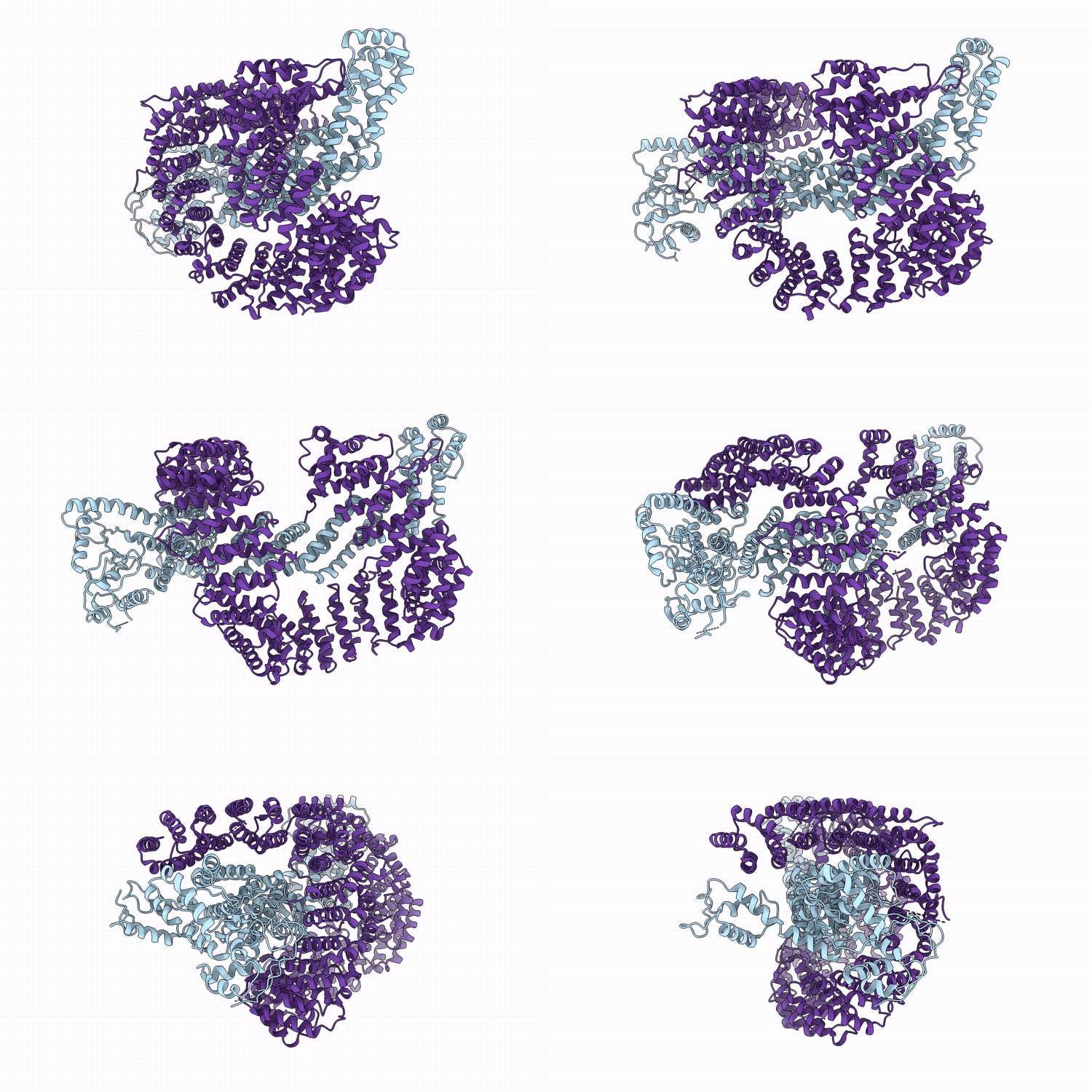
9PVH image
Deposition Date 2025-08-01
Release Date 2026-06-10
Last Version Date 2026-06-17
Entry Detail
PDB ID:
9PVH
Keywords:
Title:
Human Cullin-4 in complex with CAND2
Biological Source:
Source Organism(s):
Homo sapiens (Taxon ID: 9606)
Expression System(s):
Method Details:
Experimental Method:
Resolution:
4.38 Å
Aggregation State:
PARTICLE
Reconstruction Method:
SINGLE PARTICLE
Macromolecular Entities
Structures with similar UniProt ID
Protein Blast
Polymer Type:polypeptide(L)
Molecule:Cullin-4A
Gene (Uniprot):CUL4A
Chain IDs:A
Chain Length:726
Number of Molecules:1
Biological Source:Homo sapiens
Structures with similar UniProt ID
Protein Blast
Polymer Type:polypeptide(L)
Molecule:Cullin-associated NEDD8-disso
Gene (Uniprot):CAND2
Chain IDs:B (auth: C)
Chain Length:1247
Number of Molecules:1
Biological Source:Homo sapiens
Ligand Molecules
Primary Citation
CAND1 and CAND2 drive CUL4 substrate receptor exchange with largely comparable biochemical efficiency, unlike their relative effects on CUL1.
Structure 34 963 ? (2026)
PMID: 41864201 DOI: 10.1016/j.str.2026.02.015

Abstact

Cullin-RING ubiquitin ligases (CRLs) regulate diverse cellular processes by dynamically recruiting substrate receptors onto conserved cullin-RING scaffolds. CAND1 and CAND2 function as substrate receptor exchange factors for CRL1, but CAND2 displays reduced efficiency in CRL1 disassembly, exhibits tissue-specific expression, and shows distinct disease associations, raising questions about its function in other CRL subfamilies. Here, we define the regulatory roles of CAND1 and CAND2 in CRL4 remodeling. Using genetic perturbation, real-time kinetic analyses, and quantitative interaction proteomics, we show that both CAND proteins promote CRL4-mediated protein degradation and enhance the dynamic exchange of DDB1.DCAF substrate receptor modules, likely through conserved yet distinct structural features. In contrast to their differential efficiencies in CRL1 disassembly, CAND1 and CAND2 exhibit similar kinetic parameters and comparable exchange efficiencies across most of the CRL4 complexes. These findings establish CAND1 and CAND2 as bona fide CRL4 exchange factors and reveal biochemical distinctions between CRL4 and CRL1 regulation.

Legend

Protein

Chemical

Disease

Primary Citation of related structures
Feedback Form
Name
Email
Institute
Feedback