

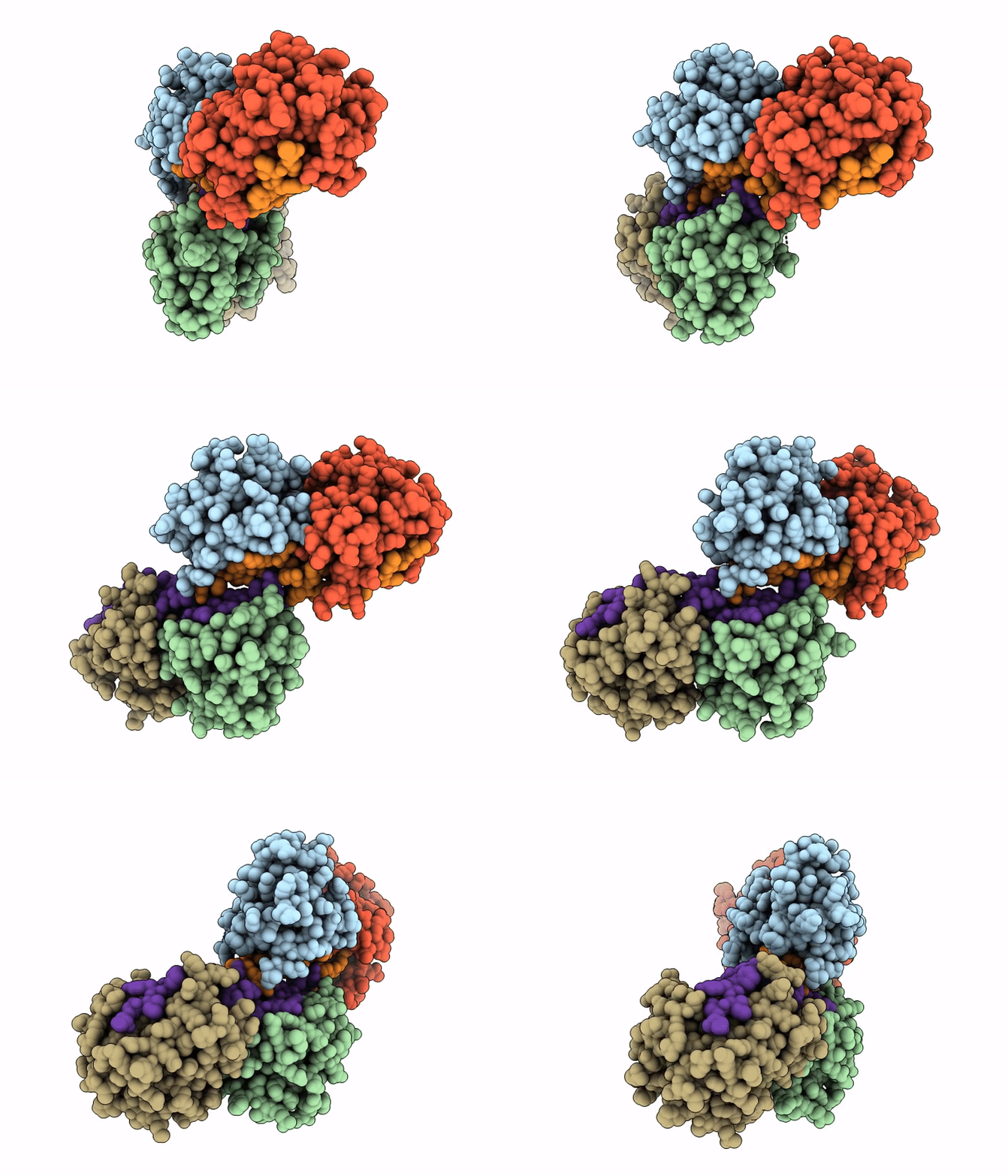
9PVG image
Deposition Date 2025-08-01
Release Date 2026-01-28
Last Version Date 2026-08-12
Entry Detail
PDB ID:
9PVG
Title:
Co-crystal structure of two CCM2 PTB domains bound to a KRIT1 peptide encompassing NPxF2 and NPxF3
Biological Source:
Source Organism(s):
Homo sapiens (Taxon ID: 9606)
Expression System(s):
Method Details:
Experimental Method:
Resolution:
3.00 Å
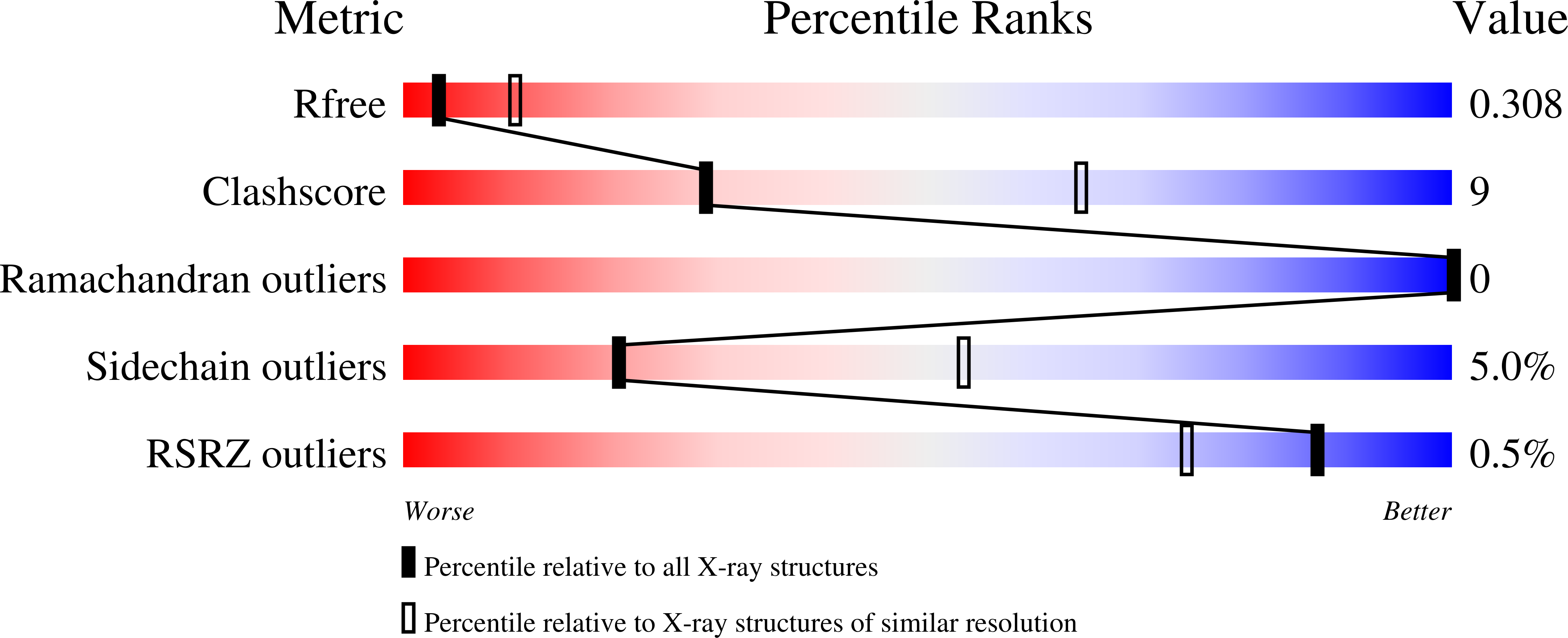
R-Value Free:
0.29
R-Value Work:
0.24
R-Value Observed:
0.24
Space Group:
P 1 21 1
Macromolecular Entities
Polymer Type:polypeptide(L)
Molecule:Malcavernin
Gene (Uniprot):CCM2
Chain IDs:A, B, C, F (auth: D)
Chain Length:180
Number of Molecules:4
Biological Source:Homo sapiens
Polymer Type:polypeptide(L)
Molecule:Krev interaction trapped prot
Gene (Uniprot):KRIT1
Chain IDs:D (auth: E), E (auth: F)
Chain Length:29
Number of Molecules:2
Biological Source:Homo sapiens
Ligand Molecules
Primary Citation
Dual recruitment of two CCM2 molecules to KRIT1 suppresses KLF4 expression.
Nat Commun 17 ? ? (2026)
PMID: 41688454 DOI: 10.1038/s41467-026-69595-7

Abstact

Regulated expression of Kruppel like factor (KLF) transcription factors is essential for normal maintenance of endothelial cells, but loss of either K-Rev interaction trapped 1 (KRIT1) or cerebral cavernous malformations 2 (CCM2) proteins results in significant over-expression of KLF4 protein, causing the cerebrovascular disorder, cerebral cavernous malformations. Here, combining knockdown and reconstitution in an endothelial cell line, with co-immunoprecipitation, biophysical analysis of purified proteins, and co-crystallography, we find that to restrain KLF4 expression, two CCM2 proteins must cluster on a single KRIT1, with the PTB domain of each CCM2 protein binding either the second or third NPxF motif within KRIT1. This clustering of two PTB domains to a single peptide reveals a previously unobserved mechanism for PTB domain recruitment to partner proteins. Overall, our data support a model where clustering of two CCM2 molecules to one KRIT1 is required for normal regulation of expression of KLF4 transcription factor.

Legend

Protein

Chemical

Disease

Primary Citation of related structures
Feedback Form
Name
Email
Institute
Feedback