

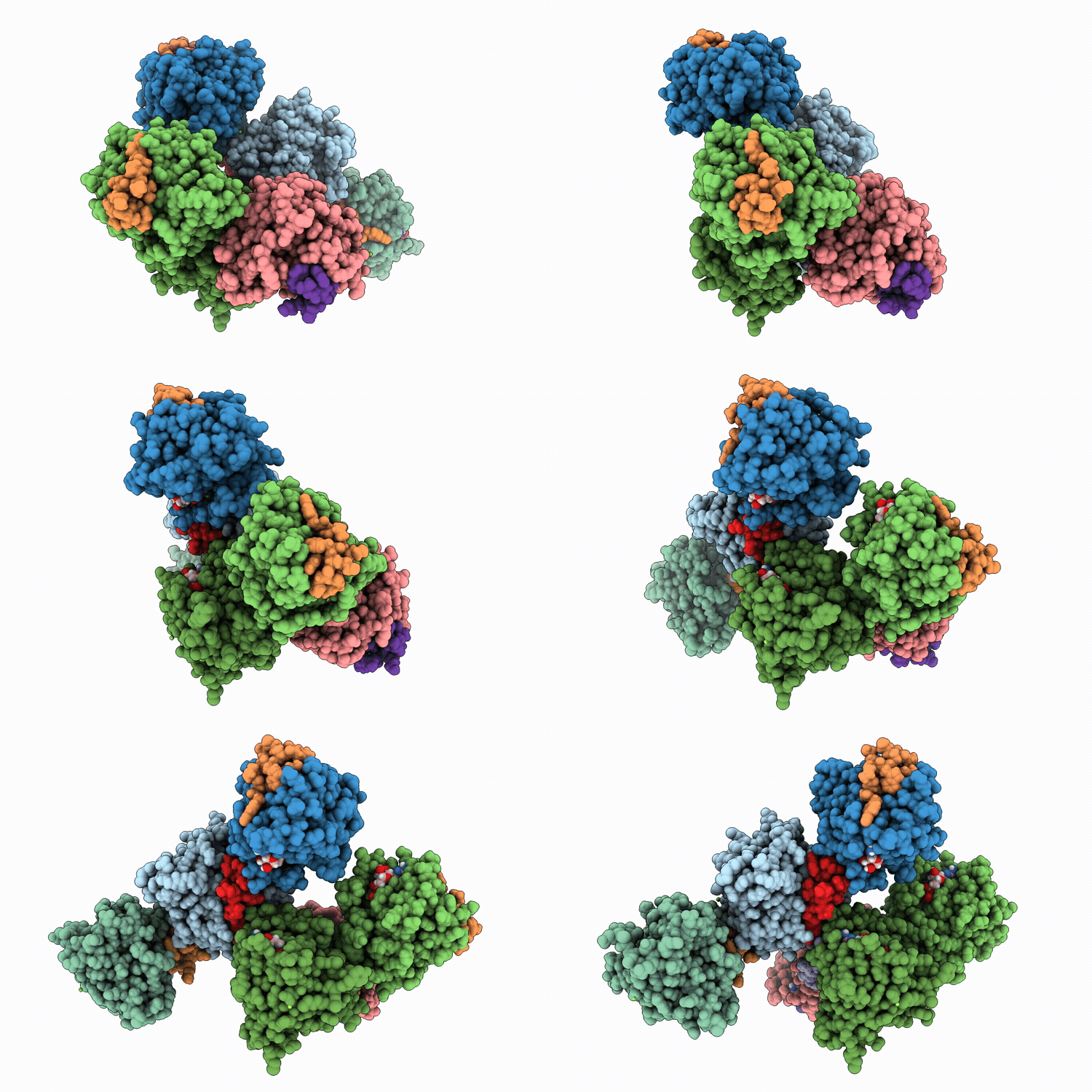
9PVF image
Deposition Date 2025-08-01
Release Date 2026-04-22
Last Version Date 2026-06-03
Entry Detail
PDB ID:
9PVF
Title:
KRAS complex with UM0152533 compound
Biological Source:
Source Organism(s):
Expression System(s):
Method Details:
Experimental Method:
Resolution:
2.00 Å
R-Value Free:
0.21
R-Value Work:
0.17
R-Value Observed:
0.17
Space Group:
P 41
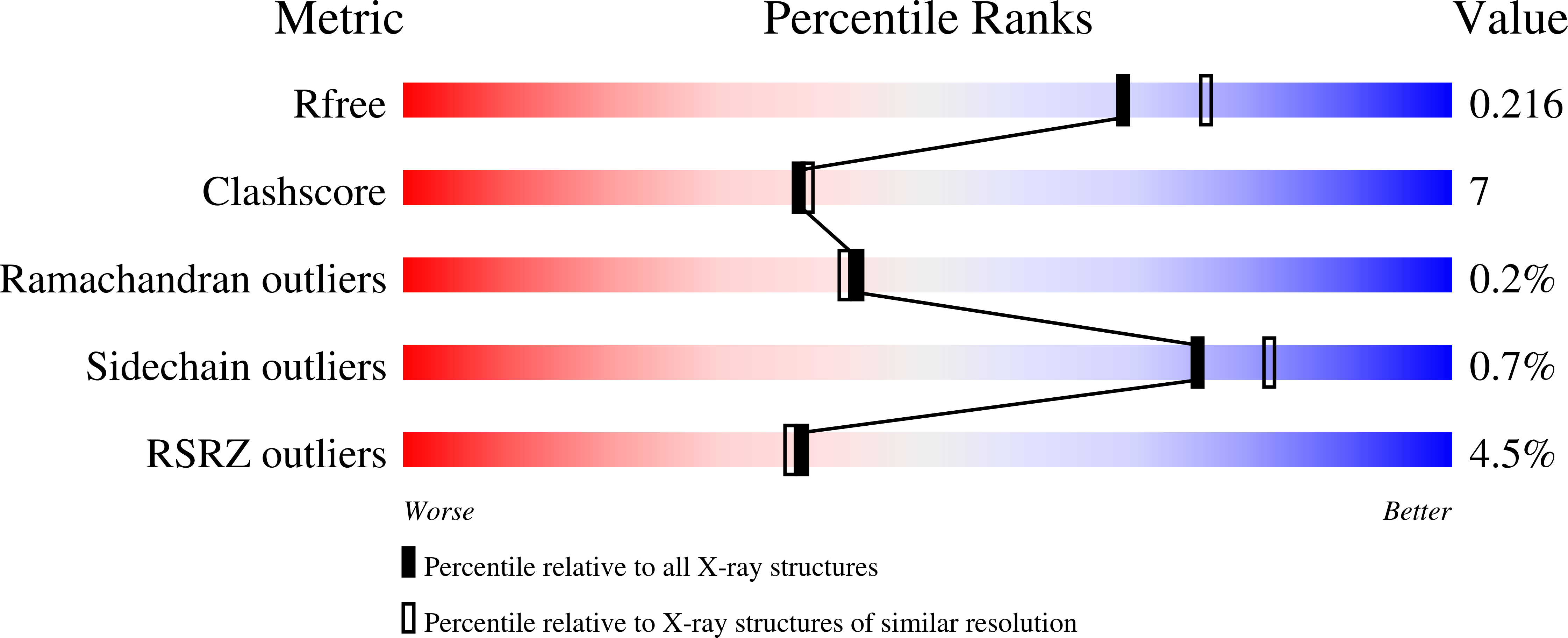
Macromolecular Entities
Structures with similar UniProt ID
Protein Blast
Polymer Type:polypeptide(L)
Molecule:GTPase KRas
Gene (Uniprot):KRAS
Chain IDs:A, B, C, D, E, F
Chain Length:166
Number of Molecules:6
Biological Source:Homo sapiens
Protein Blast
Polymer Type:polypeptide(L)
Molecule:UM0152533
Chain IDs:G (auth: I), H (auth: J), I (auth: K), J (auth: L), K (auth: M), L (auth: N)
Chain Length:11
Number of Molecules:6
Biological Source:synthetic construct
Primary Citation
Targeting the H/KRAS alpha 4-beta 6-alpha 5 Allosteric Lobe with Macrocyclic Peptides.
Acs Med.Chem.Lett. 17 1154 1162 (2026)
PMID: 42157834 DOI: 10.1021/acsmedchemlett.6c00078

Abstact

Despite therapeutic advances against RAS mutations in cancer, acquired resistance frequently arises. Several secondary mutations at the binding sites effectively confer resistance to both Switch-II inhibitors and cyclophilin-A molecular glues. This underscores the need for RAS inhibitors that engage alternative binding pockets or operate through novel mechanisms. Here, we report the design of 10-mer macrocyclic peptides that mimic the FG-loop of the NS1 monobody, which targets the allosteric alpha4-alpha5-beta6 surface of H/KRAS to disrupt RAS clustering and downstream signaling. These noncovalent inhibitors bind to H/KRAS with equivalent potencies, regardless of nucleotide state or the presence of oncogenic mutations (G12D, G12V, G13R, Q61K), and their binding site was confirmed by NMR and X-ray crystallography. Furthermore, covalent analogs targeting Cys118 were shown to label RAS in vitro and in complete cell lysates. Finally, we demonstrated that the key pharmacophores are connectable, providing a foundation for the development of smaller allosteric H/KRAS inhibitors.

Legend

Protein

Chemical

Disease

Primary Citation of related structures
Feedback Form
Name
Email
Institute
Feedback