

9PUW image
Deposition Date 2025-07-31
Release Date 2026-06-10
Last Version Date 2026-06-24
Entry Detail
PDB ID:
9PUW
Title:
Insulin Receptor bound to Ins-AC-S2
Biological Source:
Source Organism(s):
Homo sapiens (Taxon ID: 9606)
Expression System(s):
Method Details:
Experimental Method:
Resolution:
3.64 Å
Aggregation State:
PARTICLE
Reconstruction Method:
SINGLE PARTICLE
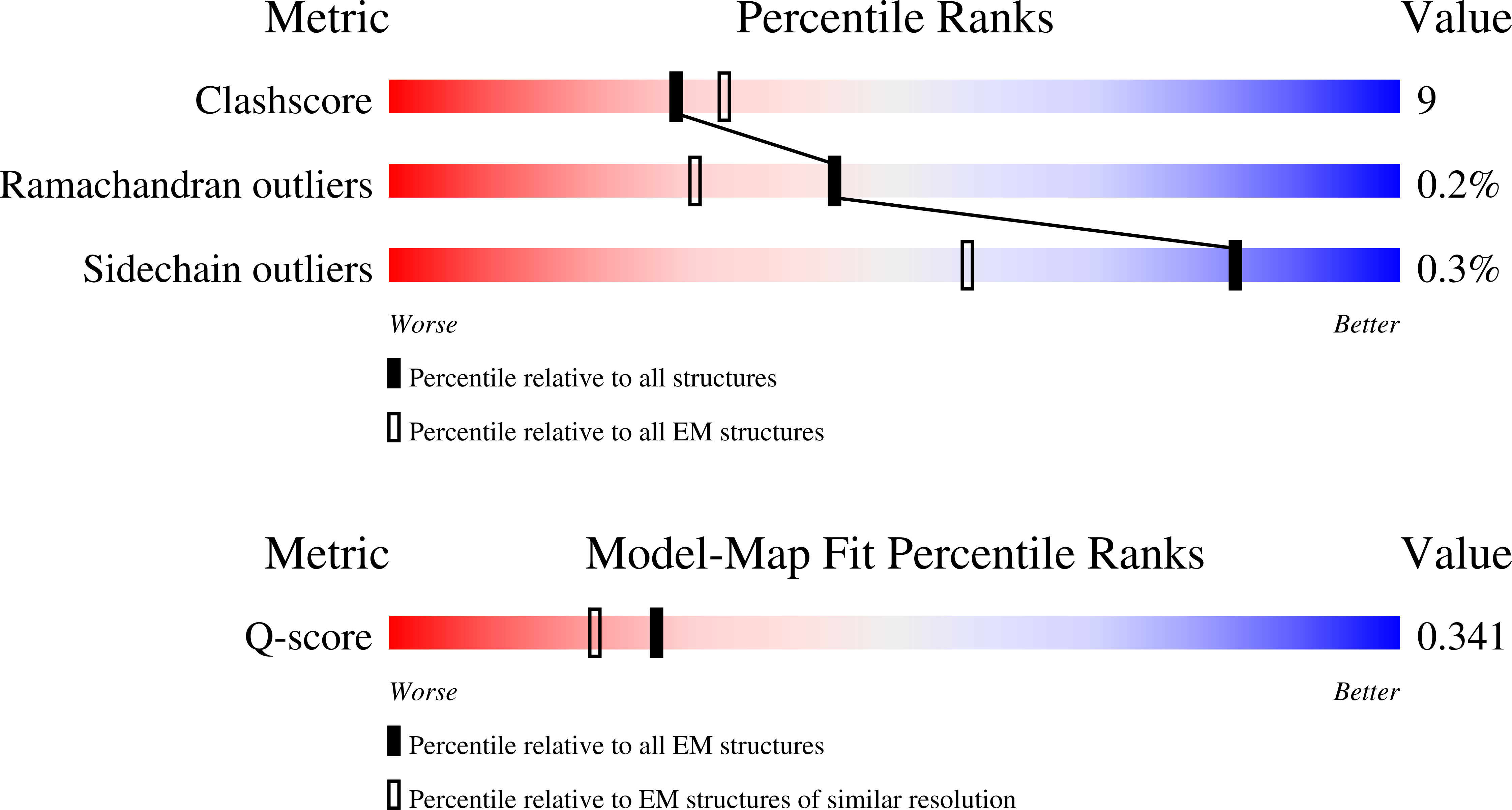
Macromolecular Entities
Structures with similar UniProt ID
Protein Blast
Polymer Type:polypeptide(L)
Molecule:Isoform Long of Insulin recep
Gene (Uniprot):INSR
Chain IDs:A, B, D (auth: M), E (auth: N)
Chain Length:960
Number of Molecules:4
Biological Source:Homo sapiens
Protein Blast
Polymer Type:polypeptide(L)
Molecule:Ins-AC-S2 chain A
Chain IDs:C, G (auth: Q)
Chain Length:51
Number of Molecules:2
Biological Source:Homo sapiens
Structures with similar UniProt ID
Protein Blast
Polymer Type:polypeptide(L)
Molecule:Insulin chain B
Gene (Uniprot):INS
Chain IDs:F (auth: P), H (auth: R)
Chain Length:29
Number of Molecules:2
Biological Source:Homo sapiens
Ligand Molecules
Primary Citation
Structural basis of insulin receptor antagonism by bivalent site 1-site 2 ligands S961 and Ins-AC-S2.
Nat Commun 17 ? ? (2026)
PMID: 42265100 DOI: 10.1038/s41467-026-73851-1

Abstact

Congenital hyperinsulinism is a rare genetic disease characterized by overproduction of insulin. One class of potential treatments is insulin receptor antagonists like S961 and Ins-AC-S2, which comprise segments for binding each of the two insulin-binding sites (site 1 and site 2) on the receptor. Notably, S597 - containing the same receptor binding segments as S961 but in the opposite order (site 2-site 1) - is an insulin receptor agonist rather than an antagonist. Using cryo-EM, we show how both S961 and Ins-AC-S2 bind an inactive conformation of the receptor, thereby explaining their antagonism. Furthermore, our structures reveal how agonist vs. antagonist activity is influenced by the order of site 1- and site 2-binding modules in bivalent ligands. Additionally, we show subtle differences between the receptor-binding mechanisms of S961 and Ins-AC-S2, which include displacement or engagement of alphaCT, and a binding interface between the Ins-AC-S2 insulin and the receptor FnIII-2/insert domains. These structural insights may inform development of next generation insulin receptor antagonists for treatment of congenital hyperinsulinism.

Legend

Protein

Chemical

Disease

Primary Citation of related structures
Feedback Form
Name
Email
Institute
Feedback