

9PRB image
Deposition Date 2025-07-23
Release Date 2026-03-25
Last Version Date 2026-04-08
Entry Detail
PDB ID:
9PRB
Title:
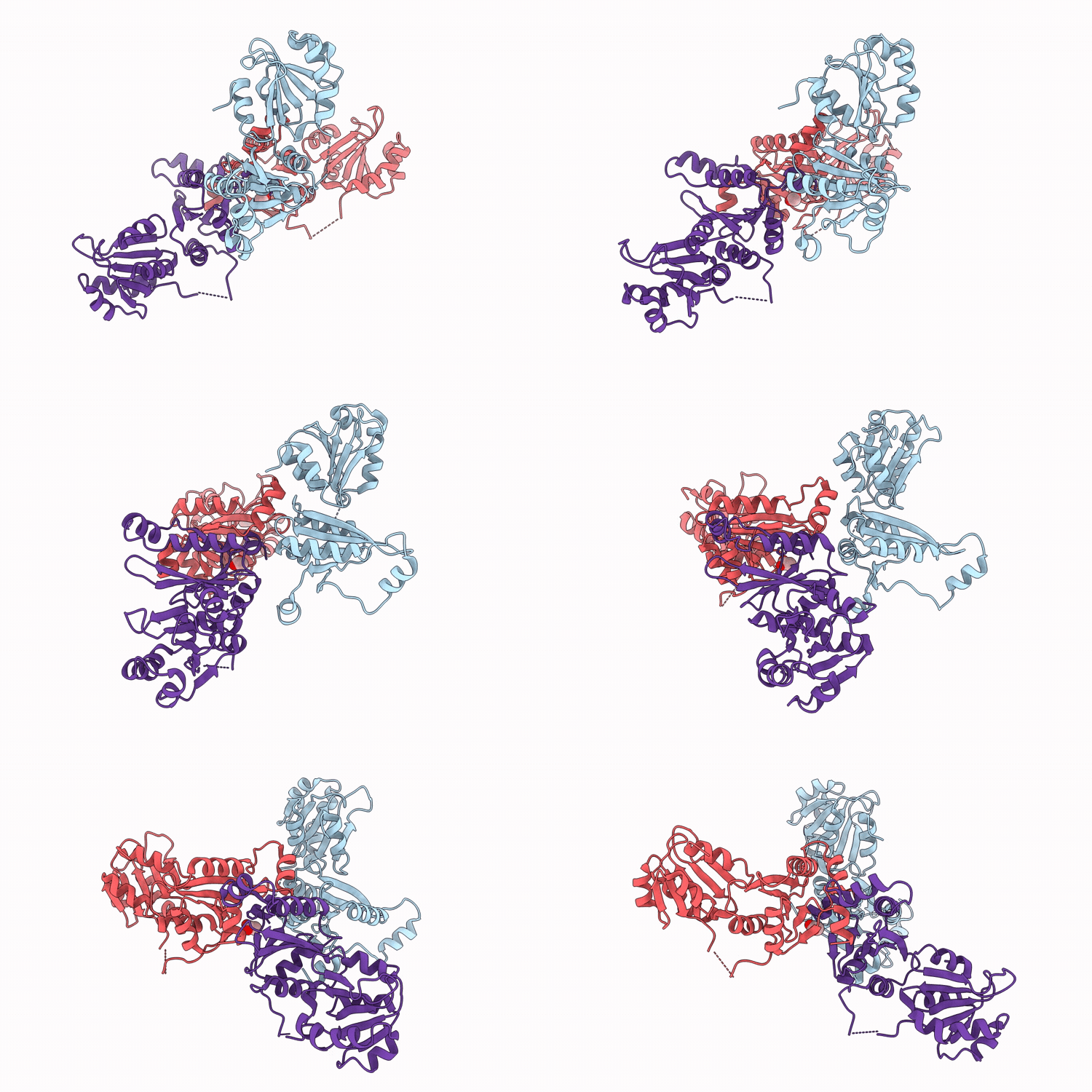
Crystal structure of the N-terminal domain of the A subunit of the Bacillus cereus GerI germinant receptor
Biological Source:
Source Organism(s):
Expression System(s):
Method Details:
Experimental Method:
Resolution:
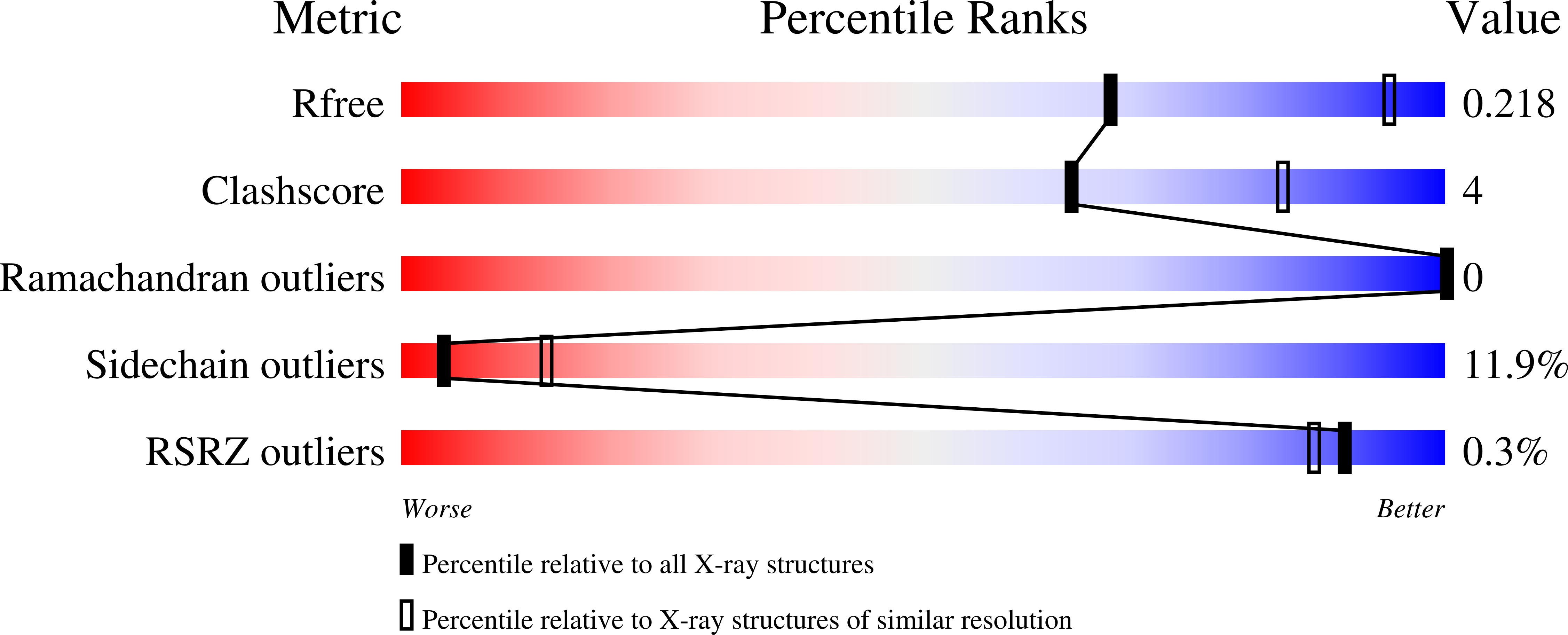
2.80 Å
R-Value Free:
0.22
R-Value Work:
0.19
R-Value Observed:
0.20
Space Group:
C 2 2 21
Macromolecular Entities
Structures with similar UniProt ID
Protein Blast
Polymer Type:polypeptide(L)
Molecule:Spore germination protein Ger
Chain IDs:A, B, C
Chain Length:260
Number of Molecules:3
Biological Source:Bacillus cereus ATCC 14579
Modified Residue
Compound ID Chain ID Parent Comp ID Details 2D Image
MSE A MET modified residue
Ligand Molecules
Primary Citation
Structural and functional analysis of the Bacillus cereus GerI inosine-responsive spore germinant receptor.
Mbio ? e0010826 e0010826 (2026)
PMID: 41891750 DOI: 10.1128/mbio.00108-26

Abstact

Bacterial endospores are metabolically dormant yet can rapidly return to vegetative growth upon exposure to nutrients through the process of germination. Spore germination is triggered by specific chemical nutrients binding to cognate germinant receptors (GRs) in spores' inner membrane. These GRs function as ligand-gated ion channels and are composed of clusters of at least three subunits. Given their central role in germinant recognition and discrimination, elucidating 3D structures of GR subunits is a key part of efforts to understand the mechanism(s) of spore germination. Here, we present the crystal structure of the N-terminal domain of the Bacillus cereus GerIA protein (GerIA(NTD)), a component of the inosine-responsive GerI GR. GerIA(NTD) adopts a conformation homologous to substrate-binding proteins in bacterial ABC transporters. NMR chemical shift perturbation and site-directed mutagenesis identified GerIA(NTD) residues potentially involved in inosine binding or critical for germinosome assembly in B. cereus spores, modification of which abrogated inosine-induced germination. Molecular modeling and mutagenesis additionally identified residues in the GerIB subunit forming germinant and cation-binding sites. GerQ, the second GR that contributes to inosine germination in B. cereus spores, was capable of complementing hypomorphic gerI alleles in several instances, demonstrating cooperative restoration of function despite being incapable of initiating germination to inosine in gerI null spores. Collectively, our results provide new insights into GR subunit function and the molecular basis of the B. cereus germinative response to inosine. IMPORTANCE: Many bacteria in the order Bacillota form spores that survive antibacterial treatments, including antibiotics. However, once these spores germinate and return to growth, they become vulnerable to antibiotics and other treatments. Notably, growing cells of some of these species cause food spoilage or serious diseases. Thus, there is much interest in spore germination, as stimulating this process would allow for easy spore eradication. This study has investigated precisely how spores' germinant receptors (GRs) recognize and respond to triggers of spore germination, such as inosine and L-alanine. Using a combination of structural biology, computational modeling, and functional assays with targeted GR mutations, our work uncovered new insights into GR function and the initiation of germination. These findings not only advance our understanding of a critical biological process but also provide new directions for spore control strategies.

Legend

Protein

Chemical

Disease

Primary Citation of related structures
Feedback Form
Name
Email
Institute
Feedback