

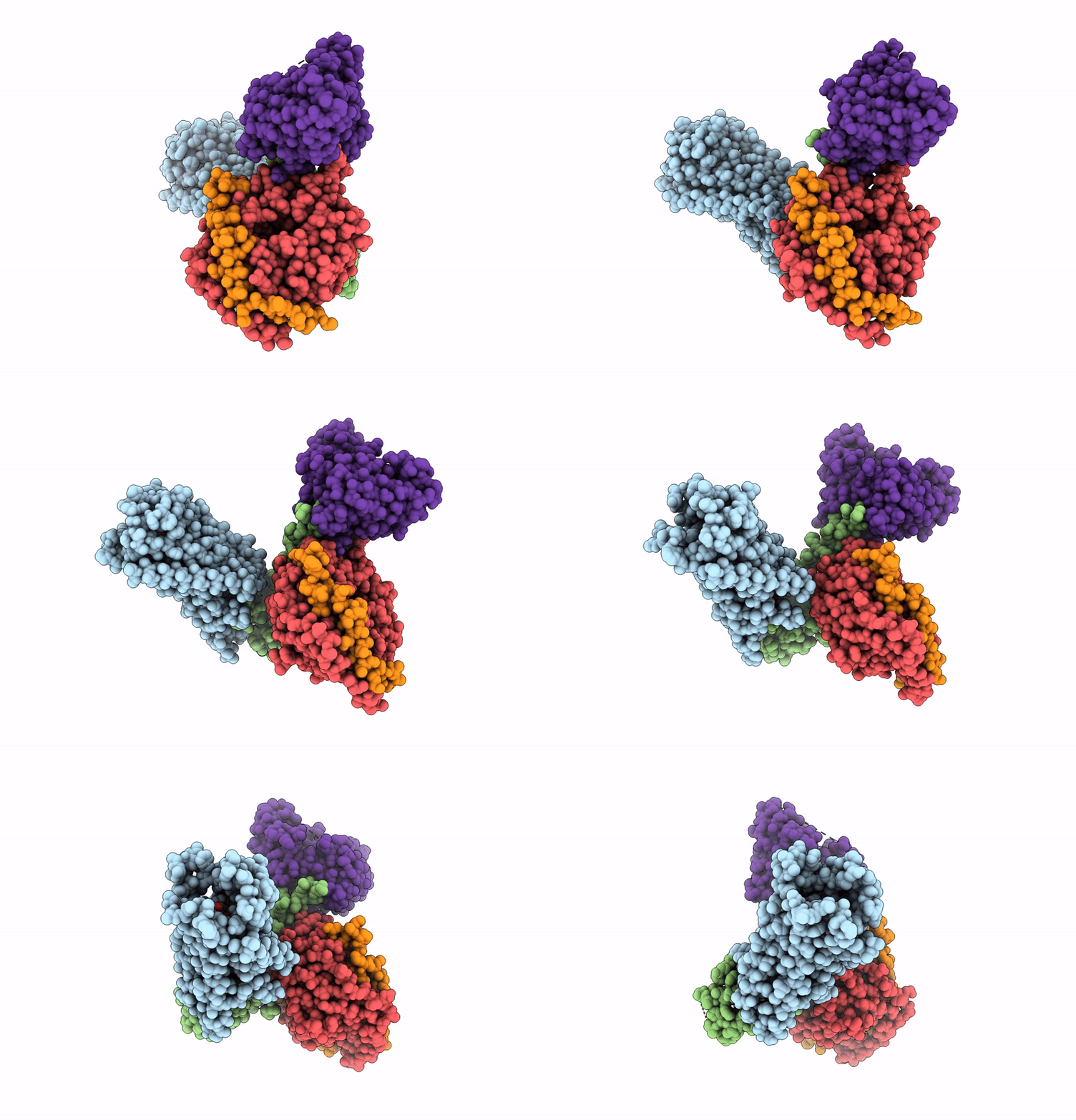
9PPX image
Deposition Date 2025-07-22
Release Date 2026-03-04
Last Version Date 2026-04-08
Entry Detail
PDB ID:
9PPX
Title:
CryoEM structure of delta opioid receptor bound to G proteins and naltrexone
Biological Source:
Source Organism(s):
Homo sapiens (Taxon ID: 9606)
Mus musculus (Taxon ID: 10090)
Expression System(s):
Method Details:
Experimental Method:
Resolution:
3.04 Å
Aggregation State:
PARTICLE
Reconstruction Method:
SINGLE PARTICLE
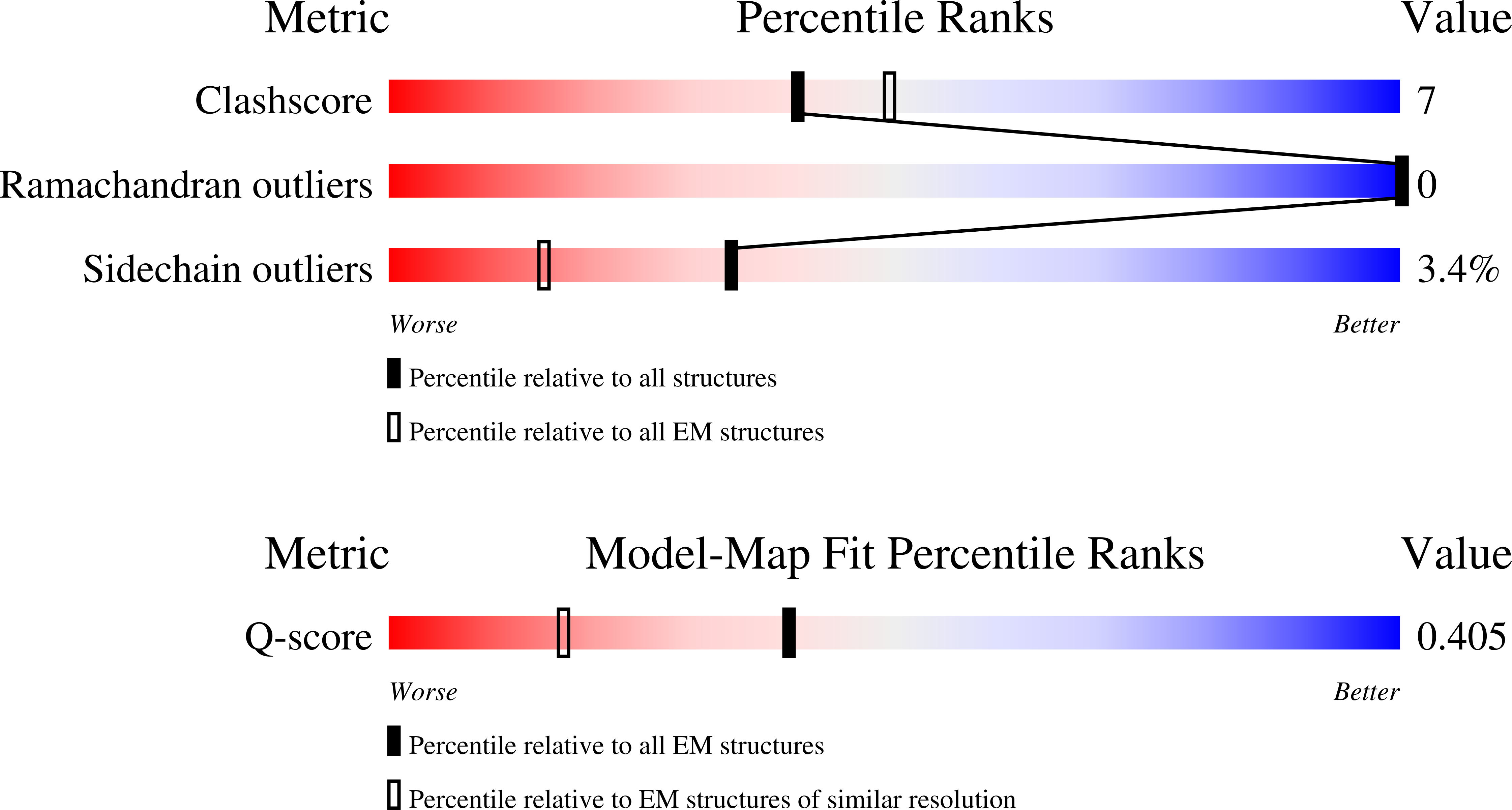
Macromolecular Entities
Structures with similar UniProt ID
Protein Blast
Polymer Type:polypeptide(L)
Molecule:Delta-type opioid receptor
Gene (Uniprot):OPRD1
Chain IDs:A
Chain Length:303
Number of Molecules:1
Biological Source:Homo sapiens
Structures with similar UniProt ID
Protein Blast
Polymer Type:polypeptide(L)
Molecule:Guanine nucleotide-binding pr
Gene (Uniprot):GNAI1
Mutagens:S47N, G203A, E245A, A326S
Chain IDs:B
Chain Length:354
Number of Molecules:1
Biological Source:Homo sapiens
Structures with similar UniProt ID
Protein Blast
Polymer Type:polypeptide(L)
Molecule:Guanine nucleotide-binding pr
Gene (Uniprot):GNB1
Chain IDs:C
Chain Length:340
Number of Molecules:1
Biological Source:Homo sapiens
Structures with similar UniProt ID
Protein Blast
Polymer Type:polypeptide(L)
Molecule:Guanine nucleotide-binding pr
Gene (Uniprot):GNG2
Chain IDs:D
Chain Length:71
Number of Molecules:1
Biological Source:Homo sapiens
Protein Blast
Polymer Type:polypeptide(L)
Molecule:ScFv16 protein
Chain IDs:E
Chain Length:251
Number of Molecules:1
Biological Source:Mus musculus
Ligand Molecules
Primary Citation
Mechanistic insights into the therapeutic properties of delta opioid receptor.
Sci Adv 12 eaeb6737 eaeb6737 (2026)
PMID: 41880505 DOI: 10.1126/sciadv.aeb6737

Abstact

The delta opioid receptor (DOR) is a promising target for treating pain, anxiety, and depression, yet no DOR-based drugs have reached the clinic. Here, we examine how ligands with varying therapeutic properties modulate DOR function. While full agonists rapidly internalize the receptor, partial agonists show a slower rate of internalization, and antagonists increase cell-surface DOR levels. High-resolution structures of ligand-bound DOR-G(i1) complexes, including those with antagonists engaged, reveal key interactions that account for DOR ligand selectivity, potency, and efficacy. Single-molecule fluorescence resonance energy transfer studies show that DOR dynamically samples three distinct states (active, obligate preactive, and inactive), and transition rates are tuned by both ligand efficacy and G protein coupling. The endogenous agonist, met-enkephalin, not only stabilizes the active-state conformation but also catalyzes transitions between the active and inactive states. These results reveal how ligand-specific interactions and receptor dynamics can govern pharmacological profiles and provide a framework for developing DOR-targeted therapeutics.

Legend

Protein

Chemical

Disease

Primary Citation of related structures
Feedback Form
Name
Email
Institute
Feedback