

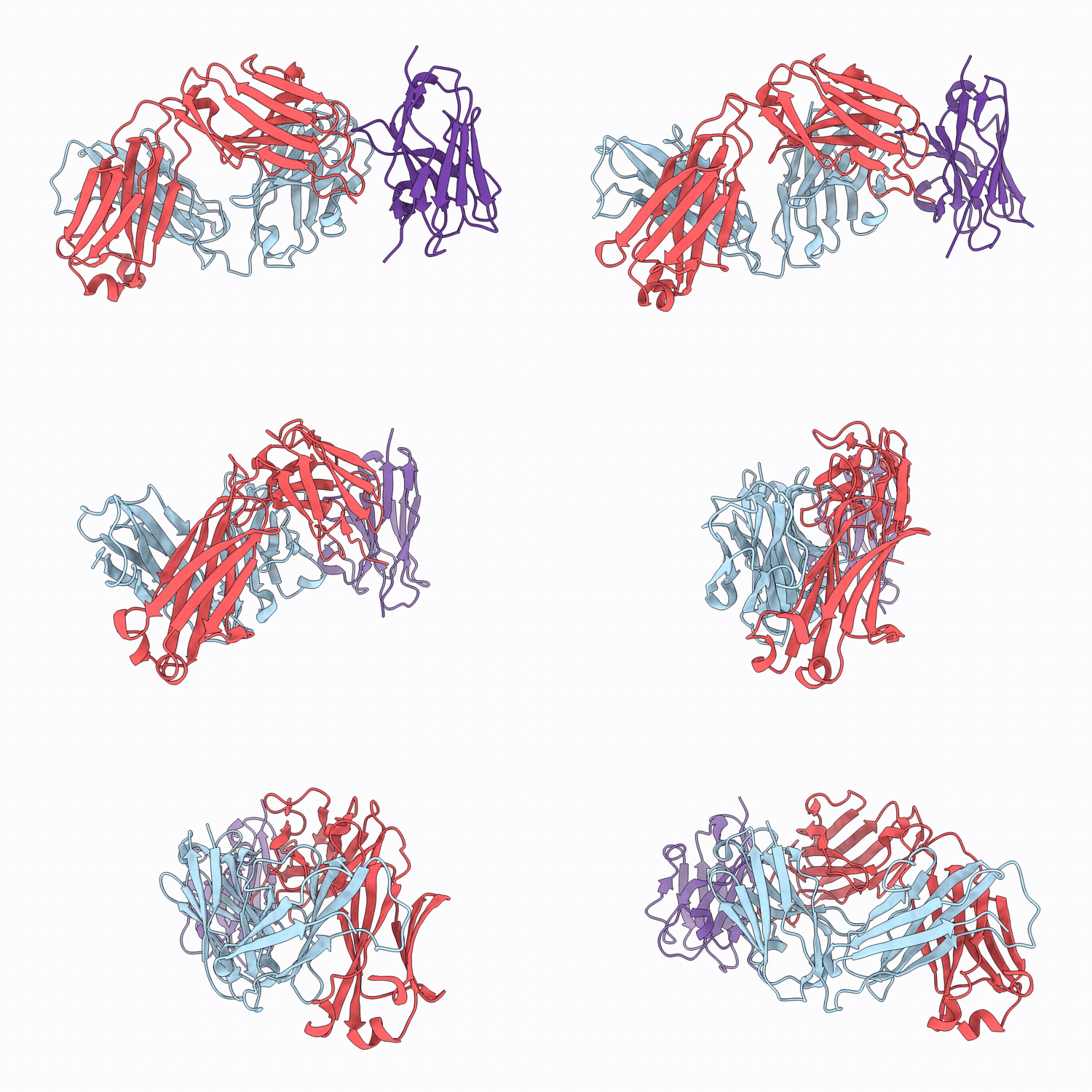
9PMT image
Deposition Date 2025-07-18
Release Date 2026-05-06
Last Version Date 2026-05-20
Entry Detail
PDB ID:
9PMT
Keywords:
Title:
Structure of an anti-VHH fab fragment bound to nanobody Nb33
Biological Source:
Source Organism(s):
Oryctolagus cuniculus (Taxon ID: 9986)
Lama glama (Taxon ID: 9844)
Expression System(s):
Method Details:
Experimental Method:
Resolution:
2.26 Å
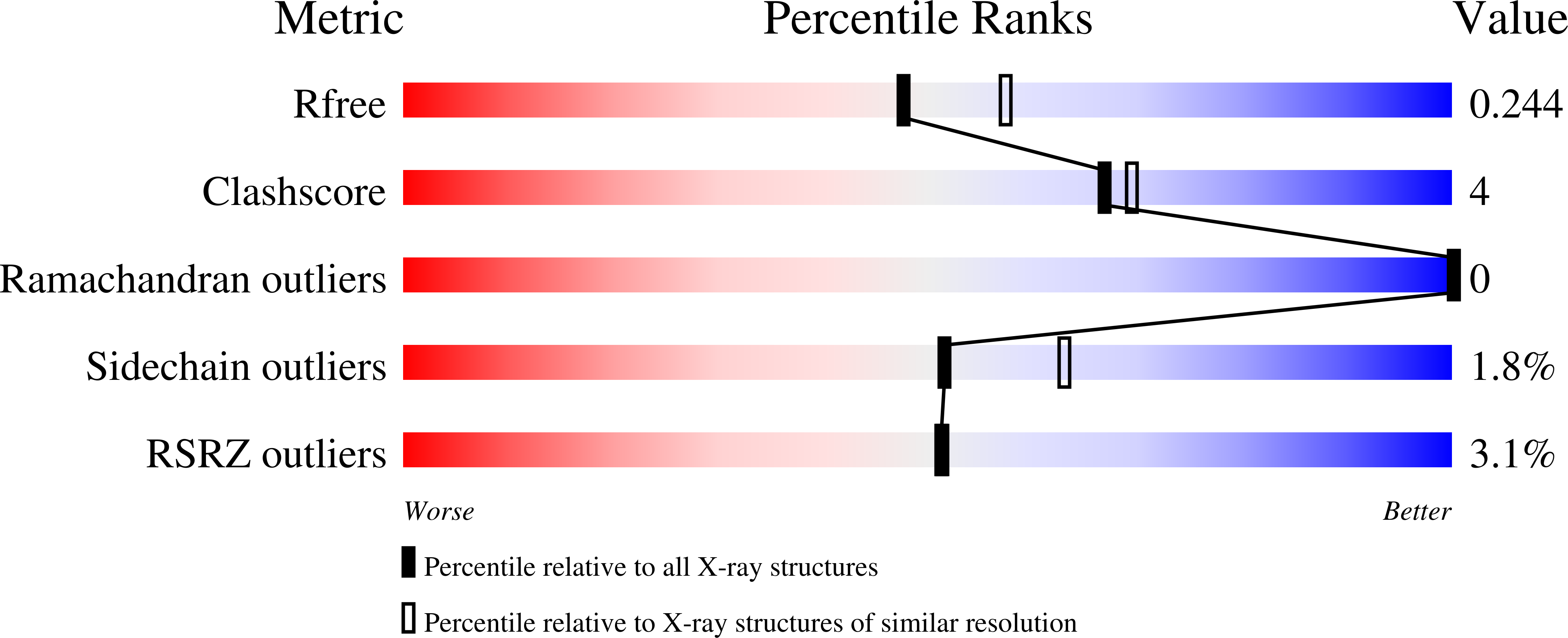
R-Value Free:
0.24
R-Value Work:
0.20
R-Value Observed:
0.20
Space Group:
P 21 21 21
Macromolecular Entities
Protein Blast
Polymer Type:polypeptide(L)
Molecule:Anti-VHH fab Heavy Chain
Chain IDs:A (auth: H)
Chain Length:236
Number of Molecules:1
Biological Source:Oryctolagus cuniculus
Protein Blast
Polymer Type:polypeptide(L)
Molecule:Anti-VHH fab Light Chain
Chain IDs:B (auth: L)
Chain Length:234
Number of Molecules:1
Biological Source:Oryctolagus cuniculus
Protein Blast
Polymer Type:polypeptide(L)
Molecule:Nanobody Nb33
Chain IDs:C (auth: N)
Chain Length:136
Number of Molecules:1
Biological Source:Lama glama
Primary Citation
Hypervariable loop profiling decodes sequence determinants of antibody stability.
Nat.Struct.Mol.Biol. ? ? ? (2026)
PMID: 42062516 DOI: 10.1038/s41594-026-01804-9

Abstact

Antibody folding and aggregation are major challenges in the development of relevant reagents and therapeutics. Antibodies face a biophysical trade-off; the immense diversity in complementarity-determining regions (CDRs), which is crucial for broad antigen recognition, comes at the cost of folding stability. How CDR sequences influence antibody folding remains poorly understood because of their sequence diversity and lack of large-scale data. Here we develop a high-throughput 'deep loop profiling' approach to quantify folding fitness across millions of diverse CDRs. Machine learning models trained on this dataset predict folding propensity directly from sequence and identify interpretable residue-level rules that reveal CDR1 and CDR2 as key folding determinants. Using these insights, we rescue two unstable nanobodies, including an aggregation-prone SARS-CoV-2 binder and a G-protein-coupled receptor-targeting intrabody, and build next-generation synthetic libraries enriched for biophysically optimized nanobodies. This approach provides a scalable framework for understanding and engineering folding competence in antibody-based scaffolds.

Legend

Protein

Chemical

Disease

Primary Citation of related structures
Feedback Form
Name
Email
Institute
Feedback