

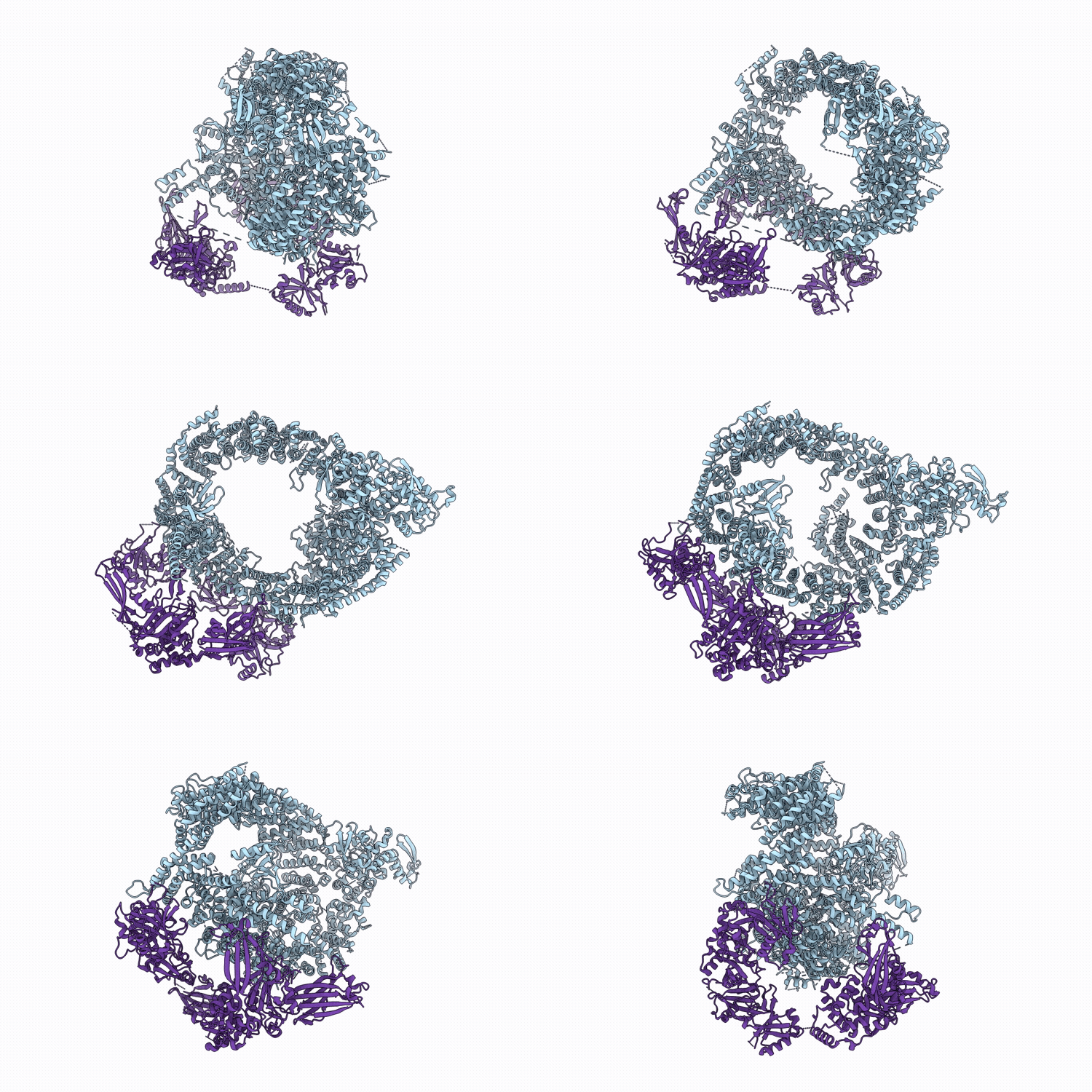
9PLR image
Deposition Date 2025-07-16
Release Date 2026-07-22
Last Version Date 2026-09-30
Entry Detail
PDB ID:
9PLR
Keywords:
Title:
CryoEM reconstruction of HUWE1-USP7 complex in the closed state
Biological Source:
Source Organism(s):
Homo sapiens (Taxon ID: 9606)
Expression System(s):
Method Details:
Experimental Method:
Resolution:
2.88 Å
Aggregation State:
PARTICLE
Reconstruction Method:
SINGLE PARTICLE
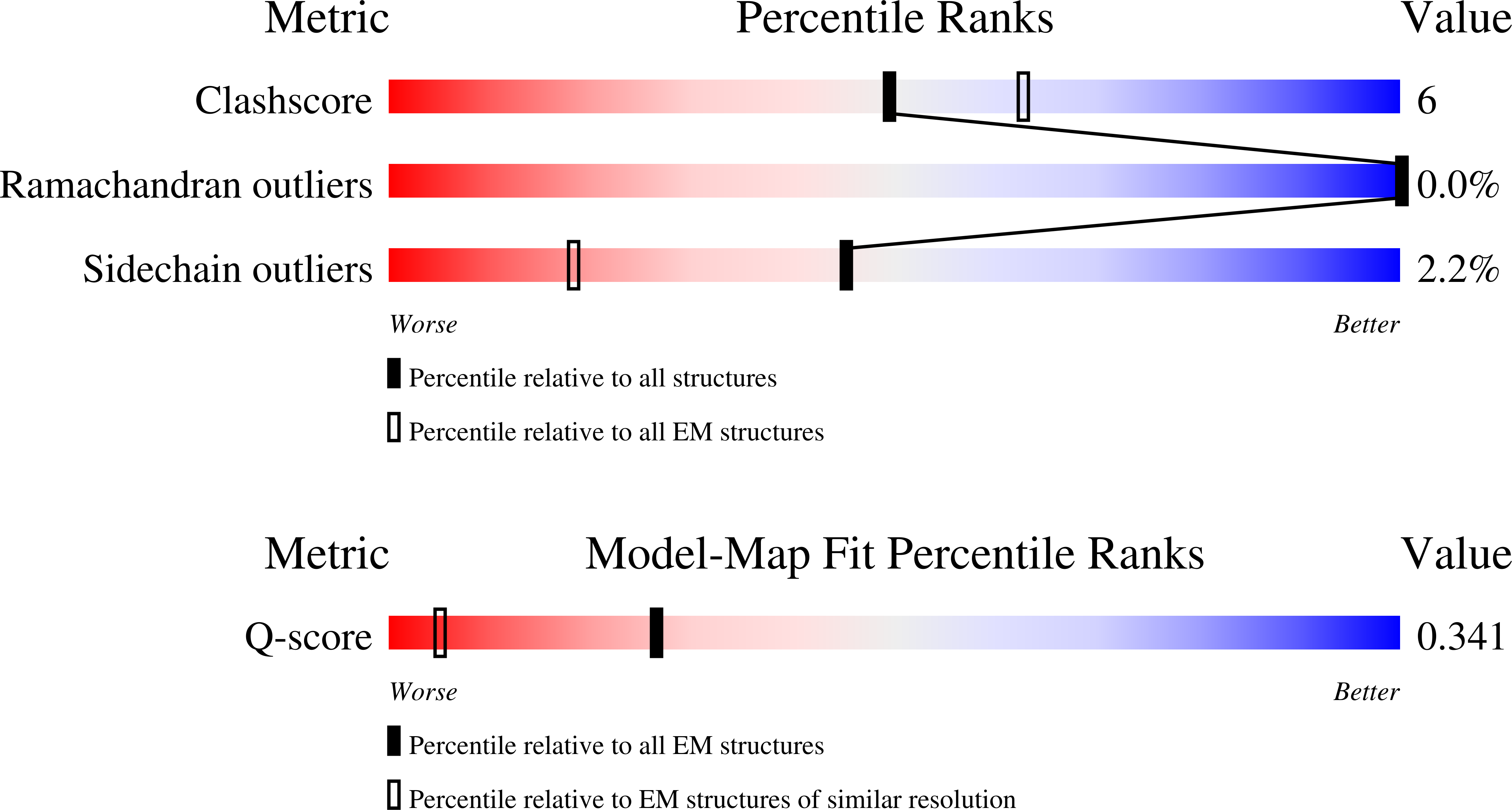
Macromolecular Entities
Polymer Type:polypeptide(L)
Molecule:E3 ubiquitin-protein ligase H
Gene (Uniprot):HUWE1
Chain IDs:A
Chain Length:0
Number of Molecules:1
Biological Source:Homo sapiens
Polymer Type:polypeptide(L)
Molecule:Ubiquitin carboxyl-terminal h
Gene (Uniprot):USP7
Chain IDs:B (auth: C)
Chain Length:0
Number of Molecules:1
Biological Source:Homo sapiens
Ligand Molecules
Primary Citation
Molecular mechanism of HUWE1-HAPSTR1-USP7-mediated ubiquitin chain amplification on nuclear proteins.
Mol.Cell 86 3803 3821.e17 (2026)
PMID: 42753704 DOI: 10.1016/j.molcel.2026.08.016

Abstact

Rapid protein turnover is essential for cellular stress adaptation. HUWE1 (HECT, UBA, and WWE domain containing 1), a large HECT-type E3 ligase, regulates many short-lived stress-responsive proteins, yet the mechanisms underlying its substrate selectivity remain unclear. Here, we reveal that HUWE1 functions as a ubiquitin chain amplifier that captures pre-ubiquitinated substrates and amplifies the degradation signal by assembling long ubiquitin chains containing K11-K48 branch points, a process regulated by its partners HUWE1-associated protein stress response 1 (HAPSTR1) and USP7 (ubiquitin-specific-processing protease 7). Structural and biochemical analyses show that HAPSTR1 engages HUWE1's ubiquitin-binding motifs to drive nuclear import and modulate substrate recruitment. A cryo-EM structure of the HUWE1-USP7 complex reveals a bidirectional regulatory mechanism: HUWE1 activates USP7's catalytic activity, while USP7 modulates HUWE1 conformational states. Global proteomic analyses demonstrate that this axis drives extensive remodeling of the short-lived nuclear proteome. These findings establish the HUWE1-HAPSTR1-USP7 complex as a key ubiquitin code modifier, providing a molecular rationale for HUWE1 dysregulation in neurodevelopmental disorders and cancer.

Legend

Protein

Chemical

Disease

Primary Citation of related structures
Feedback Form
Name
Email
Institute
Feedback