

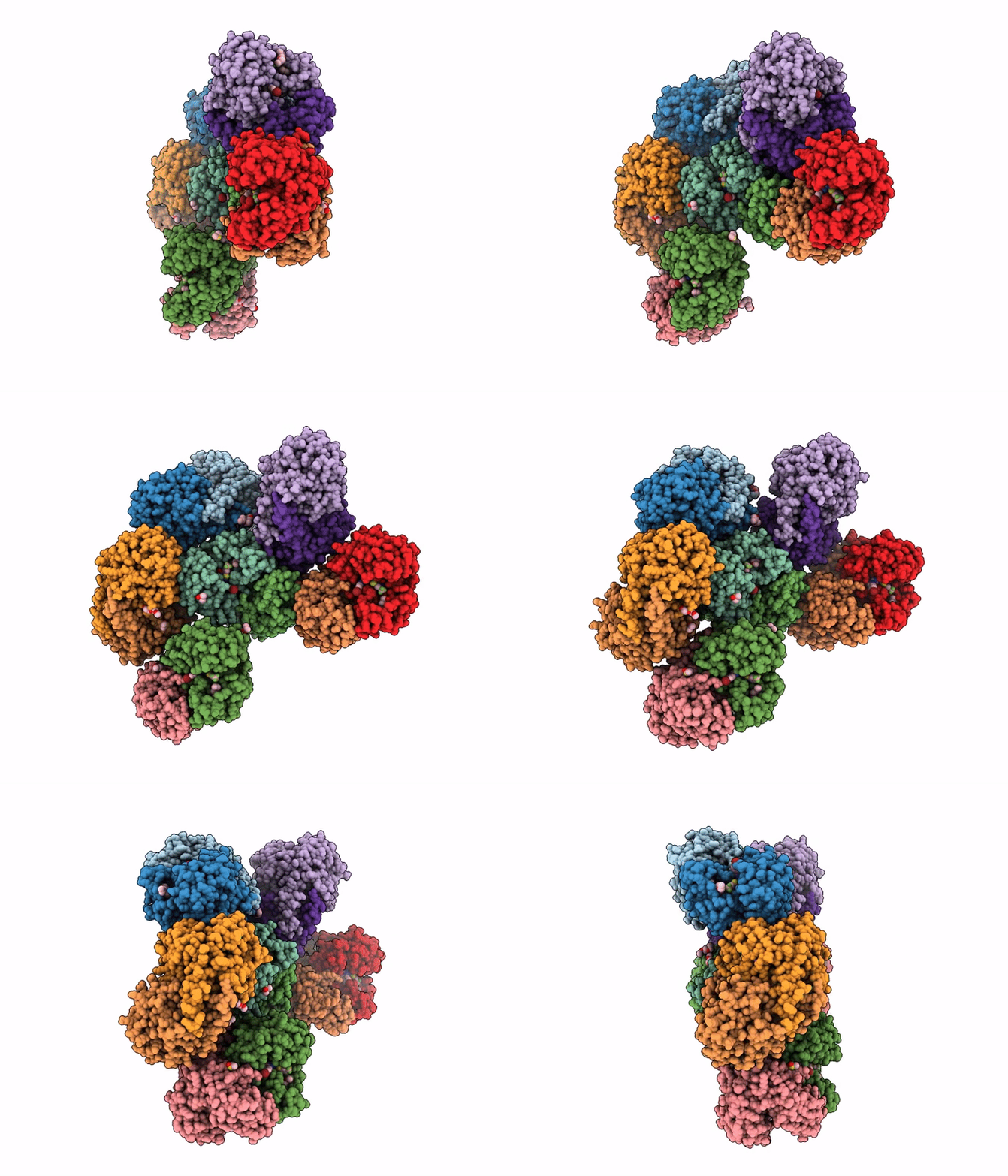
9PL0 image
Deposition Date 2025-07-15
Release Date 2026-01-28
Last Version Date 2026-03-11
Entry Detail
PDB ID:
9PL0
Keywords:
Title:
The structure of the Fusobacterium nucleatum Enoyl-Acyl Carrier Protein Reductase (FabK) bound to an inhibitor
Biological Source:
Source Organism(s):
Expression System(s):
Method Details:
Experimental Method:
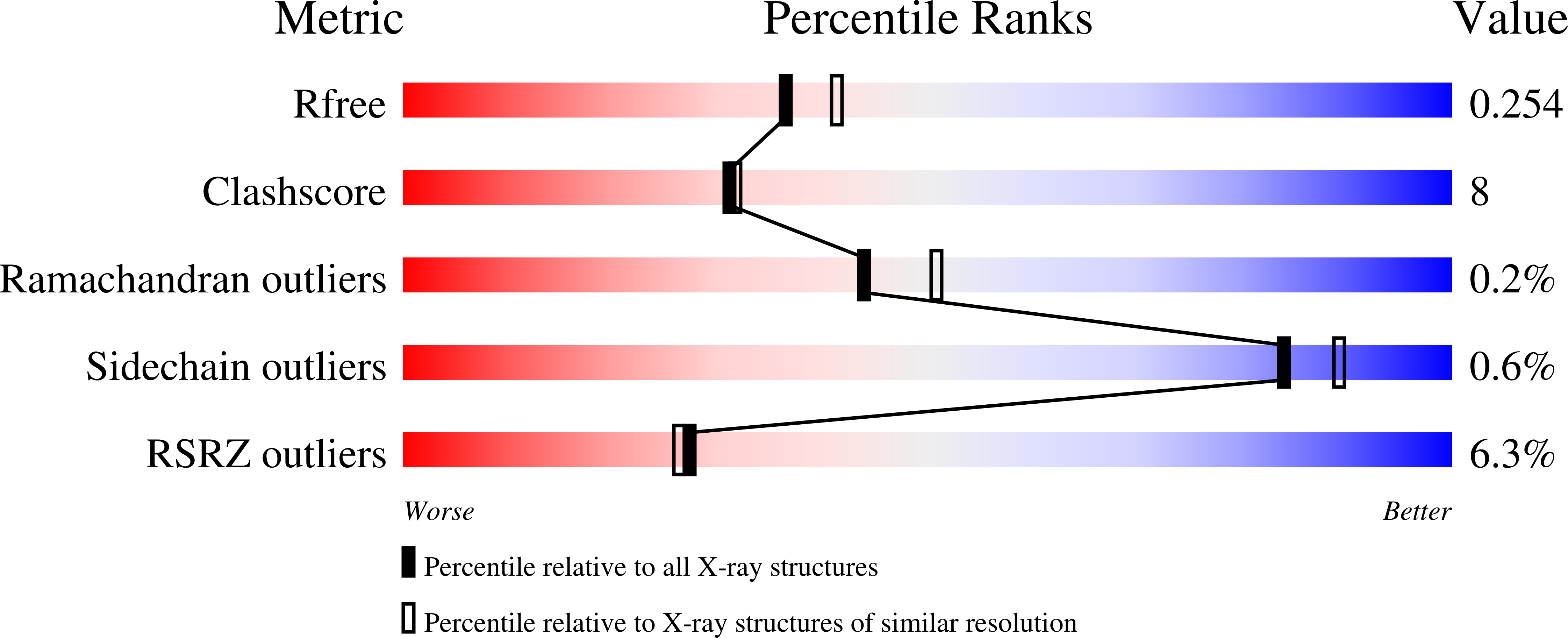
Resolution:
2.25 Å
R-Value Free:
0.25
R-Value Work:
0.21
R-Value Observed:
0.21
Space Group:
P 1 21 1
Macromolecular Entities
Structures with similar UniProt ID
Protein Blast
Polymer Type:polypeptide(L)
Molecule:Enoyl-[acyl-carrier-protein]
Gene (Uniprot):C7Y58_03945
Chain IDs:A, B, C, D, E, F, G (auth: J), H (auth: G), I (auth: H), J (auth: I), K, L
Chain Length:338
Number of Molecules:12
Biological Source:Fusobacterium nucleatum
Primary Citation
Structural and Biochemical Characterization of Fusobacterium nucleatum Enoyl-ACP Reductase II (FabK) Reveals the Basis for Bacterial Species-Specific Inhibition.
Acs Bio Med Chem Au 6 44 55 (2026)
PMID: 41726333 DOI: 10.1021/acsbiomedchemau.5c00199

Abstact

Fusobacterium nucleatum is a Gram-negative anaerobic bacterium ubiquitous in the oral cavity and increasingly recognized for its involvement in diverse clinical conditions, including periodontal disease, inflammatory bowel disease, premature birth, and several forms of cancer. These associations highlight the need for narrow-spectrum antibacterial agents directed against F. nucleatum to avoid disruption of beneficial microflora and limit the rise of antibiotic resistance. Recent studies have identified the fusobacterial fatty acid synthesis pathway (FAS-II) enzyme, enoyl-acyl carrier protein (ACP) reductase, FnFabK, as an essential and promising target for selective antibacterial intervention. However, there is a lack of detailed structural information, which has hindered the validation of FnFabK's druggability and the discovery of new inhibitors. Here, we present a comprehensive characterization of FnFabK, including its cocrystal structure solved at 2.25 A resolution and its biochemical and biophysical interactions with a series of potent small-molecule inhibitors. Our analyses revealed that these inhibitors display low to submicromolar activity against FnFabK, with notable selectivity and differential activity when tested against FabK homologues from other bacterial pathogens. Importantly, the unique structural features of the FnFabK active site, elucidated through these crystallographic studies, provide a mechanistic basis for species-specific inhibition. These findings not only validate FnFabK as a druggable target but also furnish critical insights into the design of next-generation narrow-spectrum antibacterial agents.

Legend

Protein

Chemical

Disease

Primary Citation of related structures
Feedback Form
Name
Email
Institute
Feedback