

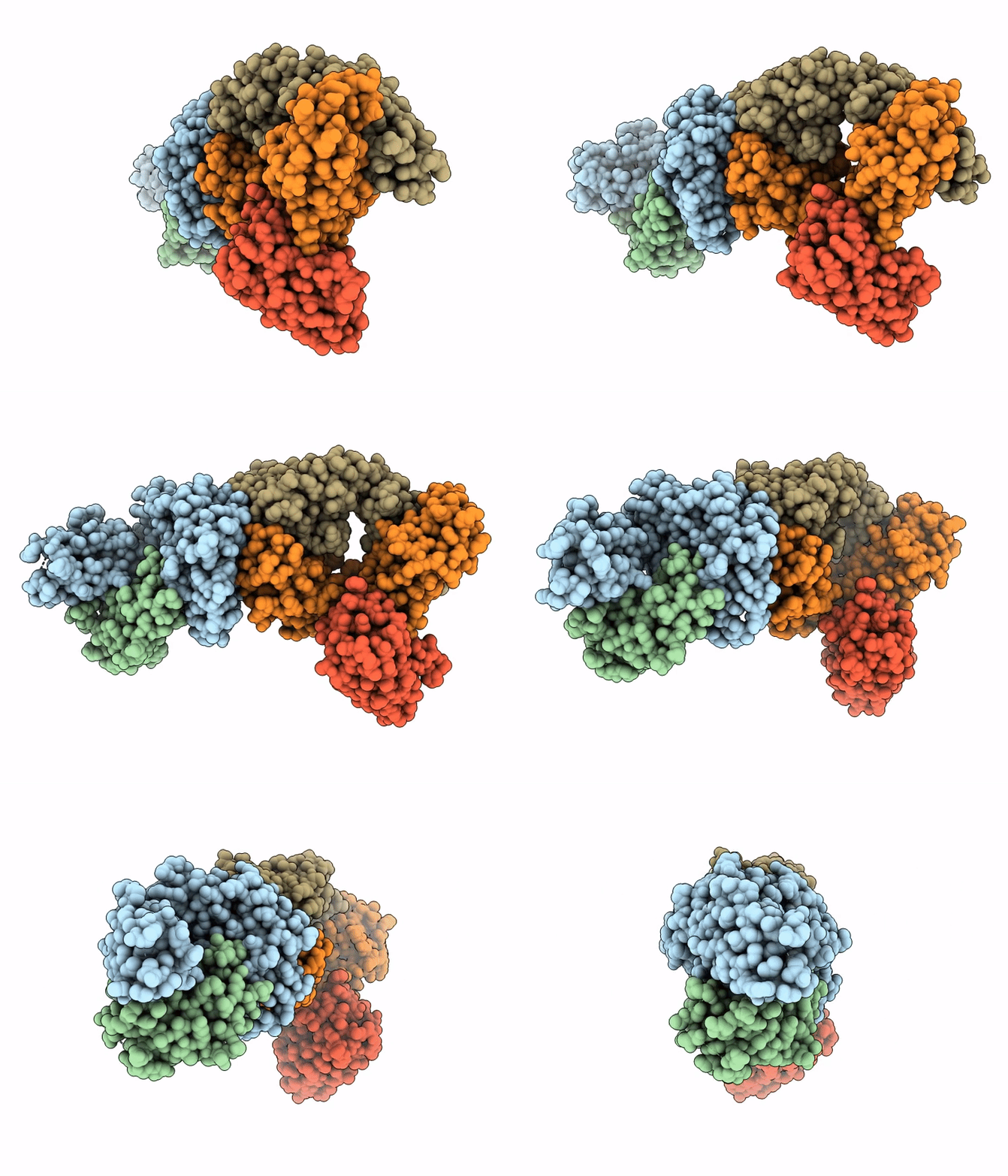
9PKV image
Deposition Date 2025-07-14
Release Date 2025-10-01
Last Version Date 2026-04-29
Entry Detail
PDB ID:
9PKV
Title:
HU-38 Fab with PRAME pMHC
Biological Source:
Source Organism(s):
Homo sapiens (Taxon ID: 9606)
Lama glama (Taxon ID: 9844)
Mus musculus (Taxon ID: 10090)
Method Details:
Experimental Method:
Resolution:
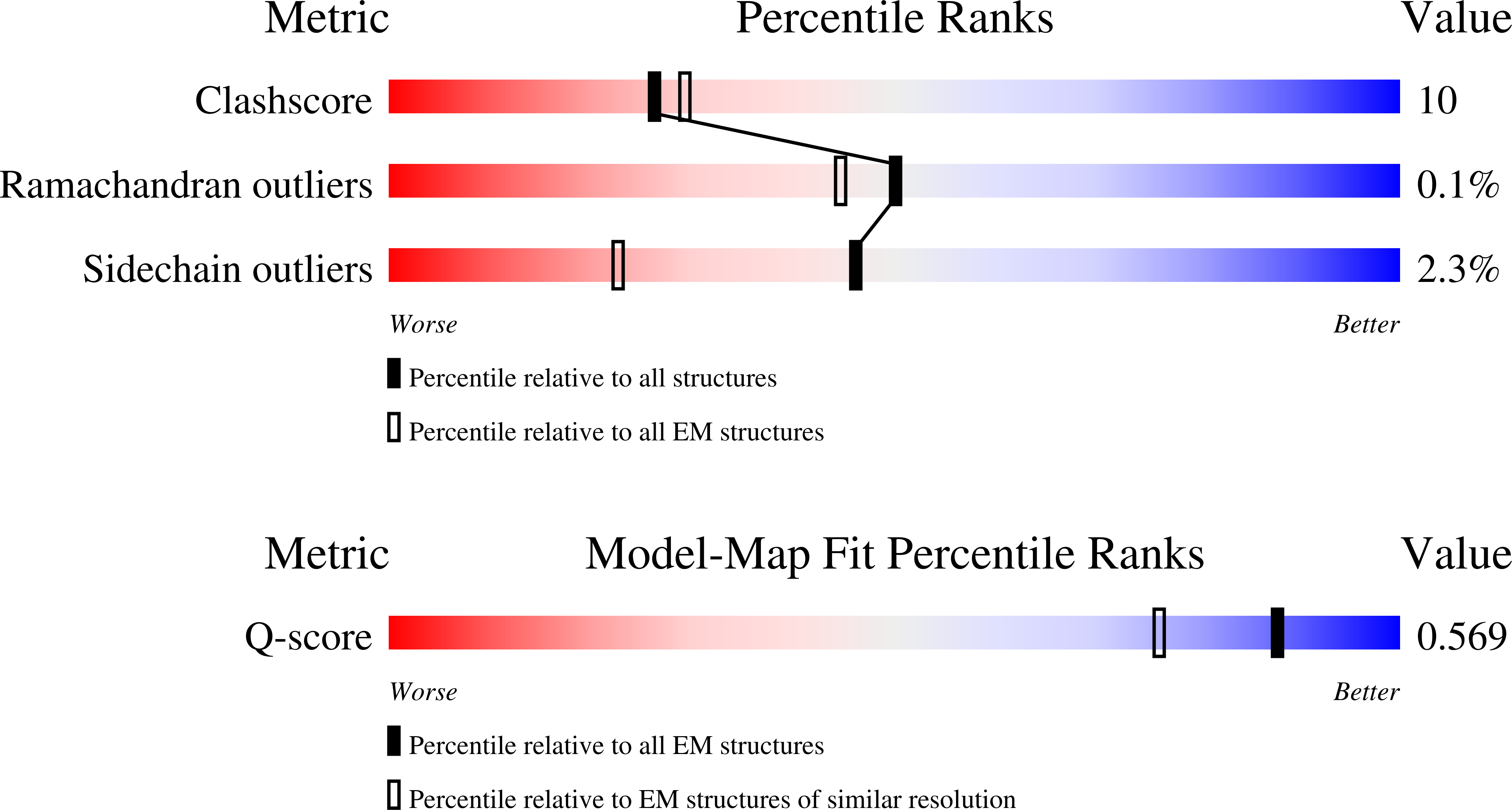
2.72 Å
Aggregation State:
PARTICLE
Reconstruction Method:
SINGLE PARTICLE
Macromolecular Entities
Structures with similar UniProt ID
Protein Blast
Polymer Type:polypeptide(L)
Molecule:MHC class I antigen
Gene (Uniprot):HLA-A
Chain IDs:A
Chain Length:301
Number of Molecules:1
Biological Source:Homo sapiens
Structures with similar UniProt ID
Protein Blast
Polymer Type:polypeptide(L)
Molecule:Beta-2-microglobulin
Gene (Uniprot):B2M
Chain IDs:E (auth: B)
Chain Length:100
Number of Molecules:1
Biological Source:Homo sapiens
Protein Blast
Polymer Type:polypeptide(L)
Molecule:HU-38 Heavy Chain
Chain IDs:D (auth: H)
Chain Length:237
Number of Molecules:1
Biological Source:Mus musculus
Protein Blast
Polymer Type:polypeptide(L)
Molecule:VHH antibody
Chain IDs:B (auth: K)
Chain Length:121
Number of Molecules:1
Biological Source:Lama glama
Protein Blast
Polymer Type:polypeptide(L)
Molecule:HU-38 Light Chain
Chain IDs:F (auth: L)
Chain Length:214
Number of Molecules:1
Biological Source:Mus musculus
Protein Blast
Polymer Type:polypeptide(L)
Molecule:PRAME peptide
Chain IDs:C (auth: P)
Chain Length:9
Number of Molecules:1
Biological Source:Homo sapiens
Primary Citation
Development of a PRAME pMHC targeted T cell engager for solid tumor therapy.
Mabs 17 2563773 2563773 (2025)
PMID: 40994043 DOI: 10.1080/19420862.2025.2563773

Abstact

Bispecific T cell engager (TCE) therapies have demonstrated transformative clinical success in the treatment of hematological cancers, but the lack of antigens that are sufficiently selective for malignant cells has hampered the success of TCEs in the solid-tumor space. To overcome the on-target, off-tumor toxicities that result from the expression of even low levels of tumor-associated antigens in healthy tissues, we sought to identify a TCE target with highly tumor-restricted expression patterns. Here, we characterize cancer-testes antigen Preferentially Expressed Antigen in Melanoma (PRAME) as a highly selective tumor antigen and identify a proteasomal degradation peptide PRAME(425-433) (PRAME(425)) presented in the context of major histocompatibility complex I (MHCI) as an attractive TCE target. We designed a TCR-mimic (TCRm) antibody screening cascade that prioritizes screening anti-PRAME pMHC binders in off-target T cell dependent cellular cytotoxicity assays in a potent TCE format, rather than relying solely on traditional pMHC binding assays, to determine specificity. Using this screening cascade, we discovered antibodies that selectively bind PRAME(425) pMHC without over-recognition of off-target peptides or MHCI via a TCR-like binding geometry. We further solved the first structure of an anti-PRAME(425) pMHC TCRm antibody in complex with PRAME(425)/HLA-A *02:01 using cryo electron microscopy to confirm the TCRm antibody binds in a TCR-like binding geometry and specifically recognizes the PRAME(425) peptide. By formatting these novel TCRm antibodies into potent TCEs, we demonstrate PRAME(425) pMHC-specific killing of tumor cells, representing a new class of anti-PRAME pMHC biologics.

Legend

Protein

Chemical

Disease

Primary Citation of related structures
Feedback Form
Name
Email
Institute
Feedback