

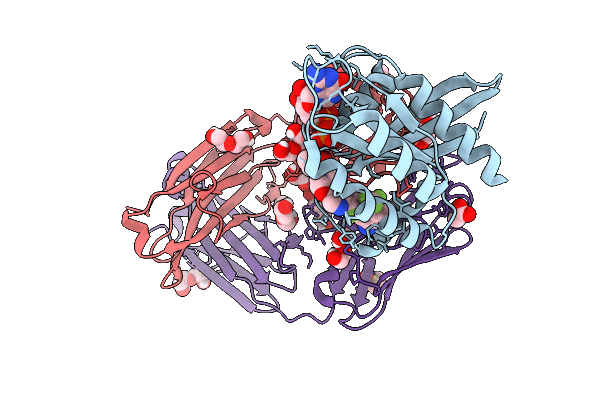
9PIZ image
Deposition Date 2025-07-11
Release Date 2026-03-11
Last Version Date 2026-03-25
Entry Detail
PDB ID:
9PIZ
Keywords:
Title:
Structure of KRAS-G12C bound to 1-[(4aR,10P,13R)-10-[5-amino-4-fluoro-3-methyl-2-(trifluoromethyl)phenyl]-11-chloro-9-fluoro-1,2,4a,5-tetrahydropyrazino[1',2':4,5][1,4]oxazino[2,3-c]quinolin-3(4H)-yl]prop-2-en-1-one (compound 15)
Biological Source:
Source Organism(s):
Expression System(s):
Method Details:
Experimental Method:
Resolution:
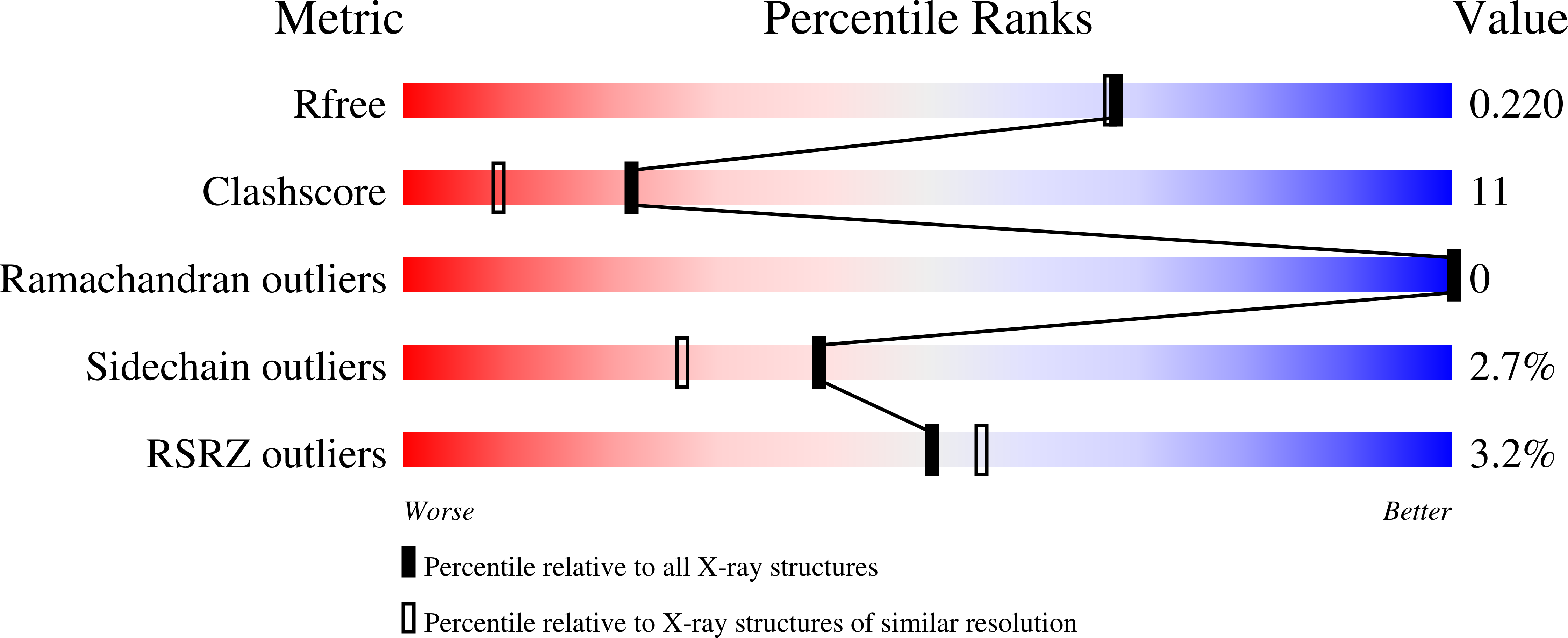
1.94 Å
R-Value Free:
0.21
R-Value Work:
0.18
R-Value Observed:
0.18
Space Group:
C 1 2 1
Macromolecular Entities
Structures with similar UniProt ID
Protein Blast
Polymer Type:polypeptide(L)
Molecule:Isoform 2B of GTPase KRas
Gene (Uniprot):KRAS
Mutagens:G12C
Chain IDs:A
Chain Length:171
Number of Molecules:1
Biological Source:Homo sapiens
Protein Blast
Polymer Type:polypeptide(L)
Molecule:anti-KRAS heavy chain
Chain IDs:B (auth: H)
Chain Length:226
Number of Molecules:1
Biological Source:synthetic construct
Protein Blast
Polymer Type:polypeptide(L)
Molecule:anti-KRAS light chain
Chain IDs:C (auth: I)
Chain Length:215
Number of Molecules:1
Biological Source:synthetic construct
Primary Citation

Abstact

Mutant KRAS is highly prevalent in human cancer and has been actively pursued as a target for drug discovery. Much progress has been made in drugging KRAS G12C, owing to the ability of inhibitors to covalently target its oncogenic cysteine mutation at codon 12. A number of KRAS G12C inhibitors have advanced to clinical development and are being investigated for the treatment of a variety of solid tumors. Notably, many patients with KRAS G12C-positive non-small cell lung cancer develop brain metastases. Herein, we report the discovery and development of a brain-penetrant inhibitor of KRAS G12C using divarasib as a starting point. Optimization efforts focused on reducing molecular weight and topological polar surface area as well as shielding of hydrogen bond donors. In this manner, active transport by both P-gp and breast cancer resistance protein (BCRP) was attenuated, and high exposure in rodent brain tissue was achieved.

Legend

Protein

Chemical

Disease

Primary Citation of related structures
Feedback Form
Name
Email
Institute
Feedback