

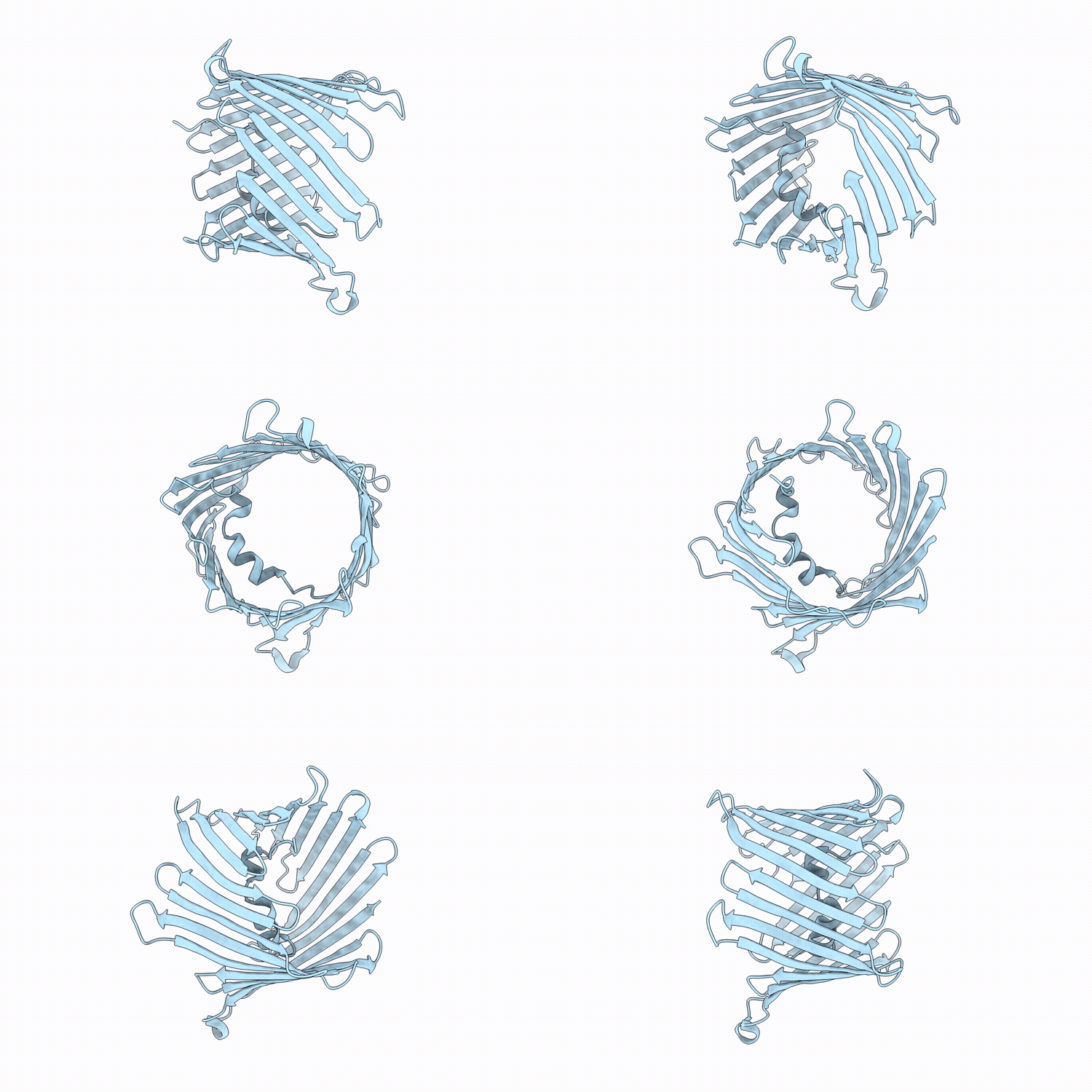
9PFZ image
Deposition Date 2025-07-07
Release Date 2026-05-27
Last Version Date 2026-05-27
Entry Detail
PDB ID:
9PFZ
Title:
Architecture of human Voltage Dependent Anion Channel 1 in nanodiscs
Biological Source:
Source Organism(s):
Homo sapiens (Taxon ID: 9606)
Expression System(s):
Method Details:
Experimental Method:
Resolution:
5.40 Å
Aggregation State:
PARTICLE
Reconstruction Method:
SINGLE PARTICLE

Macromolecular Entities
Structures with similar UniProt ID
Protein Blast
Polymer Type:polypeptide(L)
Molecule:Non-selective voltage-gated i
Gene (Uniprot):VDAC1
Chain IDs:A
Chain Length:283
Number of Molecules:1
Biological Source:Homo sapiens
Ligand Molecules
Primary Citation
Small Molecule Inhibition of VDAC1 Reroutes Mitochondrial Metabolite Flux.
Mol.Cells ? 100369 100369 (2026)
PMID: 42134653 DOI: 10.1016/j.mocell.2026.100369

Abstact

Voltage dependent anion channels (VDACs 1, 2 and 3) in the outer mitochondrial membrane control the flux of anions and oxidizable substrates that sustain mitochondrial metabolism. NADH closes VDAC by binding to a pocket, conserved in all isoforms, located in the inner wall of the channel. Previously, we identified the small molecule SC18 that targets the NADH-binding pocket of VDAC1 employing computational analysis. Here, we explored the interaction between SC18 and VDAC1 using High-resolution Nuclear Magnetic Resonance spectroscopy and Molecular Dynamics simulations. Atomically resolved data precisely confirmed the computational results, showing that SC18 binds to a site on VDAC1 that partially overlaps with the NADH binding pocket. SC18, in the presence of NADH blocked the conductance of VDAC1 reconstituted in lipid bilayers. To determine the metabolic effect of SC18, we combined readouts of mitochondrial metabolism and glycolysis with functional metabolomics and proteomics. Short-term treatment with SC18 inhibited mitochondrial metabolism and ATP production. Treatment over 24 h and 48 h further reduced mitochondrial uptake of pyruvate and glutamine, utilization of tricarboxylic acid cycle intermediates, as well as lipid, DNA and amino acid synthesis. Concomitant with the inhibition of mitochondrial metabolism, cellular uptake of glucose and glutamine increased in parallel with augmented lactate release. These results indicate that compensatory enhanced glycolysis sustains ATP production after impaired mitochondrial function induced by SC18 blockage of VDAC1. Our work set a mechanistic foundation for VDAC1 inhibition as a novel strategy to target and reprogram cancer metabolism through modulation of the biosynthetic ability of mitochondria.

Legend

Protein

Chemical

Disease

Primary Citation of related structures
Feedback Form
Name
Email
Institute
Feedback