

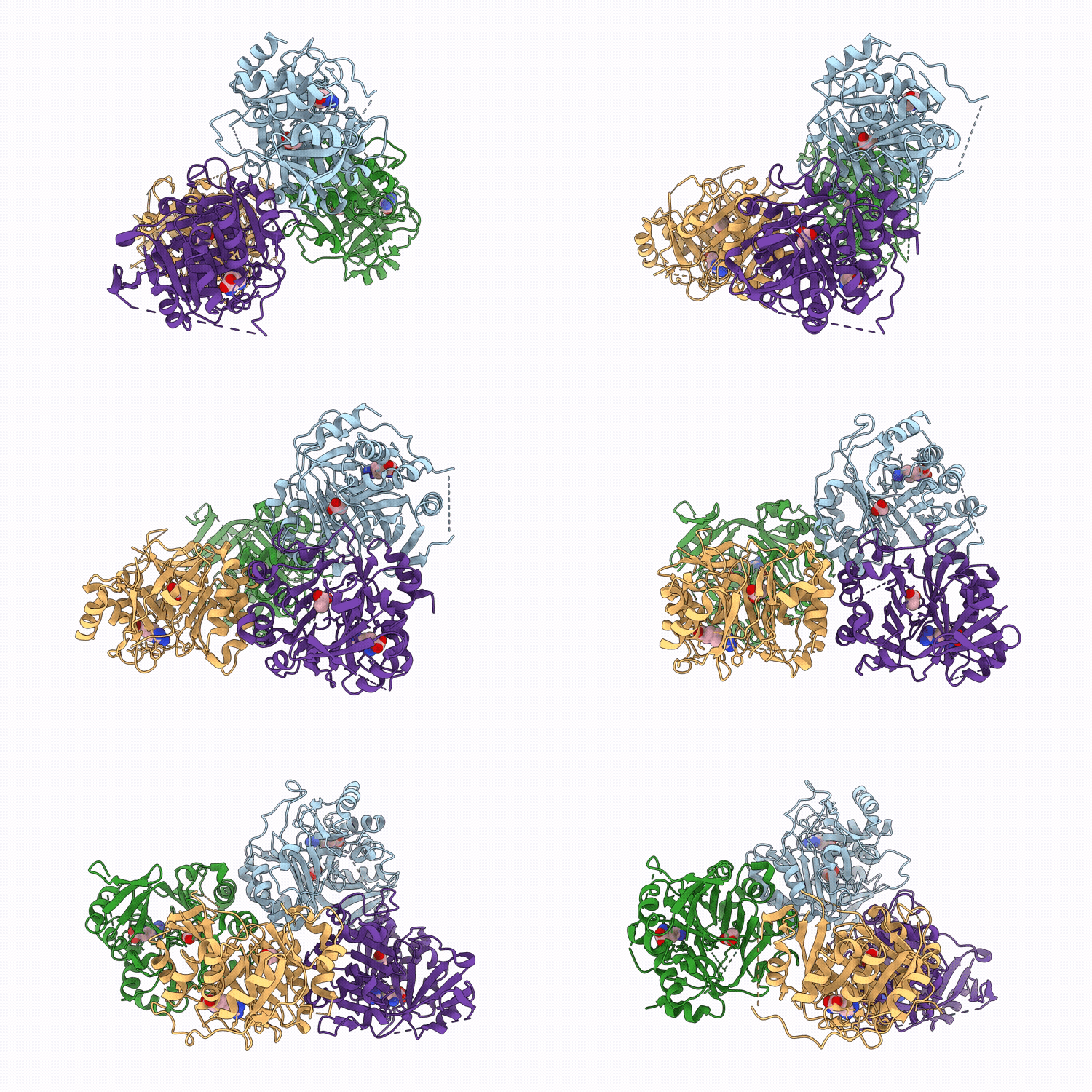
9PDO image
Deposition Date 2025-06-30
Release Date 2026-08-12
Last Version Date 2026-08-12
Entry Detail
PDB ID:
9PDO
Title:
Arginine-bound CASTOR1 from Homo sapiens (GATOR2-inspired update)
Biological Source:
Source Organism(s):
Homo sapiens (Taxon ID: 9606)
Expression System(s):
Method Details:
Experimental Method:
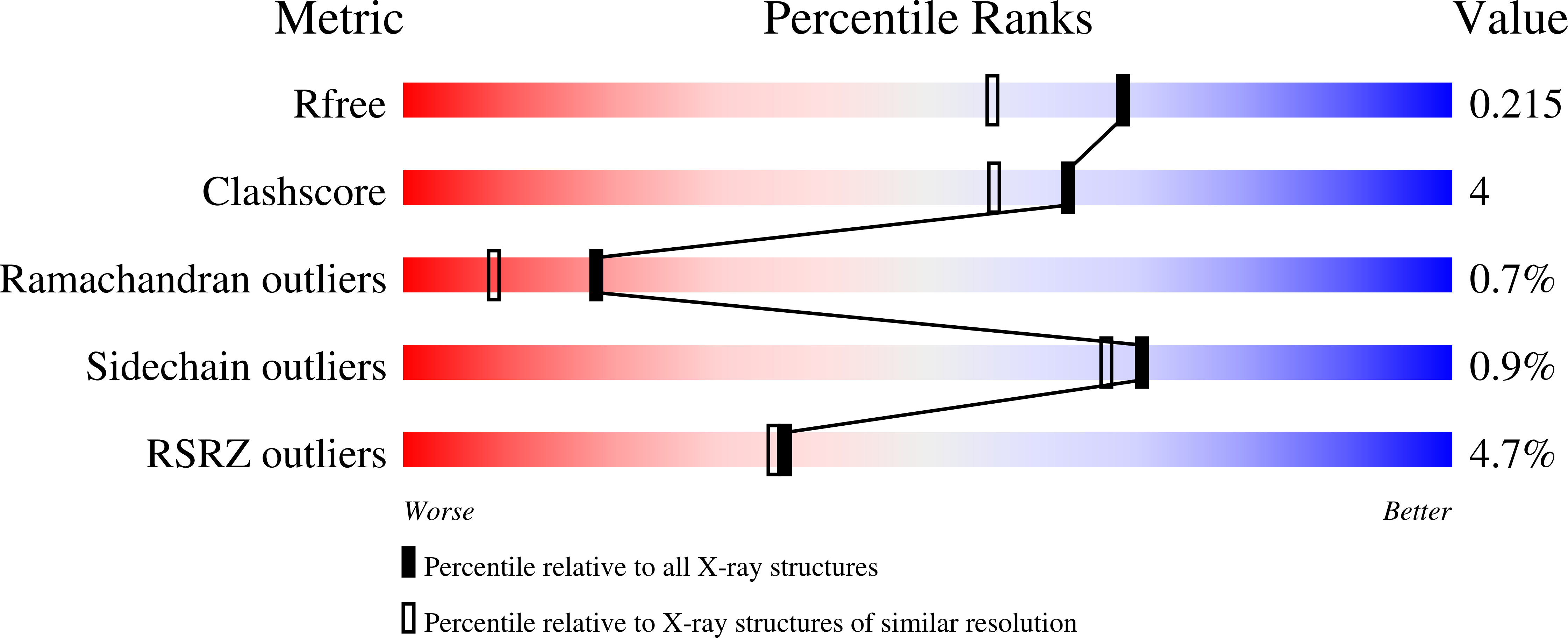
Resolution:
1.80 Å
R-Value Free:
0.21
R-Value Work:
0.18
R-Value Observed:
0.18
Space Group:
P 1 21 1
Macromolecular Entities
Polymer Type:polypeptide(L)
Molecule:Cytosolic arginine sensor for
Chain IDs:A, B, C, D
Chain Length:329
Number of Molecules:4
Biological Source:Homo sapiens
Primary Citation
Structural basis for the dynamic regulation of mTORC1 by amino acids.
Nature 646 493 500 (2025)
PMID: 40836086 DOI: 10.1038/s41586-025-09428-7

Abstact

The mechanistic target of rapamycin complex 1 (mTORC1) anchors a conserved signalling pathway that regulates growth in response to nutrient availability(1-5). Amino acids activate mTORC1 through the Rag GTPases, which are regulated by GATOR, a supercomplex consisting of GATOR1, KICSTOR and the nutrient-sensing hub GATOR2 (refs. (6-9)). GATOR2 forms an octagonal cage, with its distinct WD40 domain beta-propellers interacting with GATOR1 and the leucine sensors Sestrin1 and Sestrin2 (SESN1 and SESN2) and the arginine sensor CASTOR1 (ref. (10)). The mechanisms through which these sensors regulate GATOR2 and how they detach from it upon binding their cognate amino acids remain unknown. Here, using cryo-electron microscopy, we determined the structures of a stabilized GATOR2 bound to either Sestrin2 or CASTOR1. The sensors occupy distinct and non-overlapping binding sites, disruption of which selectively impairs the ability of mTORC1 to sense individual amino acids. We also resolved the apo (leucine-free) structure of Sestrin2 and characterized the amino acid-induced structural rearrangements within Sestrin2 and CASTOR1 that trigger their dissociation from GATOR2. Binding of either sensor restricts the dynamic WDR24 beta-propeller of GATOR2, a domain essential for nutrient-dependent mTORC1 activation. These findings reveal the allosteric mechanisms that convey amino acid sufficiency to GATOR2 and the ensuing structural changes that lead to mTORC1 activation.

Legend

Protein

Chemical

Disease

Primary Citation of related structures
Feedback Form
Name
Email
Institute
Feedback