

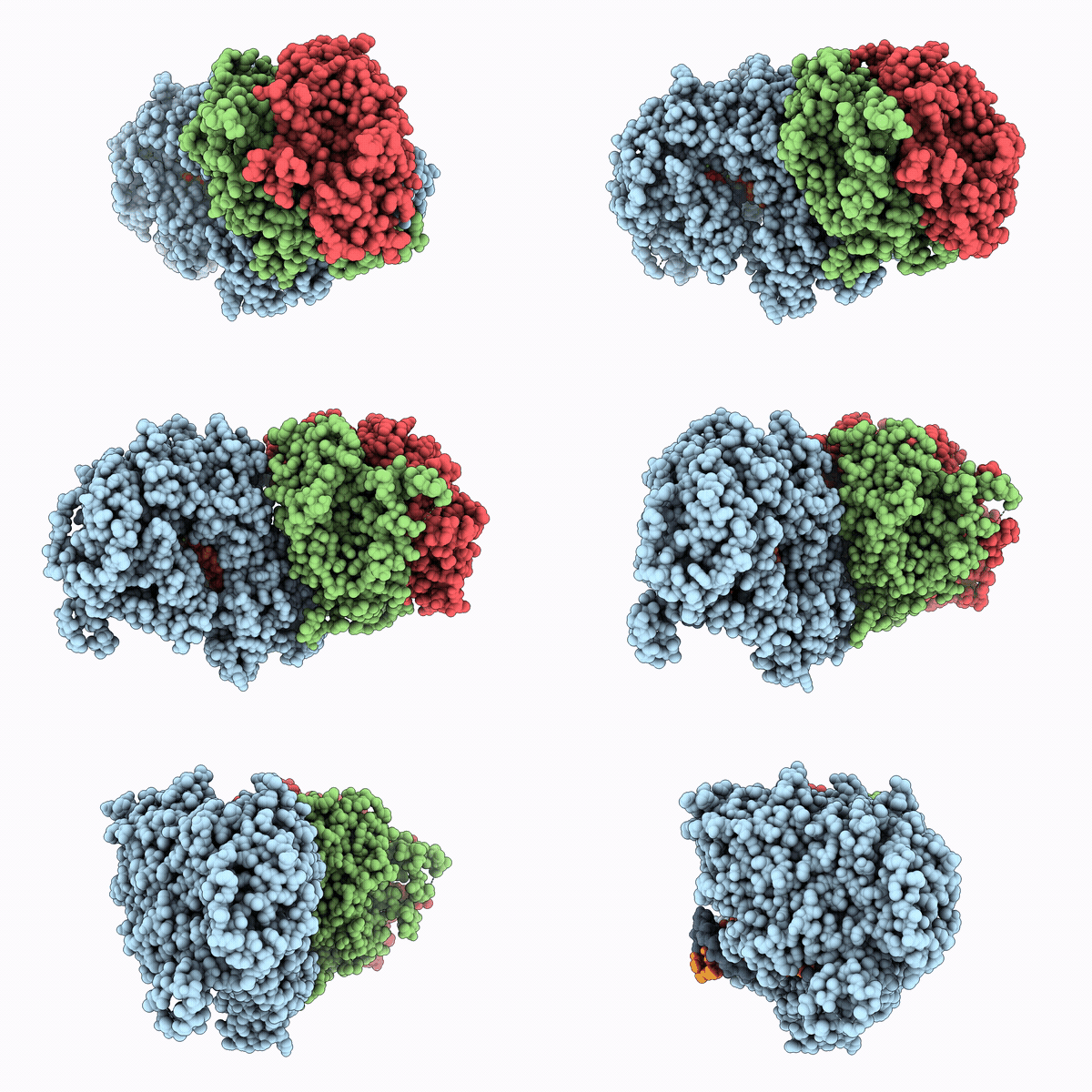
9PCK image
Deposition Date 2025-06-27
Release Date 2026-10-07
Last Version Date 2026-10-07
Entry Detail
PDB ID:
9PCK
Keywords:
Title:
Human DNA Polymerase Gamma-RNA-DNA Primer-Template Complex with Incoming ATP
Biological Source:
Source Organism(s):
Method Details:
Experimental Method:
Resolution:
2.60 Å
Aggregation State:
PARTICLE
Reconstruction Method:
SINGLE PARTICLE
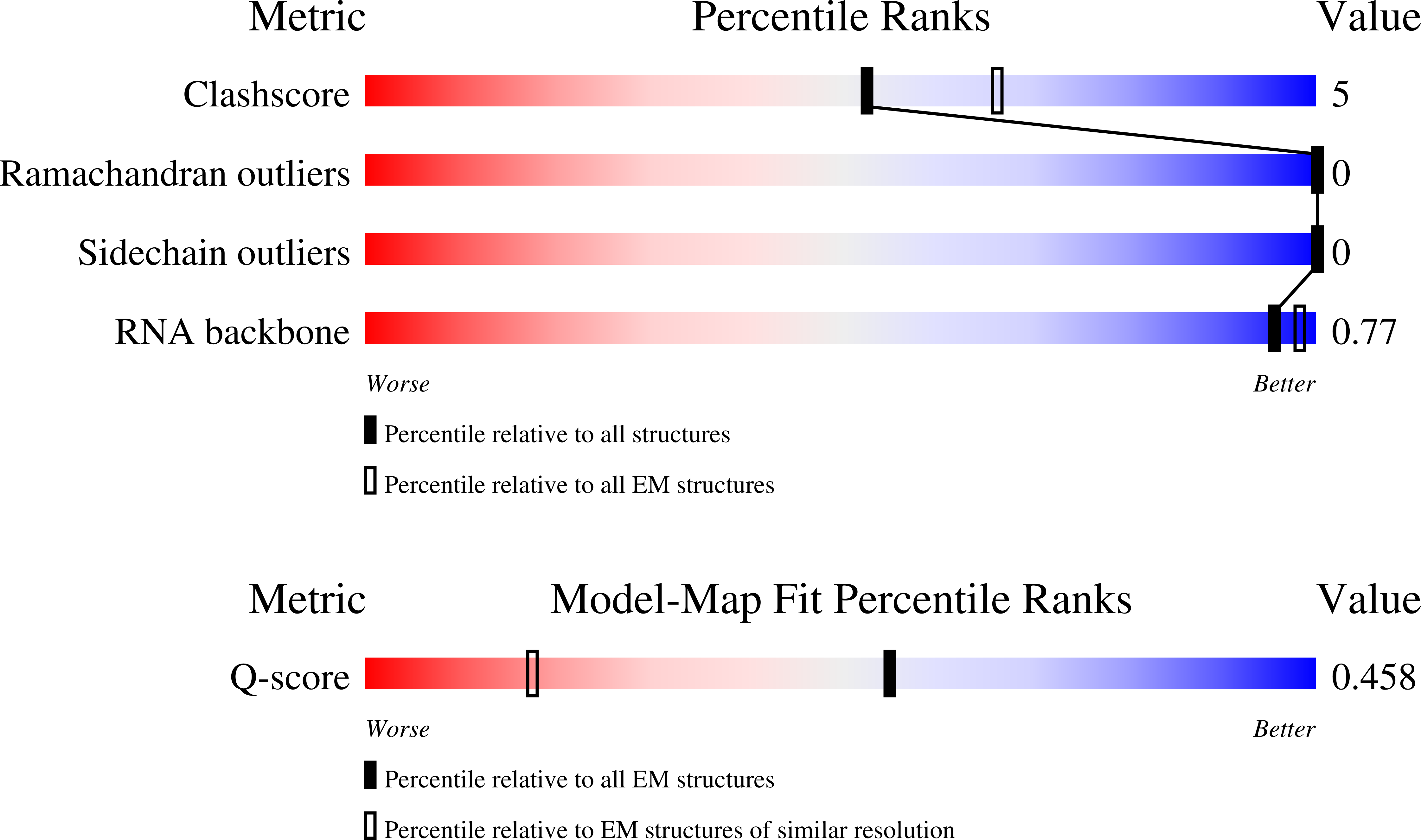
Macromolecular Entities
Polymer Type:polypeptide(L)
Molecule:DNA polymerase subunit gamma-
Gene (Uniprot):POLG
Chain IDs:A
Chain Length:1239
Number of Molecules:1
Biological Source:Homo sapiens
Polymer Type:polypeptide(L)
Molecule:DNA polymerase subunit gamma-
Gene (Uniprot):POLG2
Chain IDs:B, C
Chain Length:485
Number of Molecules:2
Biological Source:Homo sapiens
Polymer Type:polyribonucleotide
Molecule:primer RNA
Chain IDs:D (auth: P)
Chain Length:17
Number of Molecules:1
Biological Source:synthetic construct
Polymer Type:polydeoxyribonucleotide
Molecule:Template DNA
Chain IDs:E (auth: T)
Chain Length:21
Number of Molecules:1
Biological Source:synthetic construct
Primary Citation
Molecular and structural basis for replication initiation and strand separation by human mitochondrial DNA polymerase gamma.
Nucleic Acids Res. 54 ? ? (2026)
PMID: 42788360 DOI: 10.1093/nar/gkag925

Abstact

Defects in human mitochondrial DNA (mtDNA) replication can lead to somatic mutations associated with a range of devastating mitochondrial diseases. However, the molecular mechanisms governing the earliest steps of mtDNA replication and their fidelity remain poorly understood. Here, we found that DNA polymerase gamma (Polgamma) forms stable complexes with RNA-DNA primer-template substrates, exhibiting greater stability and lower misincorporation than on DNA-primed substrates. Structural analysis revealed that Polgamma interacts with the 2'-OH groups of ribose within the first four nucleotides of the primer, explaining the stability of complexes that utilize RNA primers. Although Polgamma requires TWINKLE to extend RNA primers, its intrinsic strand-displacement activity allows it to extend DNA primers independently. Structural data further show that the strand-separation mechanism in human Polgamma is distinct from that of its yeast paralog, Mip1, and involves previously unresolved elements-the catcher and a GP loop in the exonuclease domain-that support intrinsic strand-displacement synthesis by Polgamma. Structure-guided mutagenesis of elements involved in strand separation supports these structural observations. Together, our study provides mechanistic insight into mtDNA replication initiation and strand separation and has implications for understanding the molecular basis of mitochondrial disease.

Legend

Protein

Chemical

Disease

Primary Citation of related structures
Feedback Form
Name
Email
Institute
Feedback