

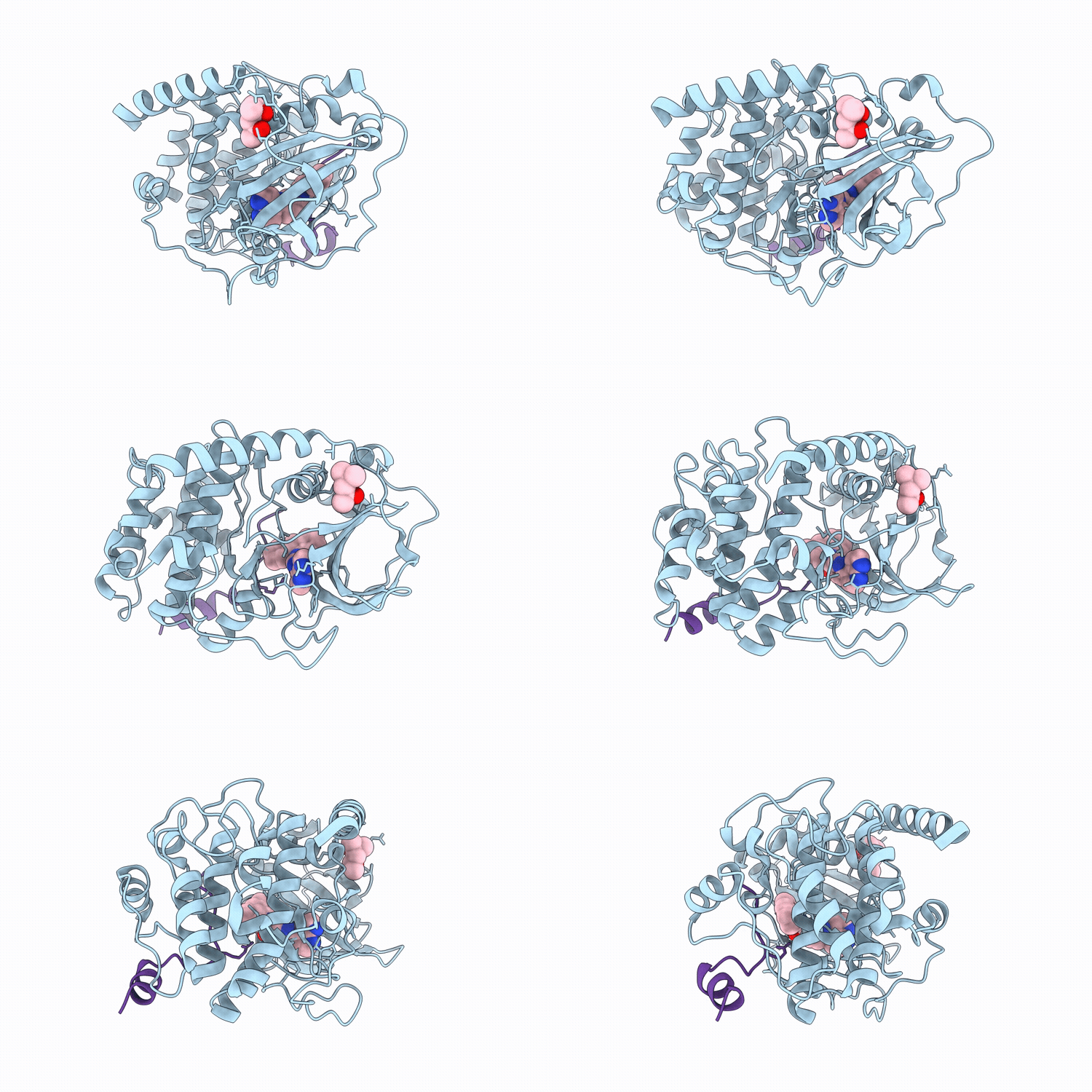
9PC1 image
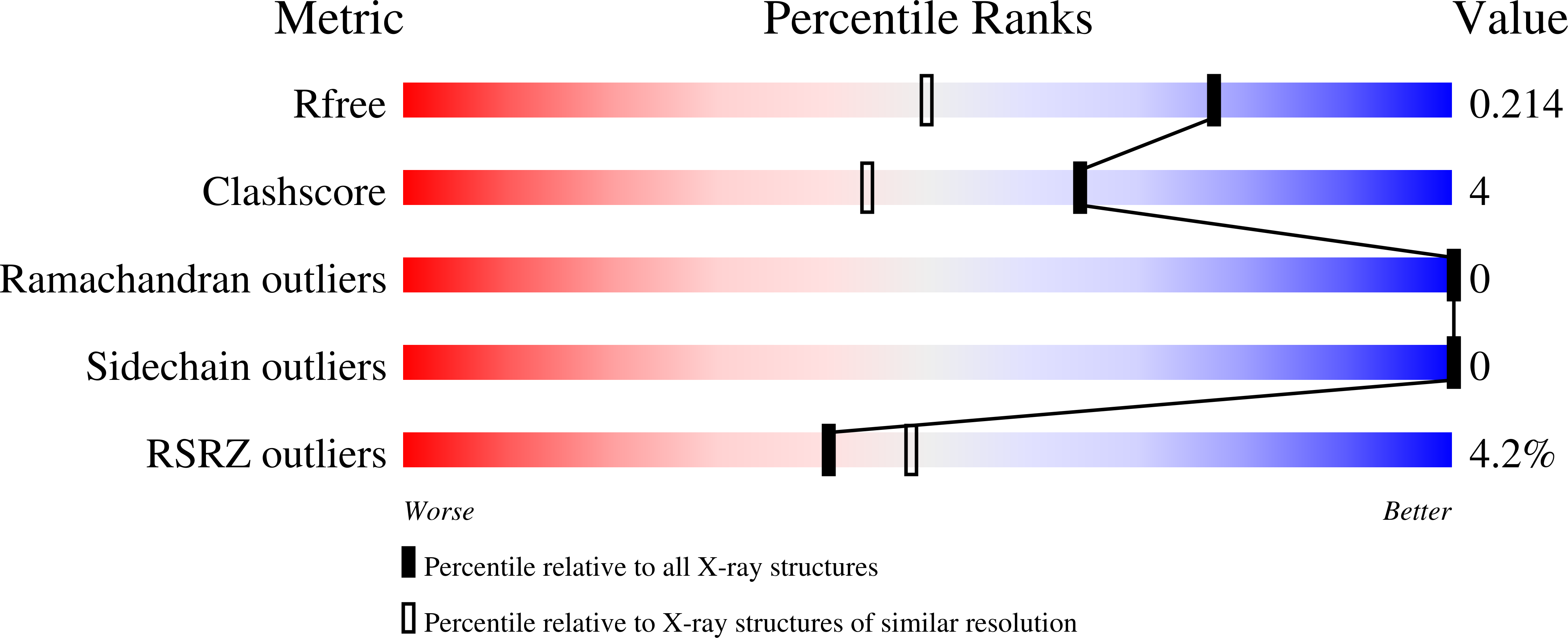
Deposition Date 2025-06-26
Release Date 2026-05-13
Last Version Date 2026-05-20
Entry Detail
PDB ID:
9PC1
Keywords:
Title:
Co-crystal structure of the cAMP-dependent protein kinase catalytic subunit alpha with the inhibitor BLU0588
Biological Source:
Source Organism(s):
Mus musculus (Taxon ID: 10090)
Homo sapiens (Taxon ID: 9606)
Expression System(s):
Method Details:
Experimental Method:
Resolution:
1.55 Å
R-Value Free:
0.21
R-Value Work:
0.18
R-Value Observed:
0.18
Space Group:
P 21 21 21
Macromolecular Entities
Structures with similar UniProt ID
Protein Blast
Polymer Type:polypeptide(L)
Molecule:cAMP-dependent protein kinase
Gene (Uniprot):Prkaca
Chain IDs:A (auth: E)
Chain Length:350
Number of Molecules:1
Biological Source:Mus musculus
Structures with similar UniProt ID
Protein Blast
Polymer Type:polypeptide(L)
Molecule:cAMP-dependent protein kinase
Gene (Uniprot):PKIA
Chain IDs:B (auth: I)
Chain Length:19
Number of Molecules:1
Biological Source:Homo sapiens
Modified Residue
Compound ID Chain ID Parent Comp ID Details 2D Image
SEP A SER modified residue
TPO A THR modified residue
Primary Citation
A PKA-selective inhibitor captures an open but more ordered conformation of the PKA catalytic subunit.
Proc.Natl.Acad.Sci.USA 123 e2536312123 e2536312123 (2026)
PMID: 42096309 DOI: 10.1073/pnas.2536312123

Abstact

The structure of the catalytic subunit of cAMP-dependent protein kinase (PKA-C), a prototype for the protein kinase superfamily, laid the foundation for the development of targeted kinase inhibitors. Here we describe the structure and biophysical characterization of a PKA-C complex with BLU0588, a small PKA-selective inhibitor. The high-resolution crystal structure not only captures the inhibitor's unusual T-shaped geometry, but also shows how the four rings of BLU0588 serve as surrogates for ATP's adenosine and phosphate-organizing sites. Each site contains two subsites. BLU0588's planar azaindole and pyridine rings, which are buried beneath the glycine-rich loop in a hydrophobic shell at the base of the active site cleft, fill the adenine and ribose subsites. In contrast, BLU0588's indane and pyrrolidine rings fill the phosphate-organizing site. The indane ring occupies the alpha/beta-phosphate organizing site while the pyrrolidine ring fills the Mg/gamma-phosphate organizing site. The structure also shows how BLU0588 nucleates an open but stable conformation of the entire hydrophobic architecture of the N- and C-lobes. In addition to potently blocking phosphoryl transfer activity, BLU0588 also abolishes the synergistic high-affinity binding of the physiological pseudosubstrate inhibitor, protein kinase inhibitor. The residence time of BLU0588, measured by surface plasmon residence, contributes to its picomolar affinity and is distinct from H89, a commonly used but more promiscuous PKA inhibitor. These molecular insights provide a valuable framework for dissecting the organization of the active site cleft as well as different strategies for the rational design of more potent and selective kinase inhibitors in general.

Legend

Protein

Chemical

Disease

Primary Citation of related structures
Feedback Form
Name
Email
Institute
Feedback