

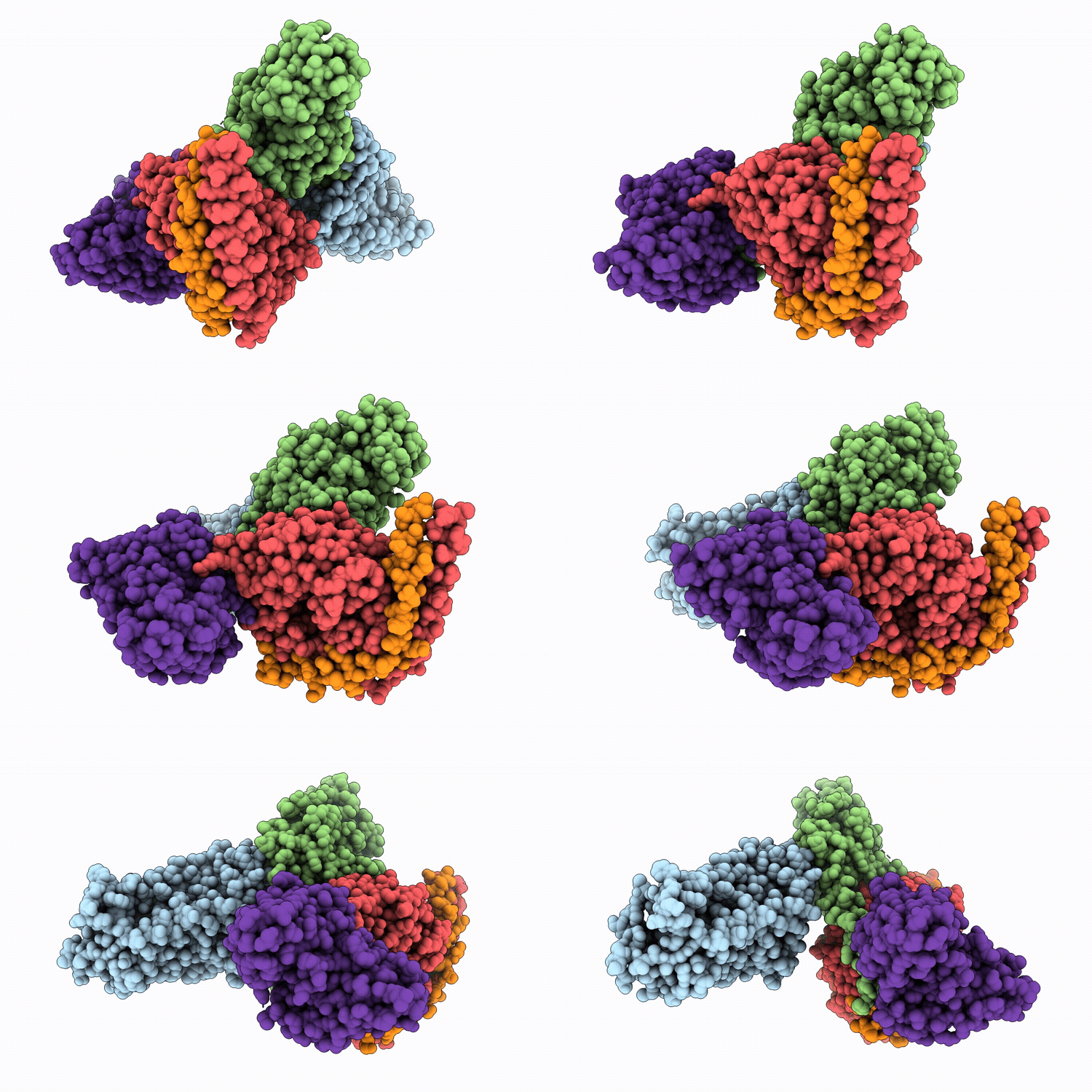
9PA6 image
Deposition Date 2025-06-25
Release Date 2026-07-01
Last Version Date 2026-07-01
Entry Detail
PDB ID:
9PA6
Title:
Ligand-free kappa-opioid receptor in complex with Gi1
Biological Source:
Source Organism(s):
Homo sapiens (Taxon ID: 9606)
Mus musculus (Taxon ID: 10090)
Expression System(s):
Method Details:
Experimental Method:
Resolution:
3.43 Å
Aggregation State:
PARTICLE
Reconstruction Method:
SINGLE PARTICLE
Macromolecular Entities
Structures with similar UniProt ID
Protein Blast
Polymer Type:polypeptide(L)
Molecule:Kappa-type opioid receptor
Gene (Uniprot):OPRK1
Chain IDs:A
Chain Length:308
Number of Molecules:1
Biological Source:Homo sapiens
Structures with similar UniProt ID
Protein Blast
Polymer Type:polypeptide(L)
Molecule:Guanine nucleotide-binding pr
Gene (Uniprot):GNAI1
Chain IDs:B
Chain Length:354
Number of Molecules:1
Biological Source:Homo sapiens
Structures with similar UniProt ID
Protein Blast
Polymer Type:polypeptide(L)
Molecule:Guanine nucleotide-binding pr
Gene (Uniprot):GNB1
Chain IDs:C
Chain Length:340
Number of Molecules:1
Biological Source:Homo sapiens
Structures with similar UniProt ID
Protein Blast
Polymer Type:polypeptide(L)
Molecule:Guanine nucleotide-binding pr
Gene (Uniprot):GNG2
Chain IDs:D
Chain Length:71
Number of Molecules:1
Biological Source:Homo sapiens
Protein Blast
Polymer Type:polypeptide(L)
Molecule:ScFv16 protein
Chain IDs:E
Chain Length:251
Number of Molecules:1
Biological Source:Mus musculus
Ligand Molecules
Primary Citation
Structural basis of opioid receptor activation by PCP and ketamine.
Nat.Struct.Mol.Biol. ? ? ? (2026)
PMID: 42332075 DOI: 10.1038/s41594-026-01839-y

Abstact

Ketamine offers rapid relief for treatment-resistant depression and severe pain in the clinic, providing immediate benefits that traditional medications often fail to deliver. While its antagonistic action at the N-methyl-D-aspartate receptor (NMDAR) is a key mechanism, ketamine's dual nature as both a promising treatment and a drug with abuse potential suggests its therapeutic effects extend beyond NMDAR inhibition. Here we provide structural evidence of human opioid receptors bound to ketamine and its parent analog phencyclidine (PCP), supporting that both ligands can directly bind and activate opioid receptors. The structures, together with site-directed mutagenesis and structure-activity relationship studies, identify key motifs involved in ketamine and PCP recognition and efficacy modulation. Furthermore, we determine the structure of the ligand-free state of human kappa opioid receptor, revealing molecular details before ligand engagement. Compared to PCP, ketamine displays more notable binding dynamics in the orthosteric site that may contribute to its unique pharmacology at opioid receptors. Our findings highlight the importance of including opioid receptors to fully understand ketamine's versatility in clinical settings.

Legend

Protein

Chemical

Disease

Primary Citation of related structures
Feedback Form
Name
Email
Institute
Feedback