

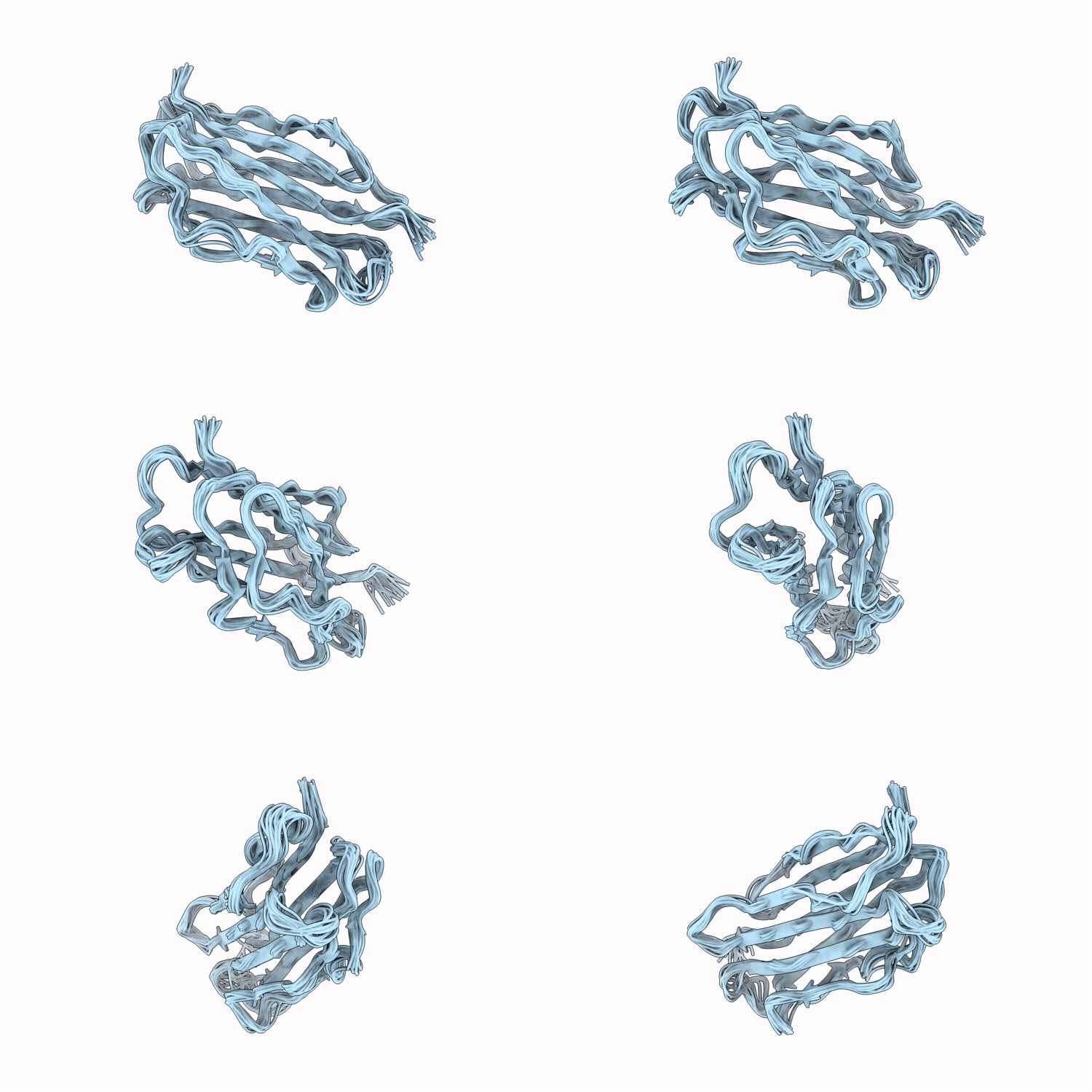
9P6W image
Deposition Date 2025-06-20
Release Date 2026-04-22
Last Version Date 2026-04-22
Entry Detail
PDB ID:
9P6W
Title:
Honey Truffle Active Component
Biological Source:
Source Organism(s):
Expression System(s):
Method Details:
Experimental Method:
Conformers Calculated:
18
Conformers Submitted:
18
Selection Criteria:
all calculated structures submitted
Macromolecular Entities
Protein Blast
Polymer Type:polypeptide(L)
Molecule:Honey Truffle Active Componen
Chain IDs:A
Chain Length:121
Number of Molecules:1
Biological Source:Mattirolomyces terfezioides
Ligand Molecules
Primary Citation
Sweet Protein Allosteric Binding and Activation of the Human T1R2/R3 Sweet Receptor: A Simulation Model Validated by in Vitro Receptor Activation Assay.
Biochemistry 65 399 416 (2026)
PMID: 41591896 DOI: 10.1021/acs.biochem.5c00622

Abstact

Sweet proteins trigger sweet taste perception through interactions with the human T1R2/R3 sweet taste receptor. To date, relatively few proteins have been identified as causing sweet taste perception, and the four most studied proteins: monellin, brazzein, thaumatin, and honey truffle active component (HT-AC), have minimal sequence homology or structural similarities aside from positively charged surface sites. Sweet taste perception has also been found to be readily perturbed by minor changes in the protein structure, such as natural isoforms inherent to heterologous expression of the protein, and synthetic amino acid substitutions. This study uses ab initio rigid-body docking to predict the interactions of known sweet proteins and variants with a recently resolved cryo-EM structure of the T1R2/R3 sweet taste receptor, incorporating comparative analyses between apo-, holo-, and a potentially transient conformation of the receptor. HT-AC mediated activation of the sweet taste receptor is confirmed by in vitro cell-based assays, and results from in silico docking of various sweet proteins are used to derive additional insights regarding sweet taste perception. Perturbations of HT-AC due to naturally occurring post-translational modifications and synthetic modifications are evaluated using in vitro and in silico methods to determine robustness of the interaction between T1R2/R3 and sweet proteins with primary focuses on HT-AC.

Legend

Protein

Chemical

Disease

Primary Citation of related structures
Feedback Form
Name
Email
Institute
Feedback