

9P6U image
Deposition Date 2025-06-20
Release Date 2026-07-01
Last Version Date 2026-07-01
Entry Detail
PDB ID:
9P6U
Keywords:
Title:
Cryo-EM structure of chimeric immunoglobulin M comprising bony fish and human sequences, hFcm-tFcm-chi3
Biological Source:
Source Organism(s):
Homo sapiens (Taxon ID: 9606)
Oncorhynchus mykiss (Taxon ID: 8022)
Expression System(s):
Method Details:
Experimental Method:
Resolution:
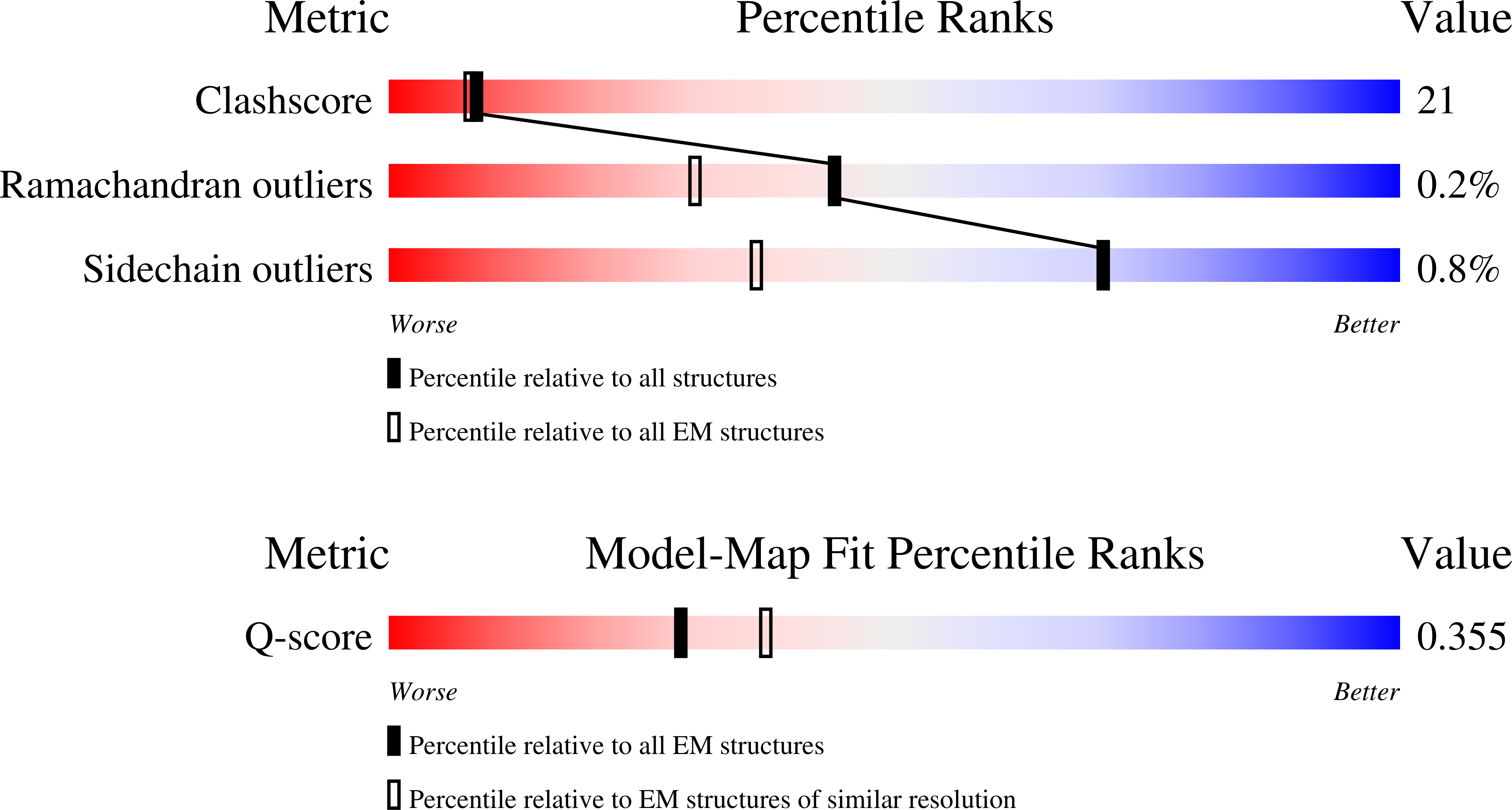
3.90 Å
Aggregation State:
PARTICLE
Reconstruction Method:
SINGLE PARTICLE
Macromolecular Entities
Structures with similar UniProt ID
Protein Blast
Polymer Type:polypeptide(L)
Molecule:Chimeric Immunoglobulin heavy
Gene (Uniprot):IGHM
Chain IDs:A, B, C, D, E, F, G, H, I (auth: K), J (auth: L)
Chain Length:241
Number of Molecules:10
Biological Source:Homo sapiens, Oncorhynchus mykiss
Ligand Molecules
Primary Citation
Chimeric Immunoglobulin and human Immunoglobulin M structures provide insights on joining-chain independent assembly and function.
Biorxiv ? ? ? (2025)
PMID: 40791433 DOI: 10.1101/2025.07.09.663956

Abstact

Polymeric (p) immunoglobulins (Igs) play critical roles in vertebrate immunity. IgM is the evolutionarily oldest pIg and functions both in circulation and in the mucosa. pIgM typically comprises between four and six IgM monomers and up to one joining chain (JC), which in mammals facilitates pIg assembly and promotes delivery to mucosal secretions. Bony fish (teleosts) lack JC and assemble tetrameric IgM whereas humans can express JC-containing pentamers and JC-free hexamers. Here we report cryo-electron microscopy structures of two JC-free chimeric IgM, comprising bony fish and human sequences, and the structure of human hexameric IgM. Chimeric IgM structures adopted unique pentameric geometry distinct from both human and fish pIgM whereas the human hexameric IgM structure adopted hexagonal geometry similar to JC-containing pentameric IgM, albeit with structural differences in center of the molecule. Together results provide new insights on how IgM heavy chain motifs contribute to JC-free pIgM assembly and reveal plasticity of this process, which can be manipulated to create pIg structures not observed in nature. Moreover, we found that antigen-targeting chimeric IgM could neutralize C. difficile toxin cytotoxicity, indicating potential to engineer uniquely structured pIgs to prevent or treat disease.

Legend

Protein

Chemical

Disease

Primary Citation of related structures
Feedback Form
Name
Email
Institute
Feedback