

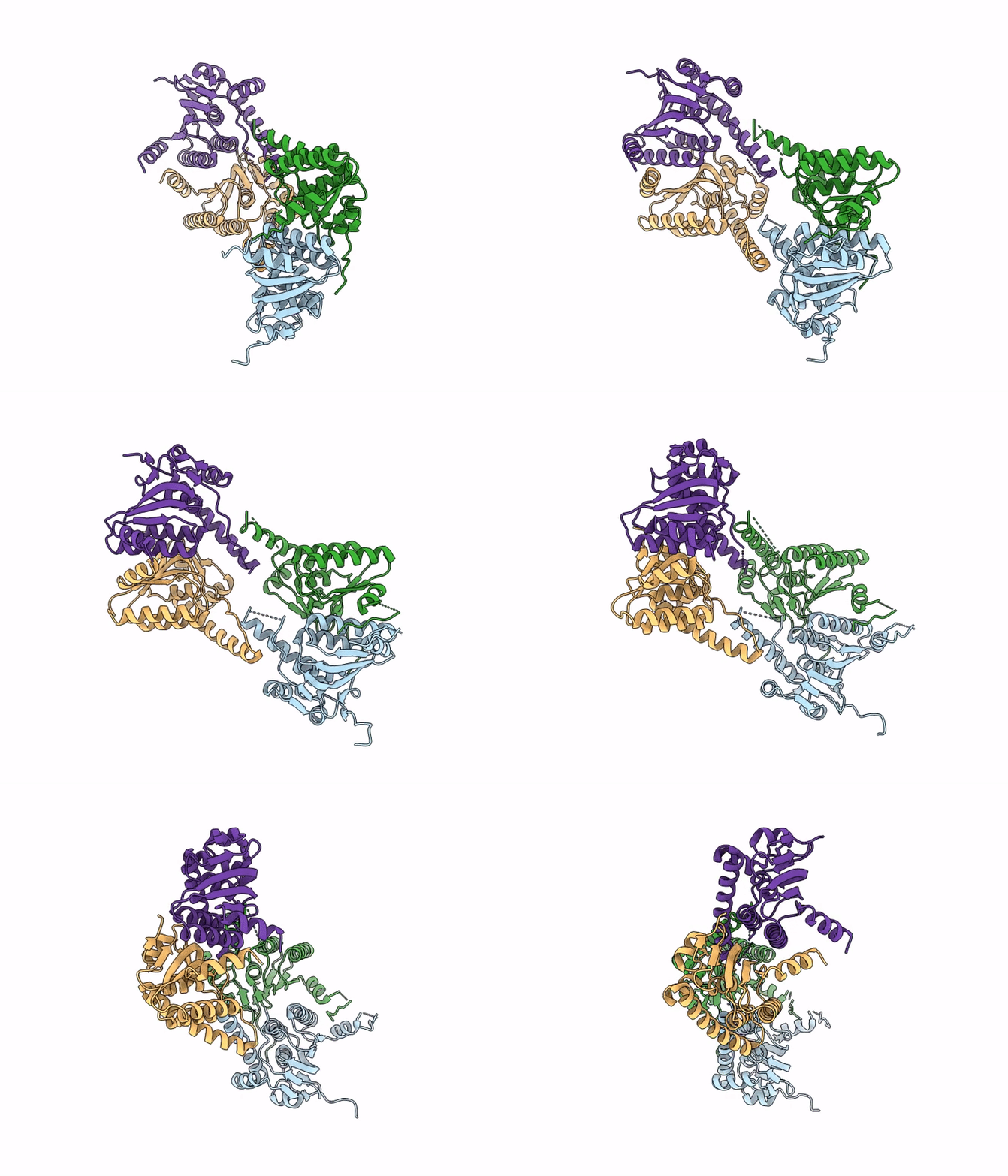
9P54 image
Deposition Date 2025-06-17
Release Date 2026-02-25
Last Version Date 2026-09-09
Entry Detail
PDB ID:
9P54
Keywords:
Title:
Apo form of ClpP1P2 complex from M. tuberculosis
Biological Source:
Source Organism(s):
Expression System(s):
Method Details:
Experimental Method:
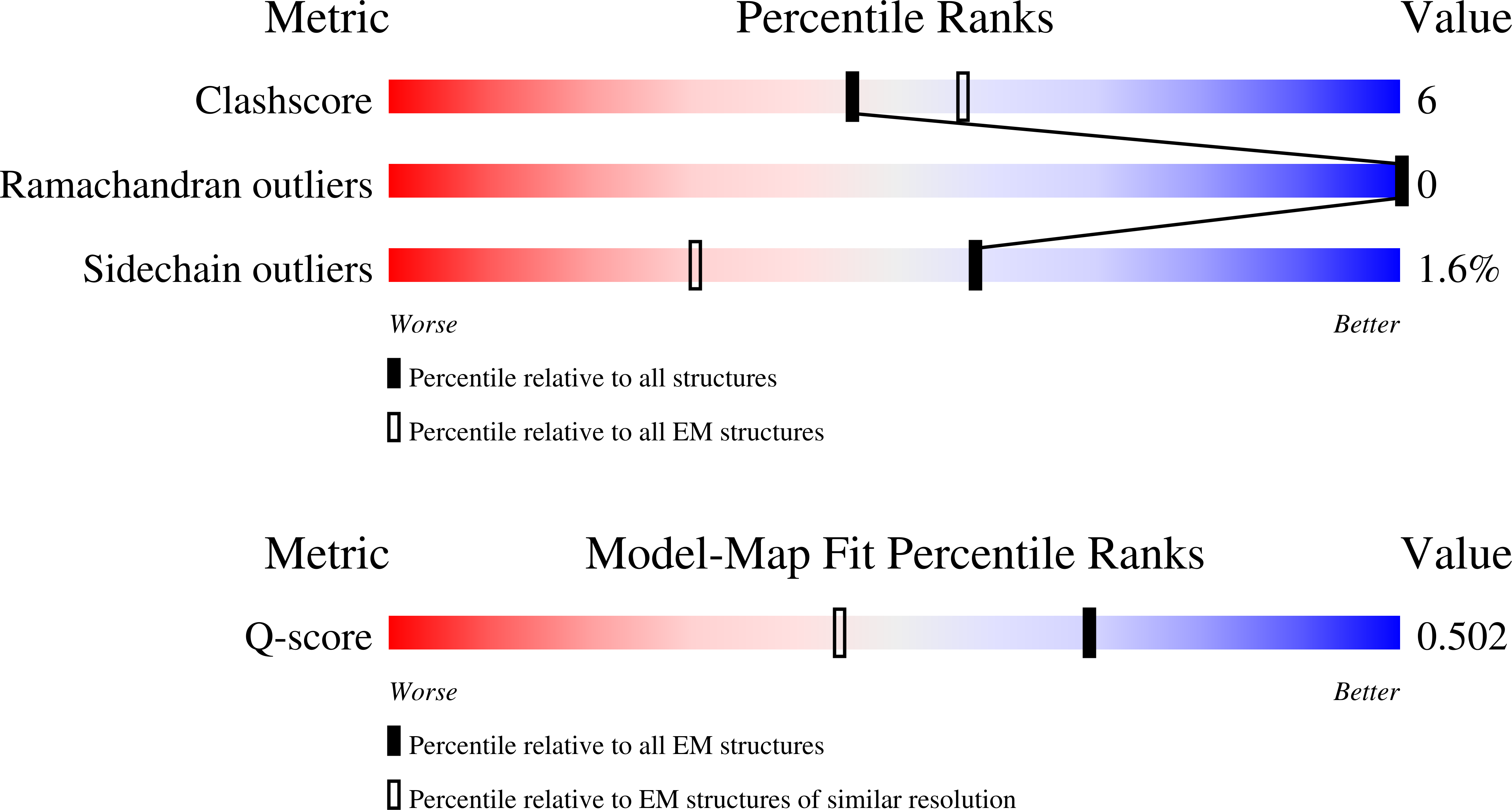
Resolution:
2.80 Å
Aggregation State:
PARTICLE
Reconstruction Method:
SINGLE PARTICLE
Macromolecular Entities
Polymer Type:polypeptide(L)
Molecule:ATP-dependent Clp protease pr
Gene (Uniprot):clpP2
Chain IDs:A (auth: C), B (auth: D)
Chain Length:203
Number of Molecules:2
Biological Source:Mycobacterium tuberculosis
Polymer Type:polypeptide(L)
Molecule:ATP-dependent Clp protease pr
Gene (Uniprot):clpP1
Chain IDs:C (auth: c), D (auth: d)
Chain Length:203
Number of Molecules:2
Biological Source:Mycobacterium tuberculosis
Ligand Molecules
Primary Citation
Mode of action guided metagenomic natural product discovery reveals convergent evolution of a ClpP-targeting motif.
Nat Commun 17 ? ? (2026)
PMID: 41957365 DOI: 10.1038/s41467-026-71586-7

Abstact

The discovery of natural products with specific modes of action from metagenomes remains challenging. Here, we present resistance-CONKAT-seq, a pipeline that links biosynthetic gene clusters (BGCs) to self-resistance genes, enabling identification of metabolites with desired molecular targets. Using clpP-directed resistance-CONKAT-seq, we identify the calprotamides, which activate native ClpP and enhance its activity. Cryo-EM and bioinformatic analyses reveal that the calprotamides' medium-chain N-acylphenylalanine substructure is a convergently evolved ClpP-targeting motif and identify additional BGCs predicted to encode this moiety, including some with co-localized clp genes. The synthesis of structures bioinformatically inspired by two such clp-linked BGCs, desmethyl jomthonic acid C and tuscamide, reveals that both enhance ClpP activity. Extending our bioinformatically guided synthesis study to additional BGCs lacking nearby clp genes shows that ClpP activity enhancement correlated with antibacterial activity, with the strongest enhancers exhibiting narrow-spectrum antibiotic activity. These findings establish N-acylphenylalanine as a previously unrecognized but common natural motif for targeting ClpP, which should help guide the discovery of both natural and synthetic ClpP modulators for antibiotic and anticancer development. Resistance-CONKAT-seq offers a scalable method for exploring biosynthetic dark matter for metabolites with desired modes of action.

Legend

Protein

Chemical

Disease

Primary Citation of related structures
Feedback Form
Name
Email
Institute
Feedback