

9P4N image
Deposition Date 2025-06-17
Release Date 2026-04-15
Last Version Date 2026-05-20
Entry Detail
PDB ID:
9P4N
Keywords:
Title:
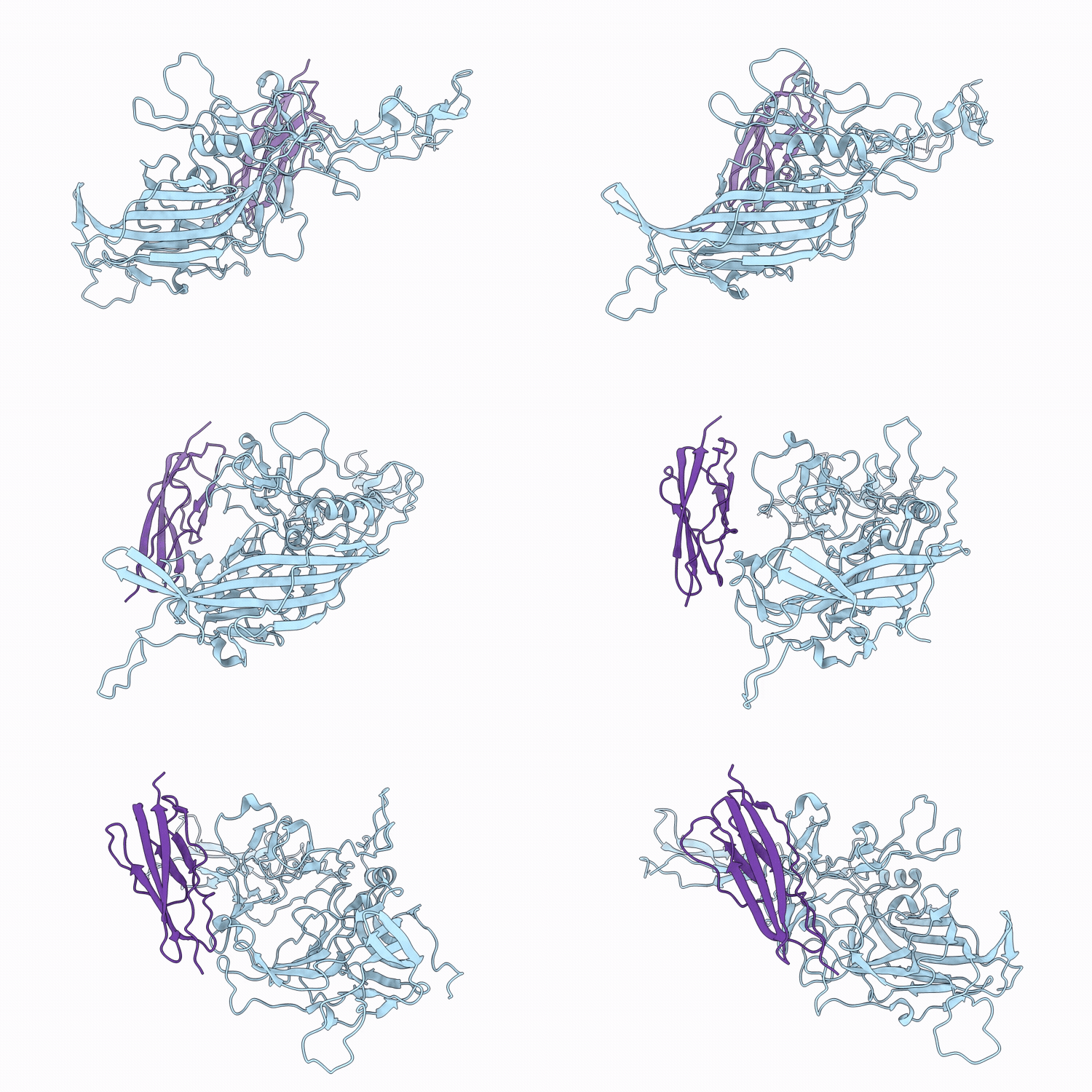
Cryo-EM structure of AAV9-X1.1 complexed to AAVR-PKD2
Biological Source:
Source Organism(s):
Expression System(s):
Method Details:
Experimental Method:
Resolution:
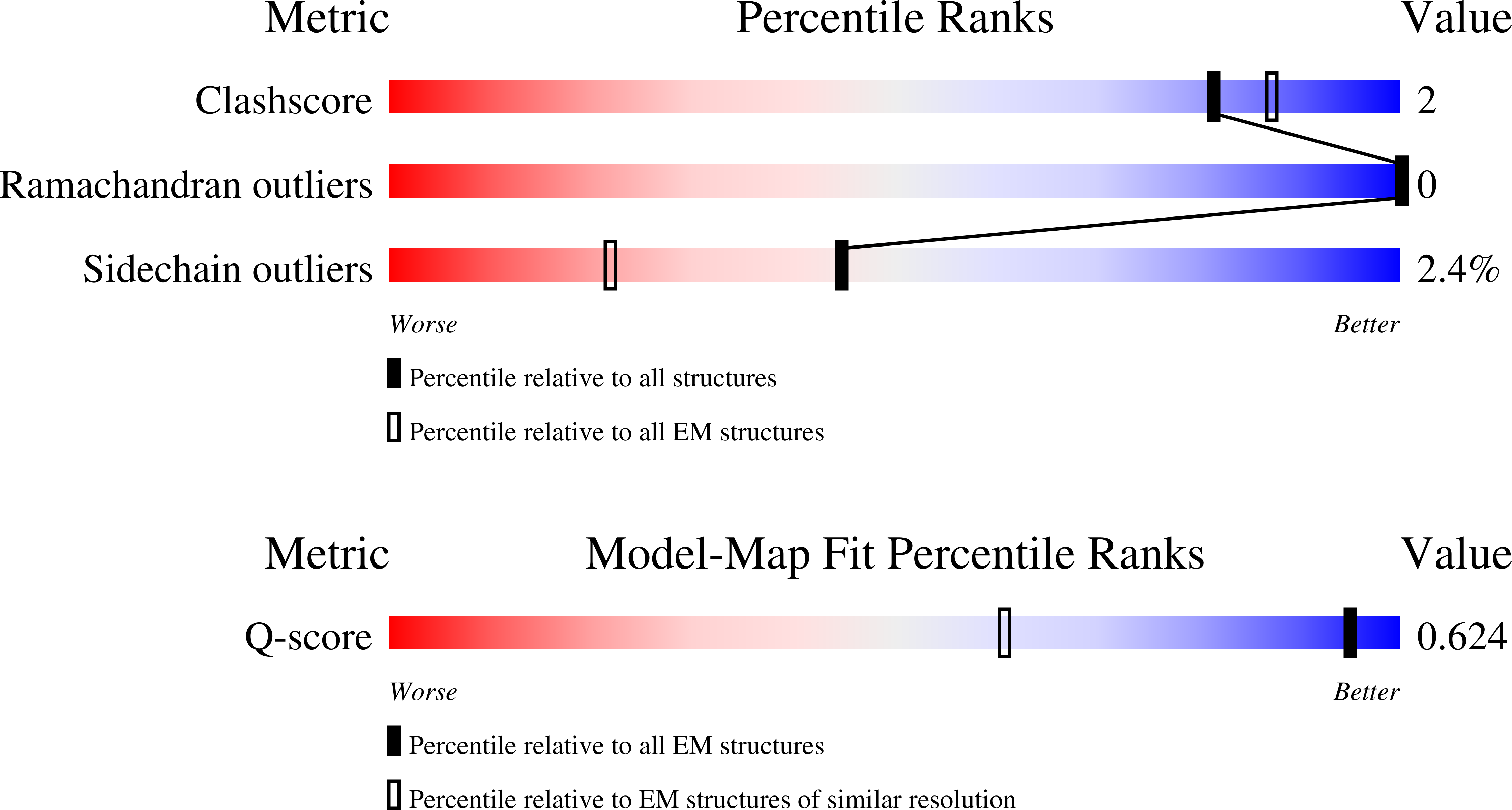
2.18 Å
Aggregation State:
PARTICLE
Reconstruction Method:
SINGLE PARTICLE
Macromolecular Entities
Structures with similar UniProt ID
Protein Blast
Polymer Type:polypeptide(L)
Molecule:Capsid protein VP1
Gene (Uniprot):cap
Chain IDs:A
Chain Length:743
Number of Molecules:1
Biological Source:Adeno-associated virus
Structures with similar UniProt ID
Protein Blast
Polymer Type:polypeptide(L)
Molecule:Dyslexia-associated protein K
Gene (Uniprot):Kiaa0319l
Chain IDs:B (auth: R)
Chain Length:124
Number of Molecules:1
Biological Source:Mus musculus
Ligand Molecules
Primary Citation
Structural basis of liver de-targeting and neuronal tropism of CNS-targeted AAV capsids.
Mol.Ther. ? ? ? (2026)
PMID: 41906393 DOI: 10.1016/j.ymthe.2026.03.030

Abstact

Developing effective vectors for gene therapy requires accurate on-target coverage while minimizing off-target transduction that can lead to adverse events. In mice, the engineered capsid PHP.eB shows enhanced brain transduction, while the further engineered CAP-B10 is also de-targeted from astrocytes and liver. Here, we solved cryoelectron microscopy (cryo-EM) structures of CAP-B10 and its complex with the adeno-associated virus receptor (AAVR) domain PKD2, at 2.22- and 2.20-A resolutions, respectively. These structures reveal a motif that hinders AAVR binding, which we confirmed by measuring affinities. We showed that this motif is transferable to other capsids by solving cryo-EM structures of AAV9-X1, at 3.09 A, and AAV9-X1.1 without and with PKD2, at 2.51 and 2.18 A, respectively. Using this structural information, we designed and validated novel AAV variants with reduced liver and altered brain cell tropism in vivo. Overall, we provide a framework for using structural information to guide rational engineering of gene delivery vectors to achieve safe and effective delivery.

Legend

Protein

Chemical

Disease

Primary Citation of related structures
Feedback Form
Name
Email
Institute
Feedback