

9P3K image
Deposition Date 2025-06-14
Release Date 2026-05-13
Last Version Date 2026-06-03
Entry Detail
PDB ID:
9P3K
Keywords:
Title:
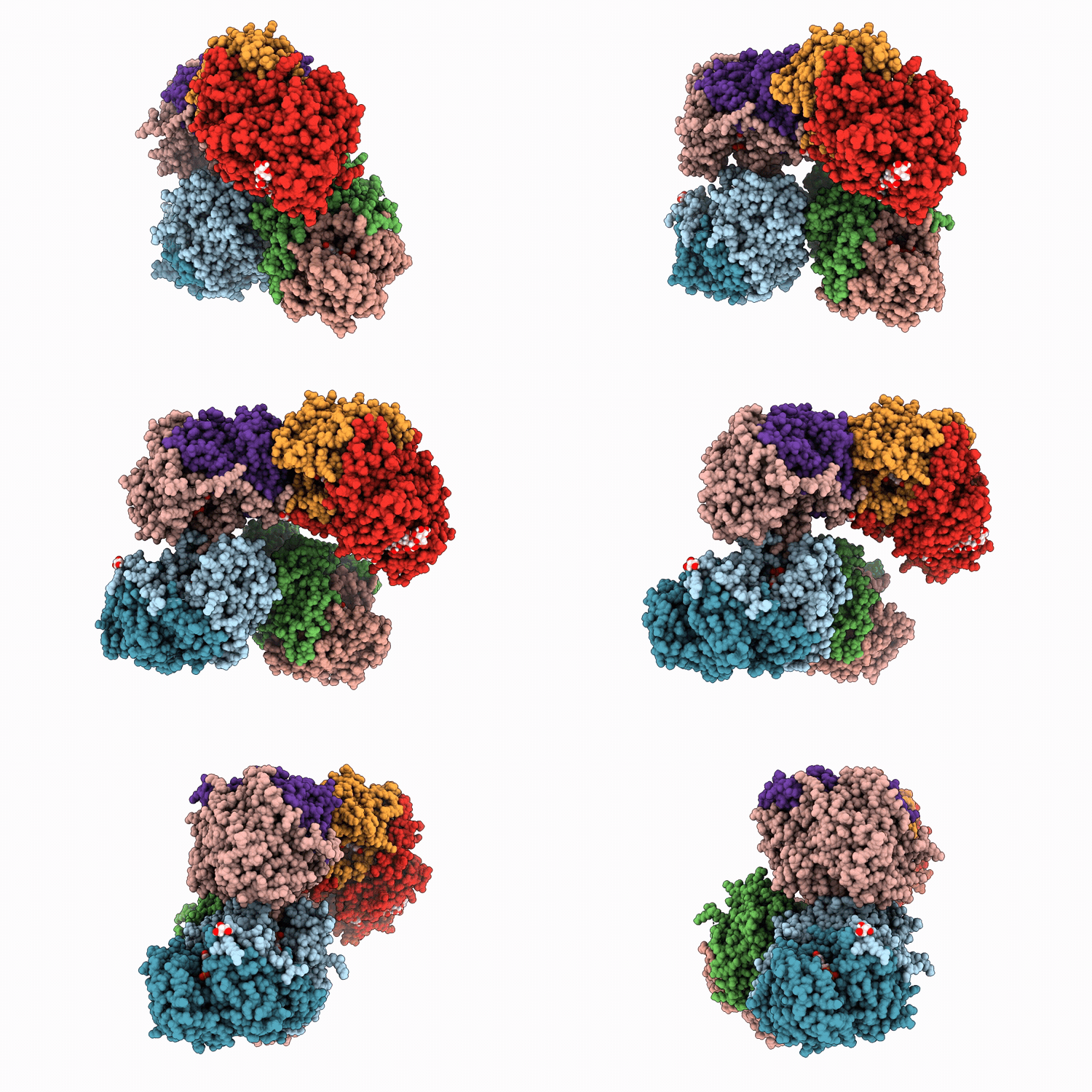
Crystal Structure of Xyloglucan Xylosyltransferase 2 and Xyloglucan Xylosyltransferase 5 Heterodimer Bound to UDP and Cellohexaose
Biological Source:
Source Organism(s):
Expression System(s):
Method Details:
Experimental Method:
Resolution:
3.20 Å
R-Value Free:
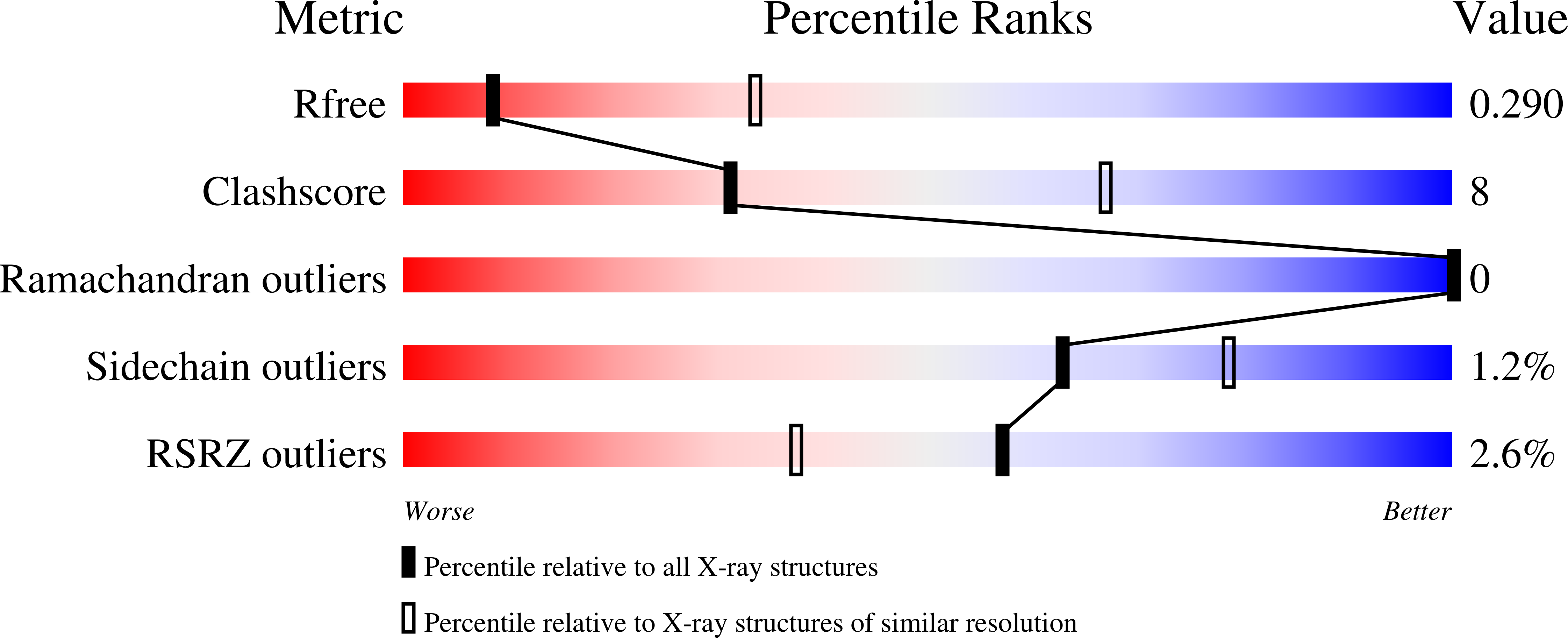
0.28
R-Value Work:
0.22
R-Value Observed:
0.23
Space Group:
P 1
Macromolecular Entities
Polymer Type:polypeptide(L)
Molecule:Xyloglucan 6-xylosyltransfera
Gene (Uniprot):XXT2
Chain IDs:A, C, E, G
Chain Length:420
Number of Molecules:4
Biological Source:Arabidopsis thaliana
Polymer Type:polypeptide(L)
Molecule:Xyloglucan 6-xylosyltransfera
Gene (Uniprot):XXT5
Chain IDs:B, D, F, H
Chain Length:387
Number of Molecules:4
Biological Source:Arabidopsis thaliana
Primary Citation
Xyloglucan xylosyltransferase stem region mediates heterodimer formation.
Nat Commun ? ? ? (2026)
PMID: 42143027 DOI: 10.1038/s41467-026-73329-0

Abstact

Xyloglucans are plant cell wall hemicelluloses composed of a glucan backbone substituted with xylosyl residues with diverse branching patterns. Xyloglucan xylosyltransferases (XXT) 2 and XXT5 are both required to fully xylosylate the glucan backbone and physically interact, yet the mechanism of this interaction has remained undefined. Here, we present crystal structures of the XXT2-XXT5 heterodimer, organized as an obligatory heterodimer and bound to both substrates. These structures confirm the presence of a secondary binding pocket in XXT5 that likely accommodates a pre-xylosylated glucan chain. A previously uncharacterized interaction is also revealed between XXT2's stem region and XXT5, which is absent in the XXT1 homodimer structure. Truncated and chimeric protein experiments support that this stem polypeptide controls oligomerization, a mechanism likely shared by other glycosyltransferase complexes. Together, these findings provide the structural basis for understanding how XXTs coordinate xyloglucan xylosylation and offer insight into the mechanism of their dimerization.

Legend

Protein

Chemical

Disease

Primary Citation of related structures
Feedback Form
Name
Email
Institute
Feedback