

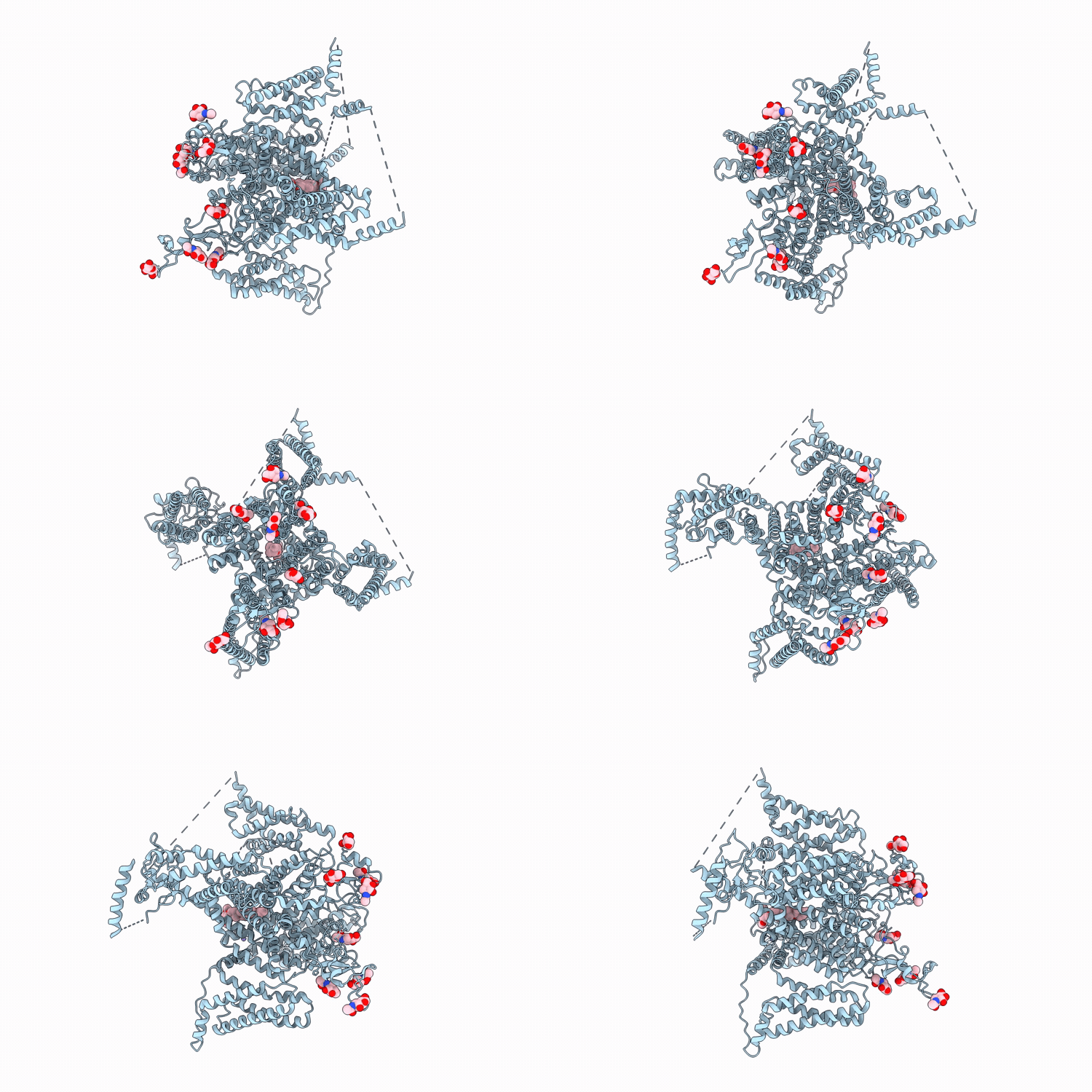
9P24 image
Deposition Date 2025-06-11
Release Date 2026-04-08
Last Version Date 2026-04-08
Entry Detail
PDB ID:
9P24
Title:
Structure of human cardiac sodium channel Nav1.5 in intermediate open state
Biological Source:
Source Organism(s):
Homo sapiens (Taxon ID: 9606)
Expression System(s):
Method Details:
Experimental Method:
Resolution:
3.48 Å
Aggregation State:
PARTICLE
Reconstruction Method:
SINGLE PARTICLE
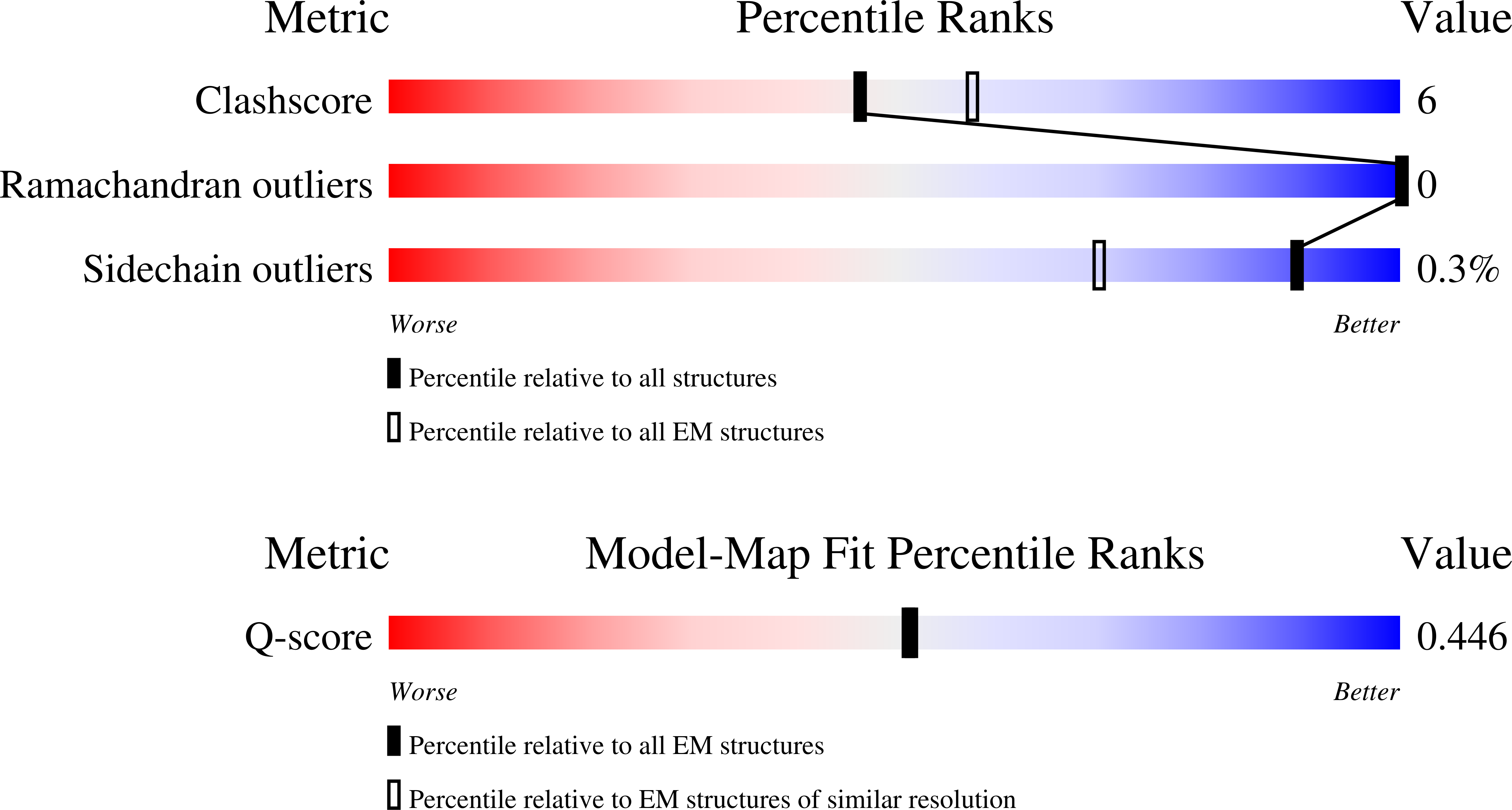
Macromolecular Entities
Structures with similar UniProt ID
Protein Blast
Polymer Type:polypeptide(L)
Molecule:Sodium channel protein type 5
Gene (Uniprot):SCN5A
Chain IDs:A
Chain Length:2016
Number of Molecules:1
Biological Source:Homo sapiens
Primary Citation
Structural and functional mechanisms underlying activation gate dynamics and IFM motif accessibility in human Na v 1.5.
Nat Commun 17 ? ? (2026)
PMID: 41698958 DOI: 10.1038/s41467-026-69672-x

Abstact

Voltage-gated sodium channels are vital for regulating excitability in muscle and nerve cells, and their dysregulation is linked to a range of diseases. However, therapeutic targeting of Na(v) channels remains challenging due to a limited understanding of their gating mechanisms. Here, we present a cryo-EM structure of human Na(v)1.5 in an intermediate open state, stabilized by interactions between the N-terminal domain and the S6(I) segment. This structure reveals a possible Na(+) binding site adjacent to the conserved inactivation (IFM) motif. Molecular dynamics simulations demonstrate that monovalent cations stably occupy this site, while electrophysiological recordings demonstrate that ion binding modulates IFM motif docking and fast inactivation kinetics. Our findings reveal that IFM accessibility is dynamically regulated in this intermediate state, refining the canonical door-wedge model of fast inactivation. Collectively, our study provides a revised structural framework for Na(v)1.5 gating mechanisms, suggesting an alternative pathway for ion accessibility that may inform better mechanistic and therapeutic strategies for treating Na(v)1.5-related cardiac arrhythmias.

Legend

Protein

Chemical

Disease

Primary Citation of related structures
Feedback Form
Name
Email
Institute
Feedback