

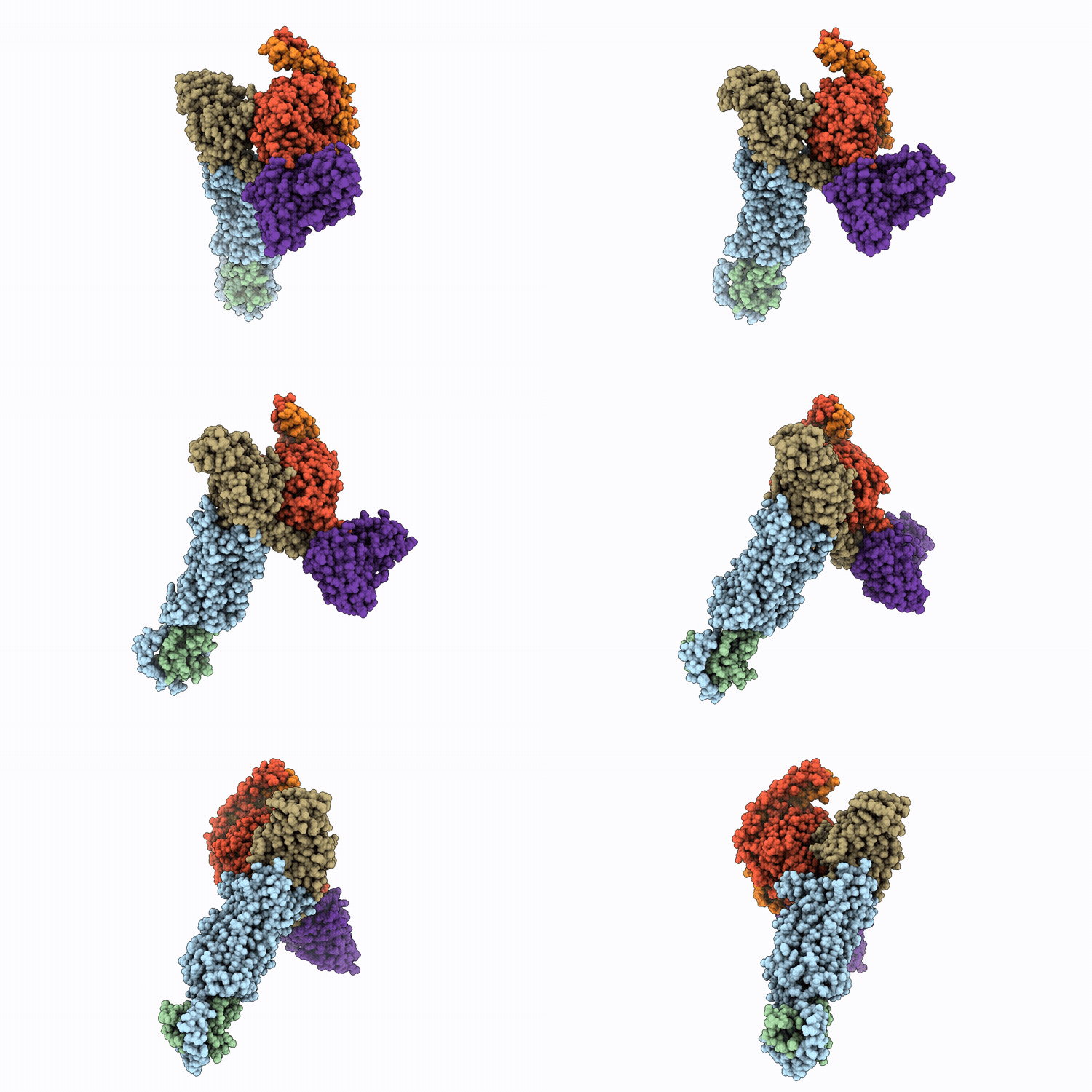
9P0M image
Deposition Date 2025-06-07
Release Date 2026-04-29
Last Version Date 2026-04-29
Entry Detail
PDB ID:
9P0M
Title:
Composite map of CXCL11-CXCR3-Gi-scFv16
Biological Source:
Source Organism(s):
Homo sapiens (Taxon ID: 9606)
Mus musculus (Taxon ID: 10090)
Method Details:
Experimental Method:
Resolution:
2.95 Å
Aggregation State:
PARTICLE
Reconstruction Method:
SINGLE PARTICLE
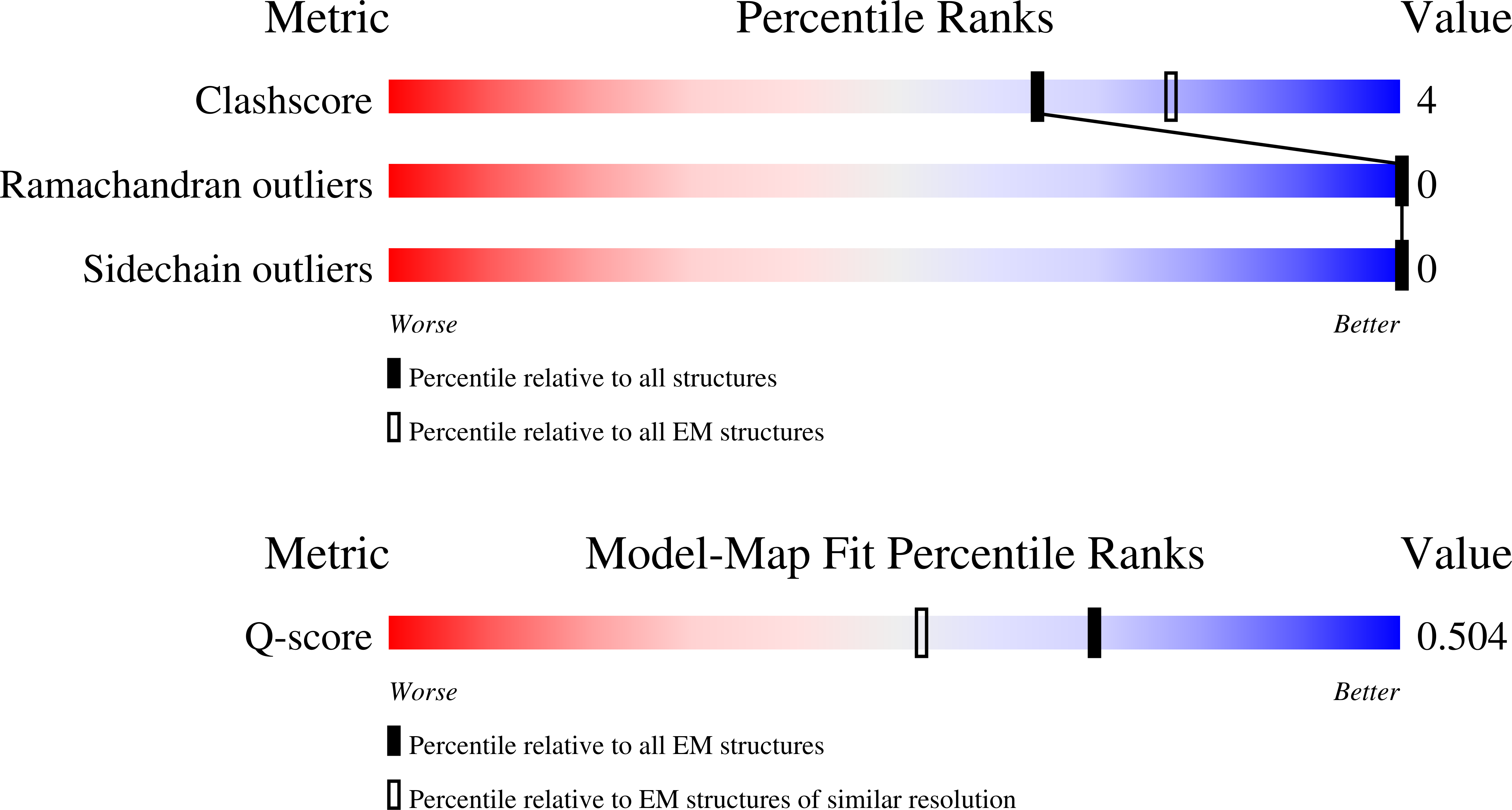
Macromolecular Entities
Protein Blast
Polymer Type:polypeptide(L)
Molecule:C-X-C chemokine receptor type
Gene (Uniprot):CXCR3, EAH_00062270
Chain IDs:A
Chain Length:684
Number of Molecules:1
Biological Source:Homo sapiens
Structures with similar UniProt ID
Protein Blast
Polymer Type:polypeptide(L)
Molecule:C-X-C motif chemokine 11
Gene (Uniprot):CXCL11
Chain IDs:B
Chain Length:73
Number of Molecules:1
Biological Source:Homo sapiens
Structures with similar UniProt ID
Protein Blast
Polymer Type:polypeptide(L)
Molecule:Guanine nucleotide-binding pr
Gene (Uniprot):GNAI1
Chain IDs:E (auth: C)
Chain Length:376
Number of Molecules:1
Biological Source:Homo sapiens
Structures with similar UniProt ID
Protein Blast
Polymer Type:polypeptide(L)
Molecule:Guanine nucleotide-binding pr
Gene (Uniprot):GNB1
Chain IDs:C (auth: D)
Chain Length:357
Number of Molecules:1
Biological Source:Homo sapiens
Structures with similar UniProt ID
Protein Blast
Polymer Type:polypeptide(L)
Molecule:Guanine nucleotide-binding pr
Gene (Uniprot):GNG2
Chain IDs:D (auth: E)
Chain Length:71
Number of Molecules:1
Biological Source:Homo sapiens
Protein Blast
Polymer Type:polypeptide(L)
Molecule:scFv16
Chain IDs:F
Chain Length:269
Number of Molecules:1
Biological Source:Mus musculus
Ligand Molecules
Primary Citation
Molecular basis of CXC chemokine receptor 3 ligand multispecificity.
Sci Adv 12 eadz3767 eadz3767 (2026)
PMID: 41996512 DOI: 10.1126/sciadv.adz3767

Abstact

C-X-C motif chemokine receptor 3 (CXCR3) is essential for immune cell functions and pivotal in T helper 1 cell infiltration in autoimmune and chronic inflammatory diseases and in tumor proliferation and metastasis, but the mechanisms by which the endogenous ligands CXCL9, CXCL10, and CXCL11 differentially recognize and activate CXCR3 are not fully understood. Here, we present cryo-electron microscopy structures of all three chemokine-CXCR3-G(i) complexes, complemented by cell binding studies and functional mutagenesis data. We systematically compare the pharmacological and interaction profiles of CXCL9, CXCL10, and CXCL11 to rationalize their varying efficacies and potencies and to reveal the critical role of the membrane-distal CXCR3 N terminus in ligand binding and signaling. Using chimeric chemokines and molecular dynamics, we reveal the signaling plasticity of chemokine ligands and signaling determinants. Together, these insights enable us to propose a multimodal binding and activation framework that explains CXCR3 chemokine ligand multispecificity and signaling versatility and offer tools to interrogate and modulate CXCR3 biology.

Legend

Protein

Chemical

Disease

Primary Citation of related structures
Feedback Form
Name
Email
Institute
Feedback