

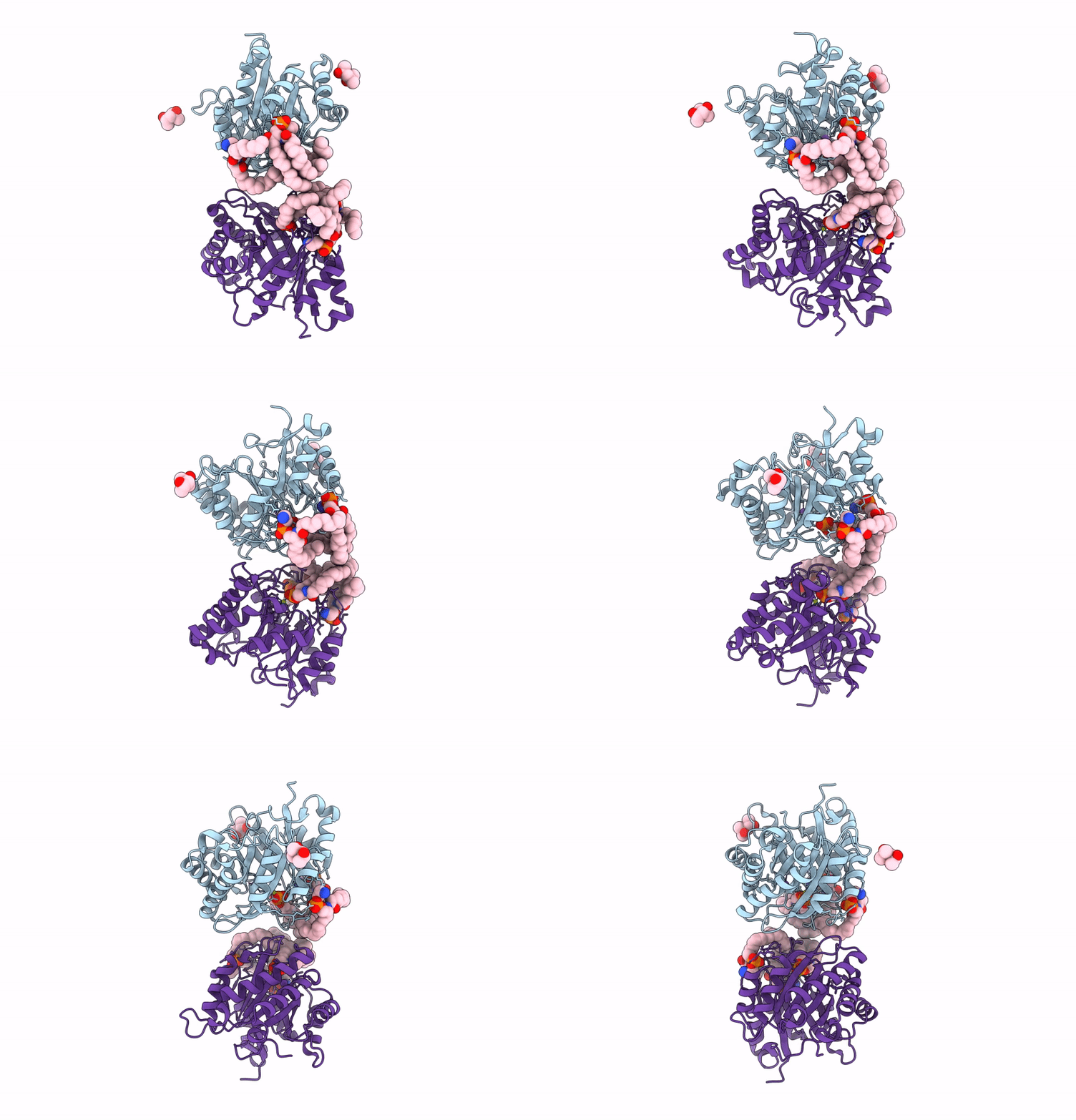
9OZO image
Deposition Date 2025-06-05
Release Date 2025-12-03
Last Version Date 2026-06-24
Entry Detail
PDB ID:
9OZO
Keywords:
Title:
Structure of phospholipase D BetaIB1i from Sicarius terrosus venom, H47N mutant bound to product and substrate sphingolipids at 2.2 A resolution from a 2-day old crystal
Biological Source:
Source Organism(s):
Expression System(s):
Method Details:
Experimental Method:
Resolution:
2.20 Å
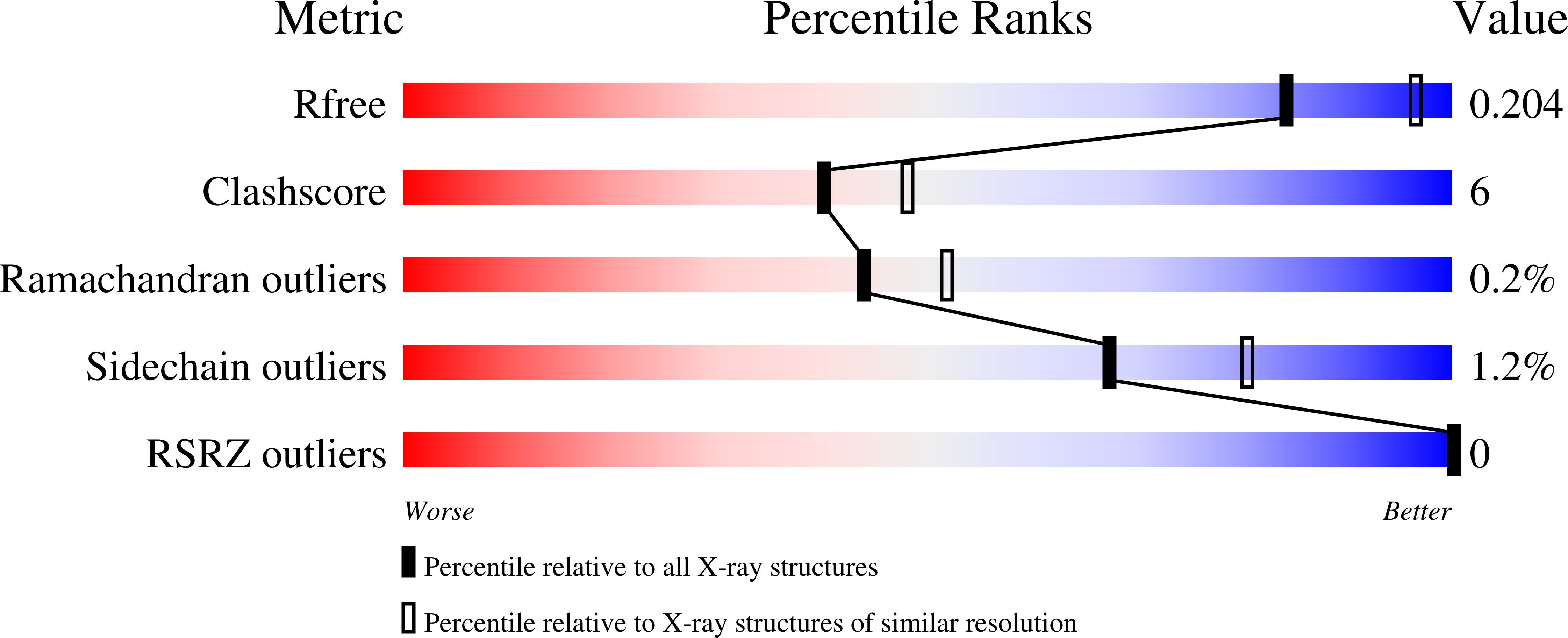
R-Value Free:
0.19
R-Value Work:
0.15
R-Value Observed:
0.15
Space Group:
I 1 2 1
Macromolecular Entities
Structures with similar UniProt ID
Protein Blast
Polymer Type:polypeptide(L)
Molecule:Dermonecrotic toxin StSicTox-
Mutagens:H47N
Chain IDs:A, B
Chain Length:301
Number of Molecules:2
Biological Source:Sicarius terrosus
Primary Citation
Spider venom phospholipase D toxin structure: Interfacial binding site, mechanism, activation, and head group preference.
Proc.Natl.Acad.Sci.USA 123 e2513997123 e2513997123 (2026)
PMID: 41941646 DOI: 10.1073/pnas.2513997123

Abstact

Envenomation by sicariid spiders such as the brown recluse can cause loxoscelism, a syndrome involving localized dermonecrosis and/or systemic effects like hemolysis. The causative venom toxins are unusual interfacial phospholipase D enzymes that cyclize sphingolipid and lysophospholipid substrates when bound to membrane surfaces. Crystal structures of several of these toxins have been reported, but none of them directly illuminates how lipids bind in the active site and at the interfacial binding site (IBS); indeed, as a general rule the lipid interfaces of peripheral membrane proteins resist crystallographic determination. Here, however, we report X-ray crystal structures at 1.85 to 2.6 A resolution of a venom toxin from the Chilean six-eyed sand spider Sicarius levii (terrosus) bound to a micelle-like agglomeration of product and substrate sphingolipids. Each enzyme subunit binds three sphingolipid molecules, one in the active site and two at adjacent noncatalytic sites, generating an interface that approximates the IBS predicted by molecular dynamics. The conformations of substrate and cyclic product in the active site definitively confirm our previously proposed catalytic mechanism. Comparisons with lipid-free structures show conformational changes in two loops that suggest a mechanism for allosteric/surface activation. Docking studies suggest that the variable preference of these toxins for phosphocholine and phosphoethanolamine head groups involves subtle changes in size and shape of the active-site pocket. The structures reveal key facets of the molecular basis of loxoscelism and show that in favorable cases crystallography can illuminate the IBS of peripheral membrane proteins.

Legend

Protein

Chemical

Disease

Primary Citation of related structures
Feedback Form
Name
Email
Institute
Feedback