

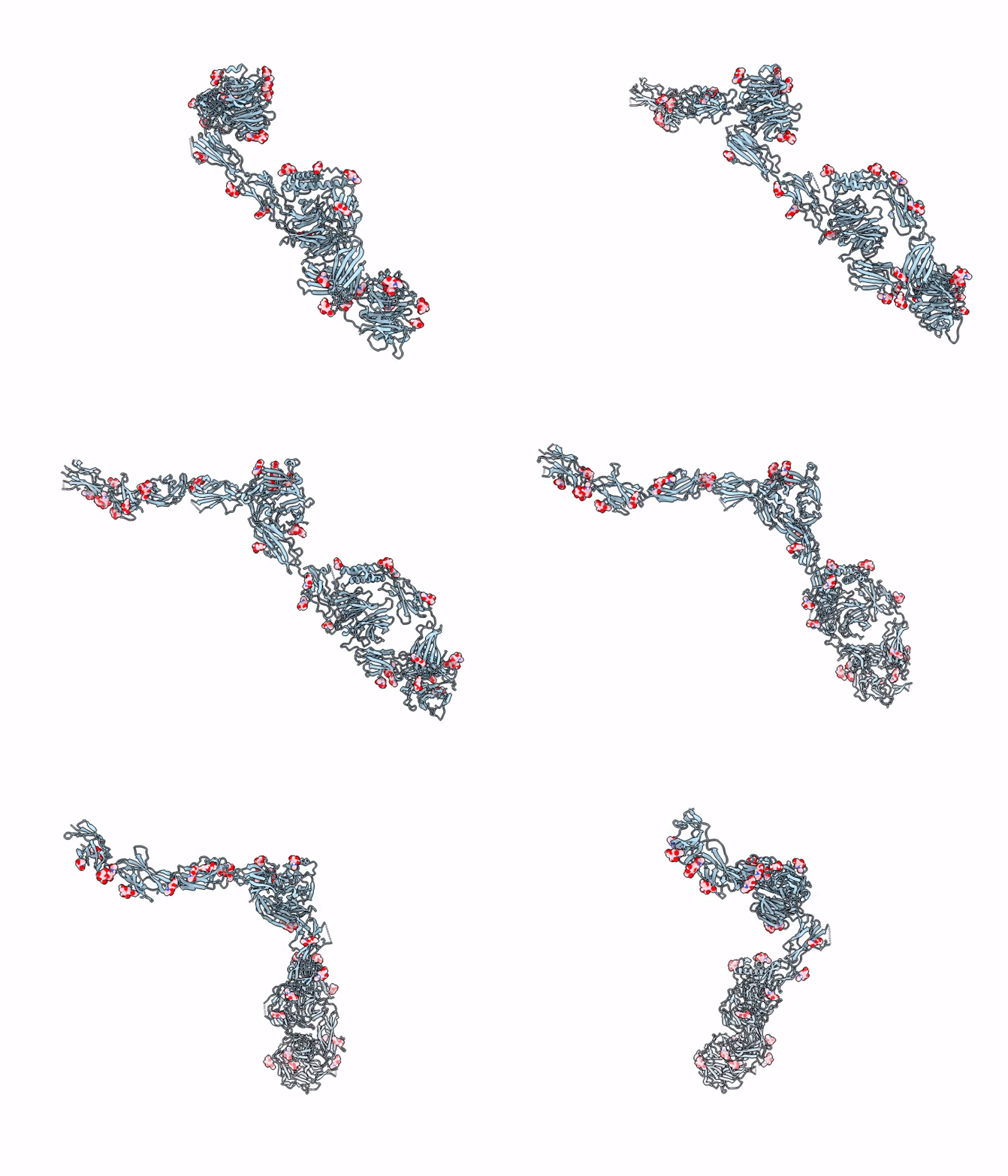
9OZI image
Deposition Date 2025-06-05
Release Date 2026-02-25
Last Version Date 2026-04-08
Entry Detail
PDB ID:
9OZI
Title:
Cryo-EM structure of chicken ROS1 in apo-state. This is the complete map and model.
Biological Source:
Source Organism(s):
Gallus gallus (Taxon ID: 9031)
Expression System(s):
Method Details:
Experimental Method:
Resolution:
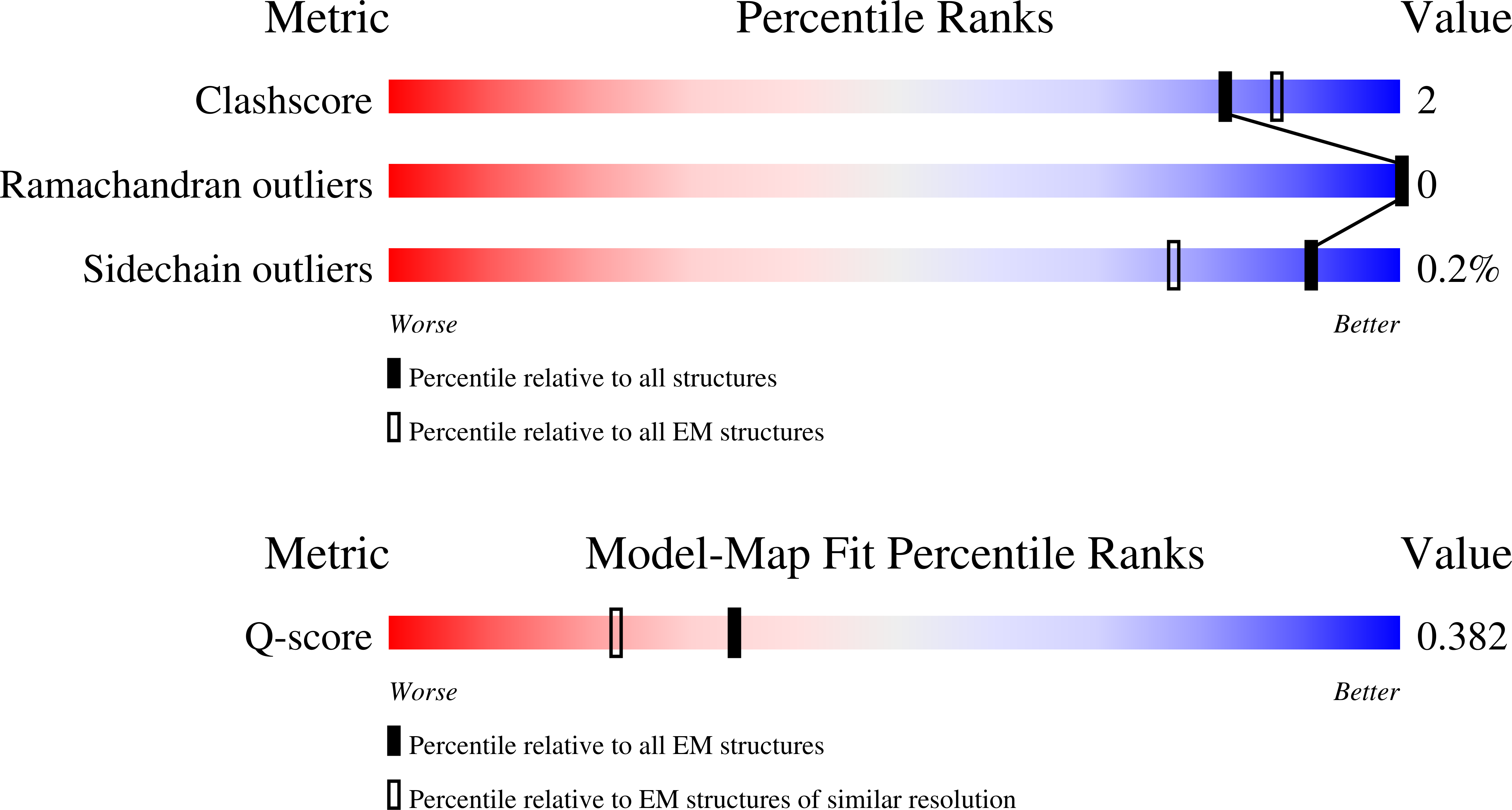
3.40 Å
Aggregation State:
PARTICLE
Reconstruction Method:
SINGLE PARTICLE
Macromolecular Entities
Structures with similar UniProt ID
Protein Blast
Polymer Type:polypeptide(L)
Molecule:Tyrosine-protein kinase recep
Gene (Uniprot):ROS1
Chain IDs:A
Chain Length:2311
Number of Molecules:1
Biological Source:Gallus gallus
Ligand Molecules
Primary Citation
Structural insights into the activation of the chicken ROS1 receptor by the NEL/NICOL ligand complex.
Nat Commun 17 ? ? (2026)
PMID: 41735298 DOI: 10.1038/s41467-026-69942-8

Abstact

The receptor tyrosine kinase ROS1 plays essential roles in cell growth and sperm maturation, yet its activation mechanism has remained poorly understood. Here, we report high-resolution cryo-electron microscopy (cryo-EM) structures of chicken ROS1 in its ligand-free form, in complex with its ligand NEL, and with the ligand/co-ligand complex NEL/NICOL. Unliganded ROS1 adopts an arc-shaped conformation. The interaction between NEL and ROS1 is mediated by the VWC2 domain of NEL and the beta1 domain of ROS1. Binding of NICOL to the coiled-coil domain of NEL stabilizes NEL into a batwing-shaped asymmetric dimer, which can recruit only one ROS1 molecule due to steric hindrance. Structural analyses and biochemical results suggest that the 2:1 NEL/NICOL complexes further oligomerize through LamG-VWC4 domain interactions, facilitating the clustering of multiple ROS1 for its activation. Functional assays confirm that both NICOL and the multimerization of NEL/NICOL complexes are required for robust ROS1 signaling. Our findings establish NICOL as a critical co-ligand for ROS1 and suggest a distinct ligand-driven oligomerization mechanism for ROS1 activation.

Legend

Protein

Chemical

Disease

Primary Citation of related structures
Feedback Form
Name
Email
Institute
Feedback