

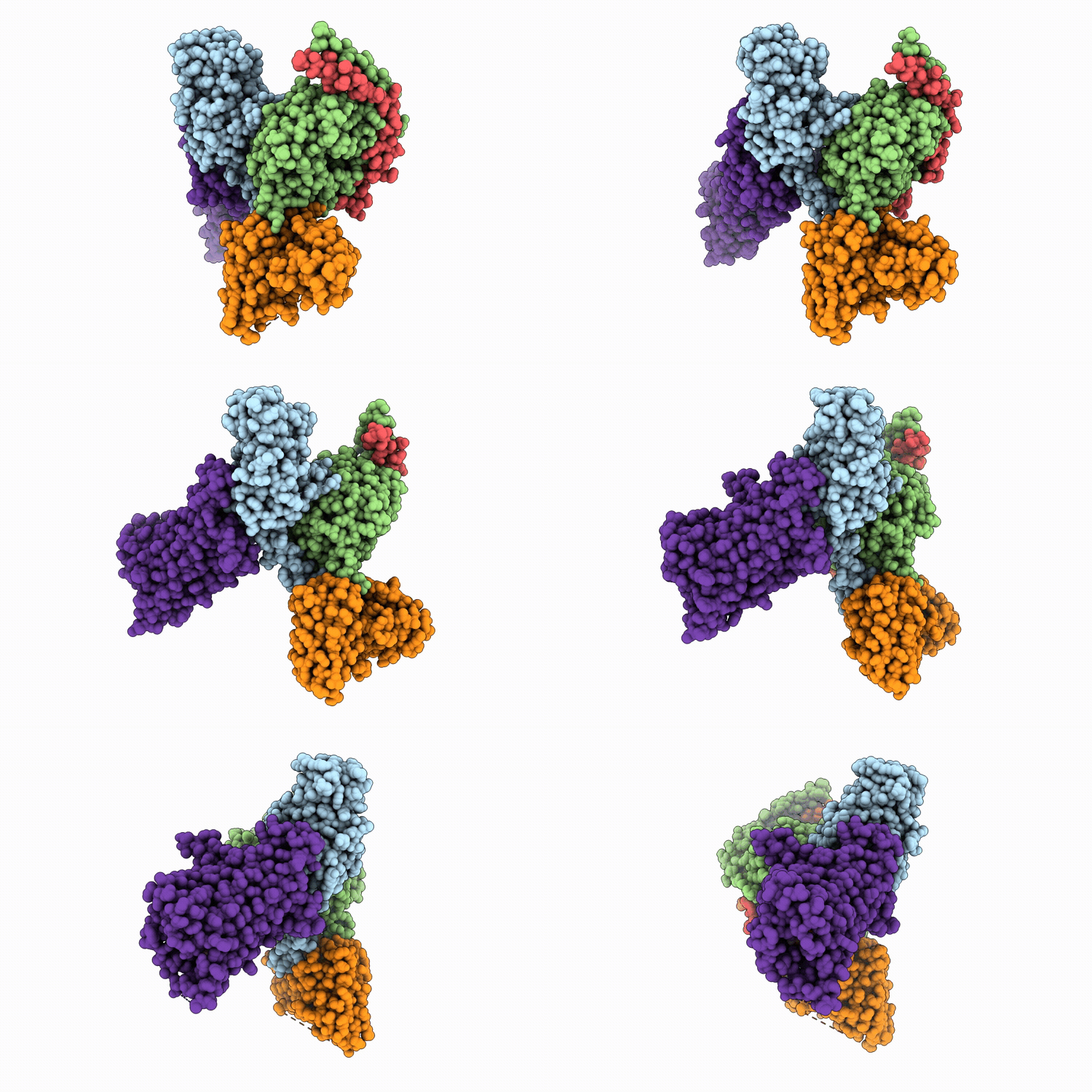
9OXA image
Deposition Date 2025-06-03
Release Date 2026-04-22
Last Version Date 2026-05-06
Entry Detail
PDB ID:
9OXA
Title:
CryoEM structure of Gi-coupled TAS2R43 with aristolochic acid I
Biological Source:
Source Organism(s):
Homo sapiens (Taxon ID: 9606)
Mus musculus (Taxon ID: 10090)
Expression System(s):
Method Details:
Experimental Method:
Resolution:
2.90 Å
Aggregation State:
PARTICLE
Reconstruction Method:
SINGLE PARTICLE
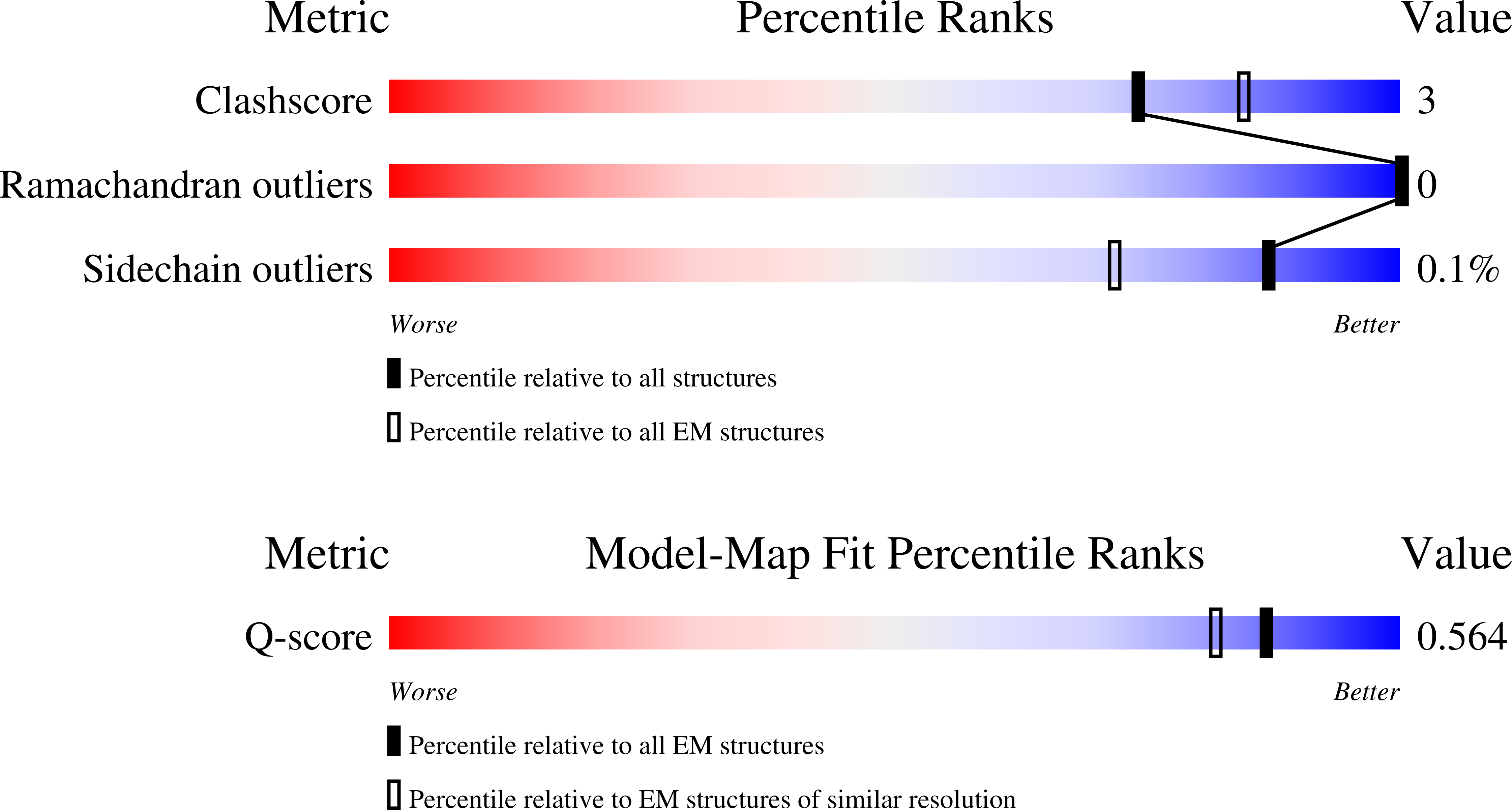
Macromolecular Entities
Structures with similar UniProt ID
Protein Blast
Polymer Type:polypeptide(L)
Molecule:Guanine nucleotide-binding pr
Gene (Uniprot):GNAI1
Chain IDs:D (auth: A)
Chain Length:354
Number of Molecules:1
Biological Source:Homo sapiens
Structures with similar UniProt ID
Protein Blast
Polymer Type:polypeptide(L)
Molecule:Guanine nucleotide-binding pr
Gene (Uniprot):GNB1
Chain IDs:B
Chain Length:402
Number of Molecules:1
Biological Source:Homo sapiens
Structures with similar UniProt ID
Protein Blast
Polymer Type:polypeptide(L)
Molecule:Guanine nucleotide-binding pr
Gene (Uniprot):GNG2
Chain IDs:C
Chain Length:71
Number of Molecules:1
Biological Source:Homo sapiens
Protein Blast
Polymer Type:polypeptide(L)
Molecule:scFv16
Chain IDs:E (auth: D)
Chain Length:267
Number of Molecules:1
Biological Source:Mus musculus
Protein Blast
Polymer Type:polypeptide(L)
Molecule:Soluble cytochrome b562,Taste
Gene (Uniprot):cybC, TAS2R43
Chain IDs:A (auth: R)
Chain Length:645
Number of Molecules:1
Biological Source:Homo sapiens
Ligand Molecules
Primary Citation
Structural insights into coffee bitter taste perception by TAS2R43 receptor.
Nat.Struct.Mol.Biol. 33 701 710 (2026)
PMID: 42009777 DOI: 10.1038/s41594-026-01776-w

Abstact

Bitter taste functions as a means of both protection against potentially toxic compounds and savoring bitter tasting foods and beverages. Among the 26 bitter taste receptors, taste receptor type 2 member 43 (TAS2R43) has been identified as key for recognizing the bitter taste of coffee. TAS2R43 has also been implicated in many other physiological processes, including the regulation of glucagon-like peptide 1 release from the intestine, bronchodilation, innate immunity and metabolism. Here we report cryo-electron microscopy structures of human TAS2R43 coupled with inhibitory G protein or gustducin (G(gust)) stabilized by the potent nephrotoxin and carcinogen aristolochic acid I. Both structures revealed that aristolochic acid I binds in a presumed orthosteric pocket shared with other bitter taste receptor. Further structural, functional and computational studies revealed potential modes for coffee's constituents including caffeine and cafestol, which are bitter tastants from coffee. Lastly, long-timescale molecular dynamics simulations identified potential cryptic allosteric pockets in TAS2R43. These structures could accelerate the search for specific bitter taste ligands that ultimately may be therapeutically useful.

Legend

Protein

Chemical

Disease

Primary Citation of related structures
Feedback Form
Name
Email
Institute
Feedback