

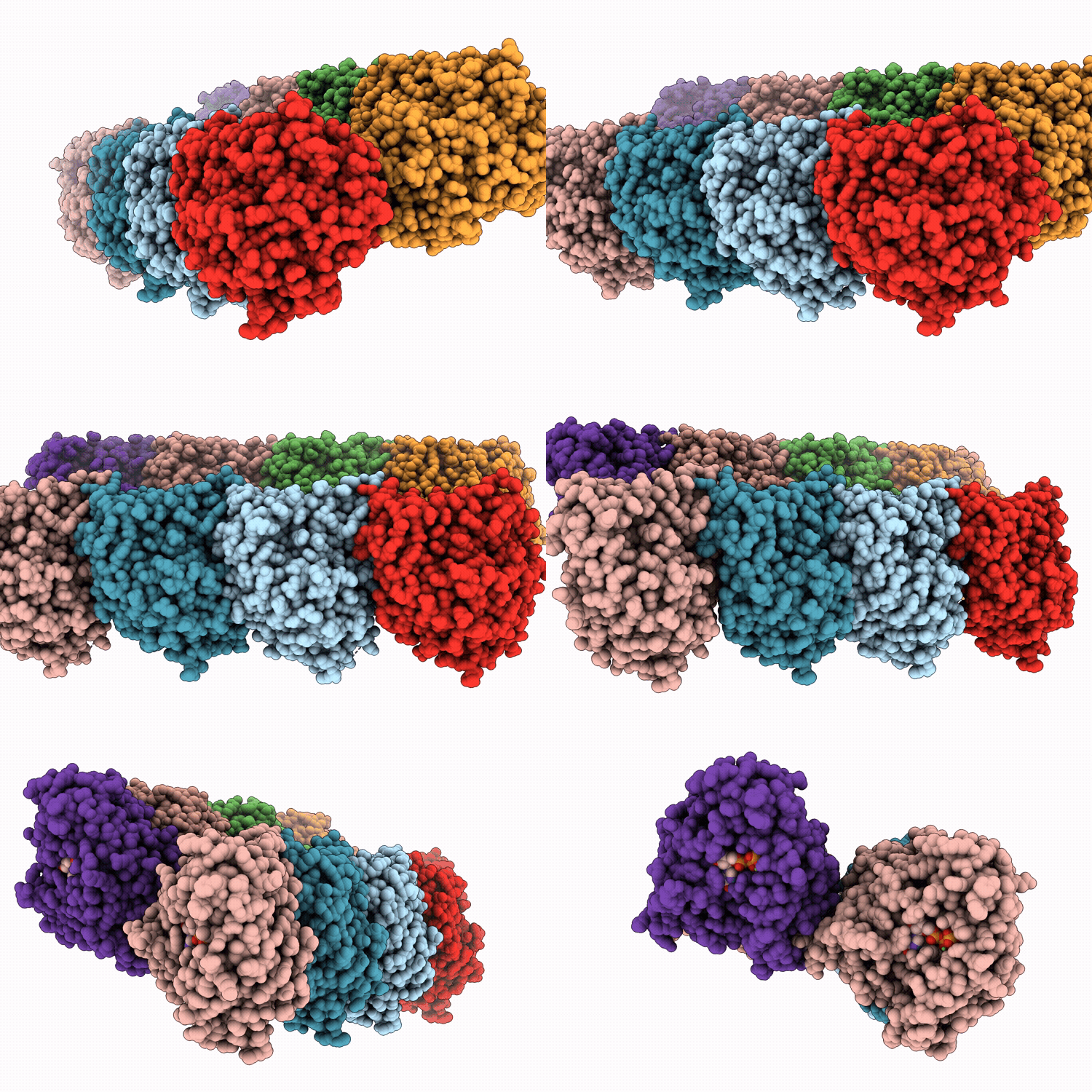
9OX7 image
Deposition Date 2025-06-03
Release Date 2026-03-18
Last Version Date 2026-05-06
Entry Detail
PDB ID:
9OX7
Title:
In situ microtubule structure in the axon of a human neuron
Biological Source:
Source Organism(s):
Homo sapiens (Taxon ID: 9606)
Method Details:
Experimental Method:
Resolution:
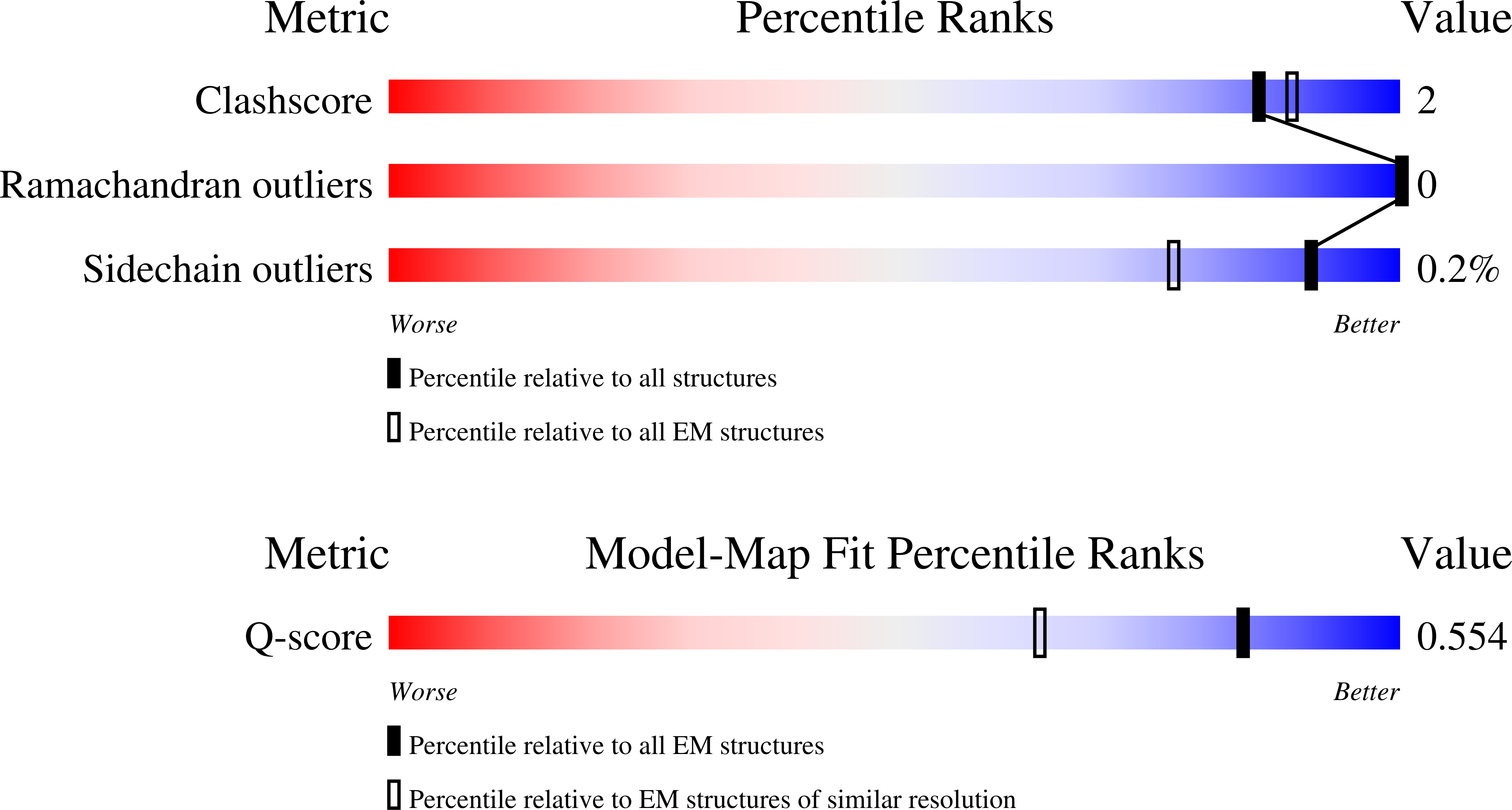
2.69 Å
Aggregation State:
FILAMENT
Reconstruction Method:
HELICAL
Macromolecular Entities
Structures with similar UniProt ID
Protein Blast
Polymer Type:polypeptide(L)
Molecule:Tubulin alpha-1A chain
Gene (Uniprot):TUBA1A
Chain IDs:E (auth: A), F (auth: C), G, H
Chain Length:451
Number of Molecules:4
Biological Source:Homo sapiens
Structures with similar UniProt ID
Protein Blast
Polymer Type:polypeptide(L)
Molecule:Tubulin beta-2B chain
Gene (Uniprot):TUBB2B
Chain IDs:A (auth: B), B (auth: D), C (auth: E), D (auth: F)
Chain Length:445
Number of Molecules:4
Biological Source:Homo sapiens
Primary Citation
Microtubules in the axon are GDP bound but adopt a stable GTP-like expanded state.
Nat.Struct.Mol.Biol. 33 631 640 (2026)
PMID: 41951886 DOI: 10.1038/s41594-026-01787-7

Abstact

Microtubules scaffold cells, supporting signaling and cargo transport. They assemble from GTP-tubulin, which hydrolyzes to GDP-tubulin during polymerization. GTP-microtubule lattices are stable; GDP lattices depolymerize rapidly. In vitro, hydrolysis triggers lattice compaction. Lattice spacing regulates motors and microtubule-associated proteins; however, the conformation of tubulin in microtubules in cells is unknown. Here, we present the atomic-resolution cryo-electron microscopy structure of human microtubules in situ, in the axons of human cortical neurons derived from induced pluripotent stem cells (iPS cells). Our 2.7-A-resolution reconstruction delineates bound water molecules and reveals that axonal microtubules adopt an expanded GTP-like lattice, despite being GDP bound. Using cryo-electron tomography and power spectrum analysis, we find that, unlike in axons, microtubules in undifferentiated iPS cells are compacted. Therefore, lattice expansion is part of neuronal differentiation. Our work provides molecular insights into neurogenesis and has implications for understanding microtubule stability and effector recruitment in neurons.

Legend

Protein

Chemical

Disease

Primary Citation of related structures
Feedback Form
Name
Email
Institute
Feedback