

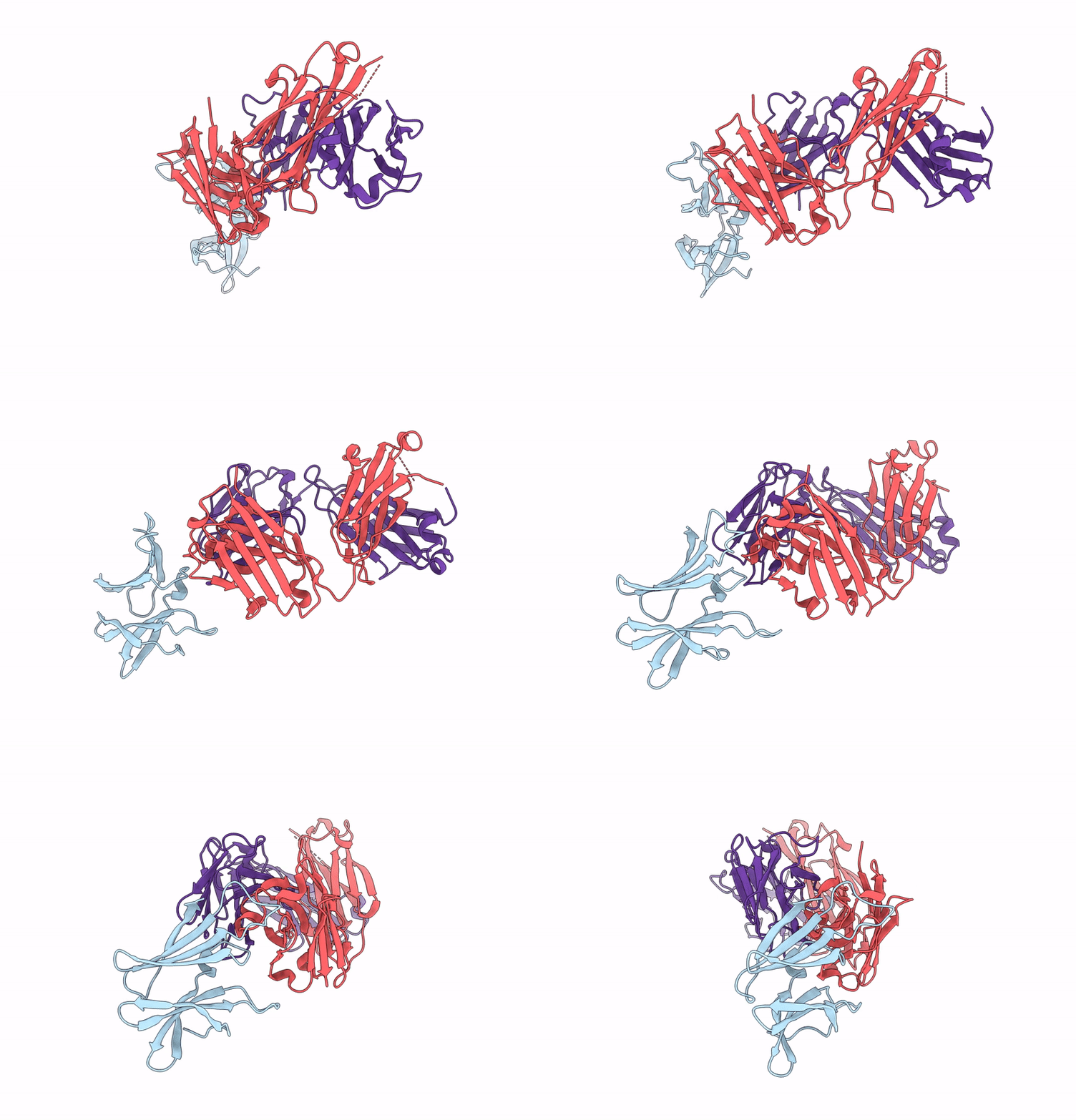
9OSX image
Deposition Date 2025-05-26
Release Date 2025-12-24
Last Version Date 2026-03-25
Entry Detail
PDB ID:
9OSX
Keywords:
Title:
PfCyRPA-EM epitope mimic bound to monoclonal antibody Cy.004
Biological Source:
Source Organism(s):
Expression System(s):
Method Details:
Experimental Method:
Resolution:
2.67 Å
R-Value Free:
0.29
R-Value Work:
0.25
R-Value Observed:
0.25
Space Group:
C 1 2 1

Macromolecular Entities
Protein Blast
Polymer Type:polypeptide(L)
Molecule:PfCyRPA-EM
Chain IDs:A
Chain Length:131
Number of Molecules:1
Biological Source:synthetic construct
Protein Blast
Polymer Type:polypeptide(L)
Molecule:Cy.004 heavy chain
Chain IDs:B
Chain Length:321
Number of Molecules:1
Biological Source:Gallus gallus
Protein Blast
Polymer Type:polypeptide(L)
Molecule:Cy.004 light chain
Chain IDs:C
Chain Length:209
Number of Molecules:1
Biological Source:Gallus gallus
Primary Citation
Structure-guided design of a PfCyRPA-based vaccine against blood-stage malaria.
Embo Mol Med 18 873 890 (2026)
PMID: 41772083 DOI: 10.1038/s44321-026-00376-x

Abstact

Effective vaccines against malaria are urgently required. All components of the PfPCRCR complex are essential for erythrocyte invasion by Plasmodium falciparum and are potential vaccine immunogens against blood-stage malaria. Of these, PfRH5 has progressed furthest in clinical development, while PfCyRPA also induces parasite growth-inhibitory antibodies. Here, we used direct nanoparticle coupling and structure-guided design to generate improved PfCyRPA-based immunogens. PfCyRPA is a six-bladed beta-propeller. Blades 1 and 2 are exposed in the PfPCRCR complex and contain the epitopes of the most potent known growth-inhibitory antibodies. We therefore performed structure-guided design to generate a correctly folded, thermostable epitope mimic, PfCyRPA-EM, containing blades 1 and 2. In a pre-clinical model, PfCyRPA-EM elicited antibodies that inhibited parasite growth at lower concentrations than those elicited by PfCyRPA. In addition, the higher thermostability of PfCyRPA-EM and its improved expression as an I53-50 nanoparticle fusion make it well-suited for clinical development, alone or with other immunogens.

Legend

Protein

Chemical

Disease

Primary Citation of related structures
Feedback Form
Name
Email
Institute
Feedback