

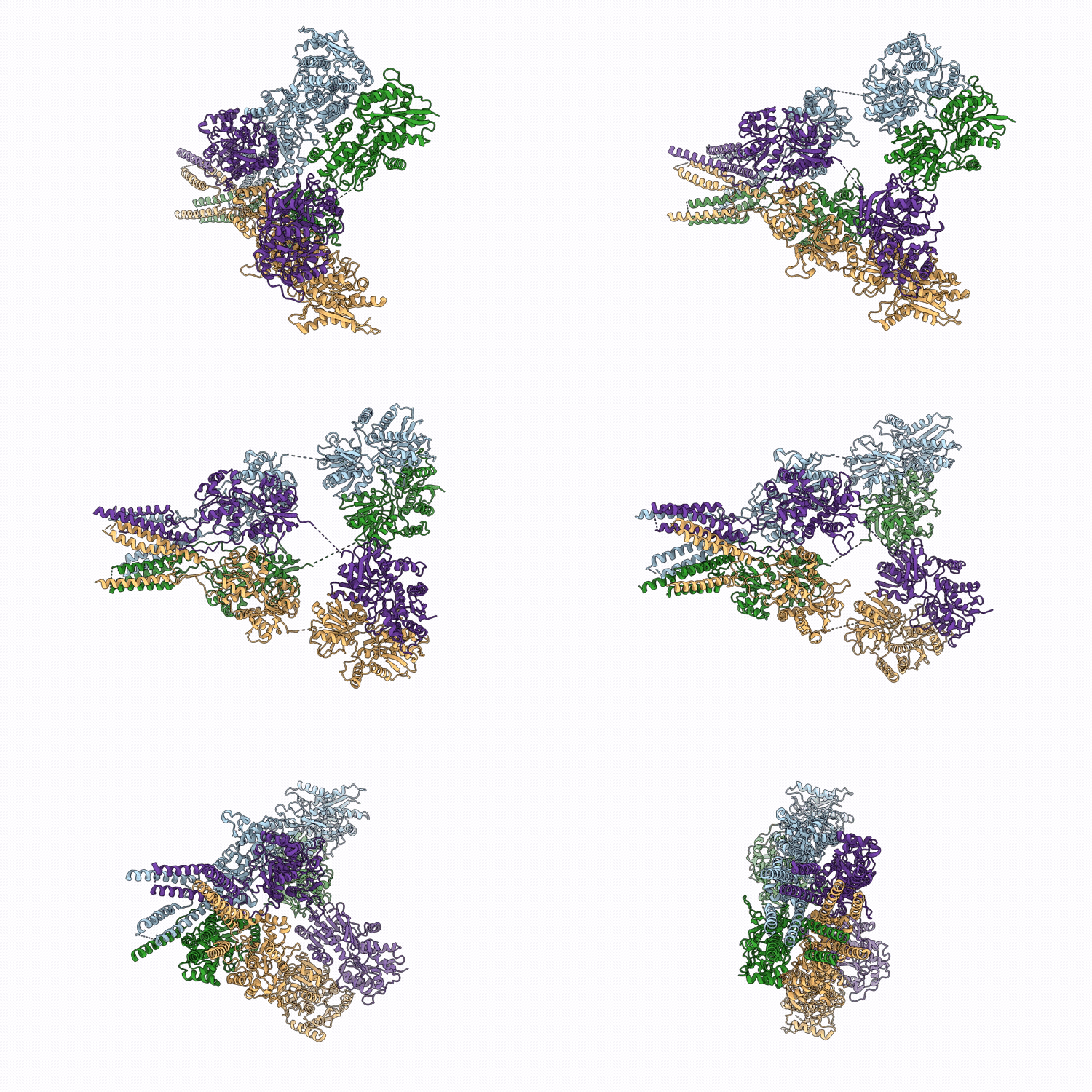
9OSI image
Deposition Date 2025-05-24
Release Date 2026-05-06
Last Version Date 2026-05-06
Entry Detail
PDB ID:
9OSI
Title:
The intact LBD state of GluK2/K5 with alpha-amino-3-hydroxy-5-methyl-4-isoxazolepropionic acid (AMPA)
Biological Source:
Source Organism(s):
Expression System(s):
Method Details:
Experimental Method:
Resolution:
3.95 Å
Aggregation State:
PARTICLE
Reconstruction Method:
SINGLE PARTICLE
Macromolecular Entities
Protein Blast
Polymer Type:polypeptide(L)
Molecule:Glutamate receptor ionotropic
Gene (Uniprot):GFP, Grik5
Chain IDs:A, C
Chain Length:1101
Number of Molecules:2
Biological Source:Rattus norvegicus, Aequorea victoria
Structures with similar UniProt ID
Protein Blast
Polymer Type:polypeptide(L)
Molecule:Glutamate receptor ionotropic
Gene (Uniprot):Grik2
Chain IDs:B, D
Chain Length:942
Number of Molecules:2
Biological Source:Rattus norvegicus
Ligand Molecules
Primary Citation
Structures of partially occupied hetero-tetramers provide insight into kainate receptor activation and desensitization.
Nat Commun 17 ? ? (2026)
PMID: 42031800 DOI: 10.1038/s41467-026-72226-w

Abstact

Kainate receptors (KARs) are critical mediators and modulators of synaptic transmission which undergo rapid activation and desensitization upon binding of the neurotransmitter glutamate. Under various physiological and pharmacological conditions agonist binding likely occurs to only a subset of subunits within these tetrameric receptors, motivating an analysis of the functional and conformational effects of partial versus complete ligand occupancy. Here we report cryo-EM structures of the GluK2/GluK5 hetero-tetramer under partially-occupied conditions using 5-iodowillardiine and AMPA as GluK5-selective agonists. High-resolution pre-active state structures containing closed/open ligand binding domain (LBD) dimers with intact interfaces reveal gating-associated interface reshaping, inter-dimer motions, and pore-linker repositioning in response to asymmetric agonist binding. Interfacial LBD mutations to a central cluster formed by the GluK5 subunits and to an inter-dimer interface between GluK2 and GluK5 subunits, highlight the roles of interactions between LBD dimers in controlling receptor function, including the distinct slow deactivation of GluK5-containing receptors. Finally, the absence or presence of intact, partially, and fully ruptured LBD interfaces under different ligand conditions allows us to propose a revised model of stepwise ionotropic glutamate receptor activation and desensitization.

Legend

Protein

Chemical

Disease

Primary Citation of related structures
Feedback Form
Name
Email
Institute
Feedback