

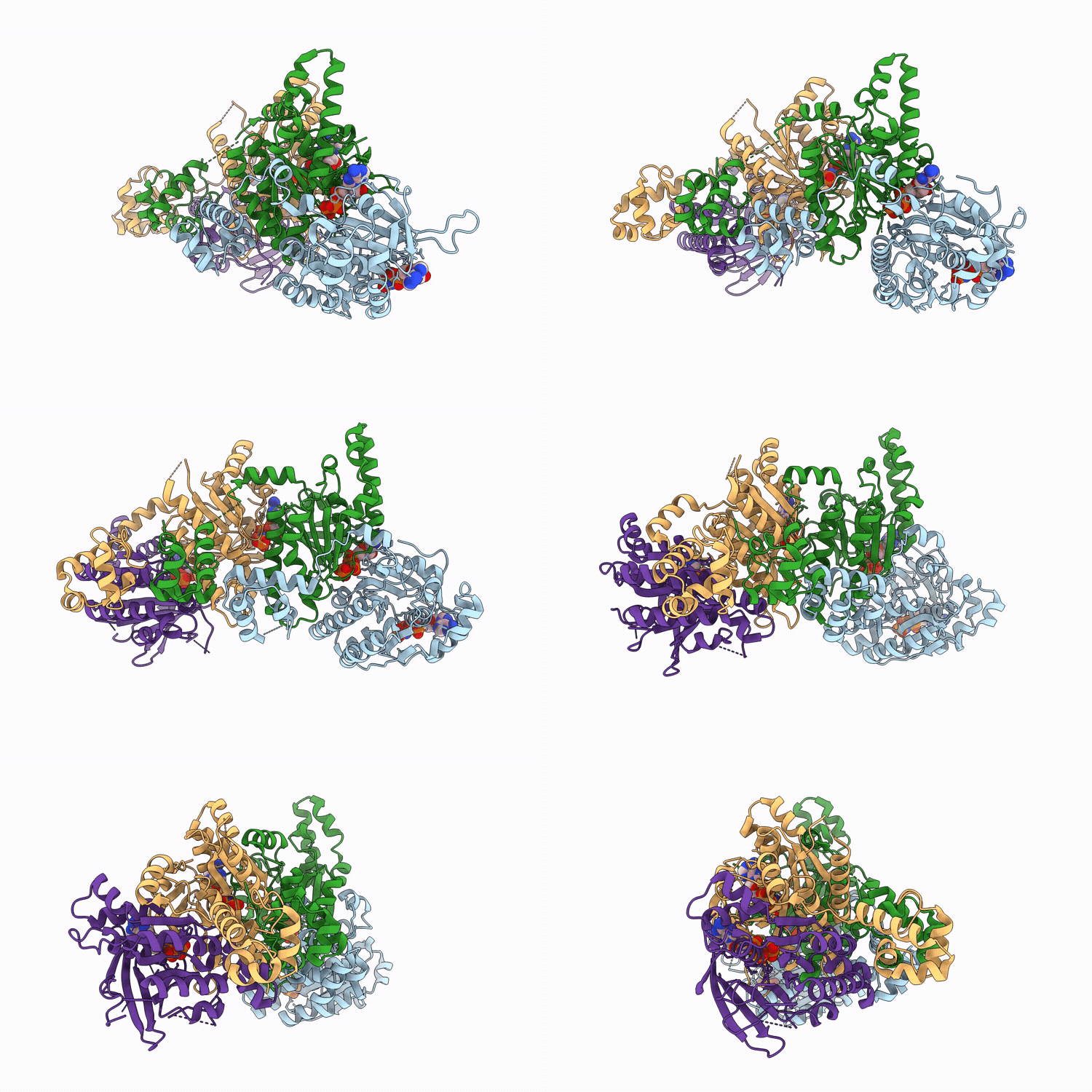
9ON2 image
Deposition Date 2025-05-14
Release Date 2026-04-01
Last Version Date 2026-06-17
Entry Detail
PDB ID:
9ON2
Title:
Cryo-EM structure of a tetrameric XRCC3-RAD51C-RAD51D-XRCC2 complex
Biological Source:
Source Organism(s):
Homo sapiens (Taxon ID: 9606)
Expression System(s):
Method Details:
Experimental Method:
Resolution:
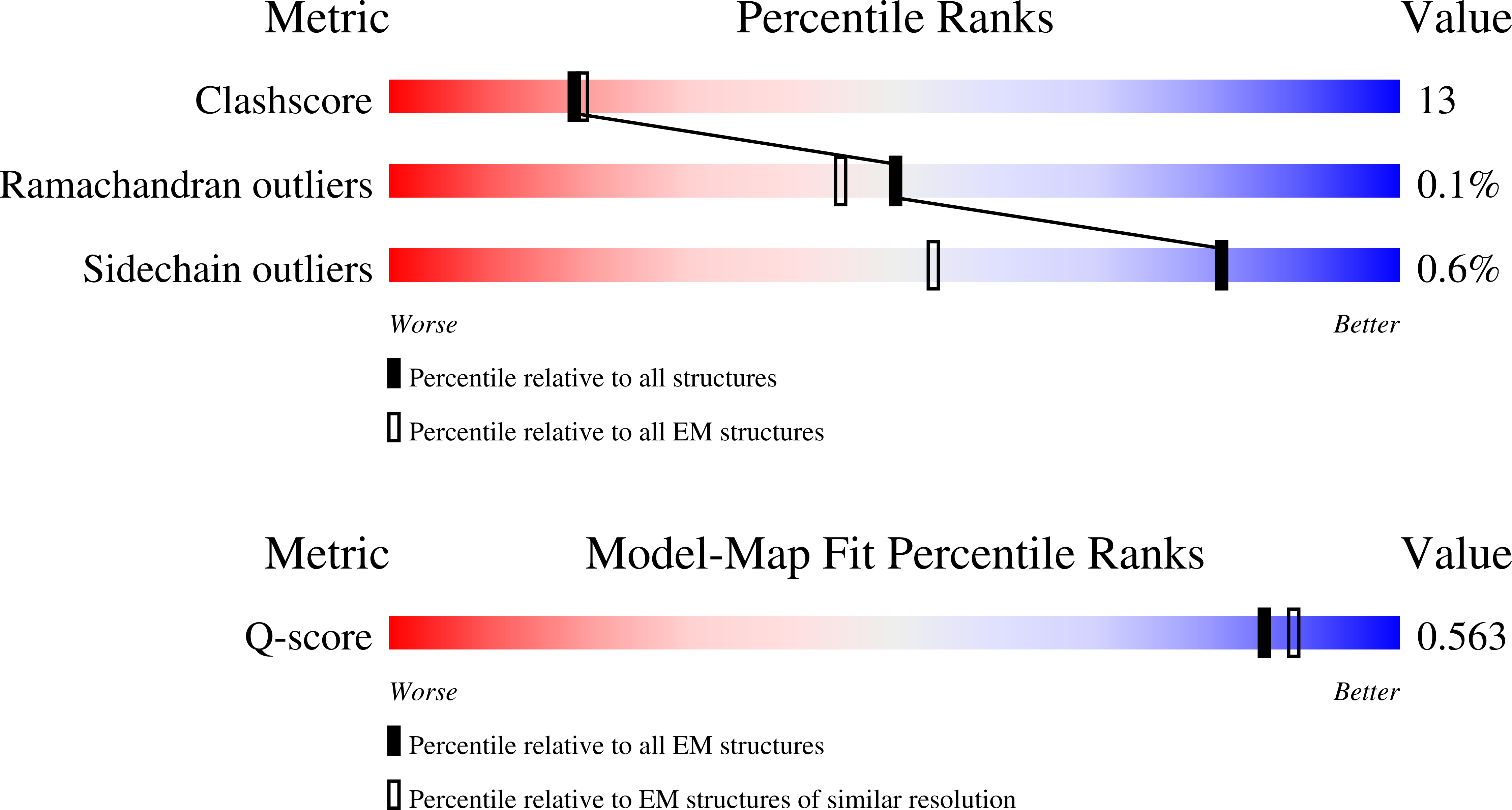
3.16 Å
Aggregation State:
PARTICLE
Reconstruction Method:
SINGLE PARTICLE
Macromolecular Entities
Structures with similar UniProt ID
Protein Blast
Polymer Type:polypeptide(L)
Molecule:DNA repair protein XRCC3
Gene (Uniprot):XRCC3
Chain IDs:A
Chain Length:346
Number of Molecules:1
Biological Source:Homo sapiens
Structures with similar UniProt ID
Protein Blast
Polymer Type:polypeptide(L)
Molecule:DNA repair protein RAD51 homo
Gene (Uniprot):RAD51C
Chain IDs:B (auth: C)
Chain Length:376
Number of Molecules:1
Biological Source:Homo sapiens
Structures with similar UniProt ID
Protein Blast
Polymer Type:polypeptide(L)
Molecule:DNA repair protein RAD51 homo
Gene (Uniprot):RAD51D
Chain IDs:C (auth: D)
Chain Length:328
Number of Molecules:1
Biological Source:Homo sapiens
Structures with similar UniProt ID
Protein Blast
Polymer Type:polypeptide(L)
Molecule:DNA repair protein XRCC2
Gene (Uniprot):XRCC2
Chain IDs:D (auth: X)
Chain Length:280
Number of Molecules:1
Biological Source:Homo sapiens
Ligand Molecules
Primary Citation

Abstact

Homologous recombination (HR) repairs DNA double-strand breaks and stabilizes stressed replication forks, and HR deficiency promotes genome instability and cancer. HR requires assembly of RAD51 nucleoprotein filaments on single-stranded DNA (ssDNA), a process regulated by the human RAD51 paralogs RAD51C, XRCC3, RAD51D and XRCC2. Here, using cryo-electron microscopy, we find that the RAD51-XRCC3-RAD51C complex (RAD51-X3C) assembles into an octamer in which XRCC3 engages the RAD51 DNA-binding surface and RAD51 subunits adopt a misaligned configuration incompatible with filament formation. These features define an autoinhibited RAD51-X3C state that limits nonproductive RAD51 binding to double-stranded DNA or RNA-DNA hybrids while preserving RAD51 availability for ssDNA-dependent strand exchange. We further show that the RAD51D-XRCC2 paralog complex remodels RAD51-X3C into a pentameric RAD51-X3CDX2 assembly by engaging the exposed RAD51C surface and disrupting contacts that stabilize the octamer. This remodeling exposes the RAD51 DNA-binding interface, enhances RAD51-ssDNA filament assembly, and promotes strand exchange on RPA-coated ssDNA, and yields a filament-compatible paralog assembly that integrates into ssDNA-bound RAD51 filaments. Together, these findings establish paralog exchange as a mechanism that converts an autoinhibited RAD51-X3C octamer into an activated RAD51-X3CDX2 pentamer to regulate RAD51 filament formation during HR and replication fork preservation.

Legend

Protein

Chemical

Disease

Primary Citation of related structures
Feedback Form
Name
Email
Institute
Feedback