

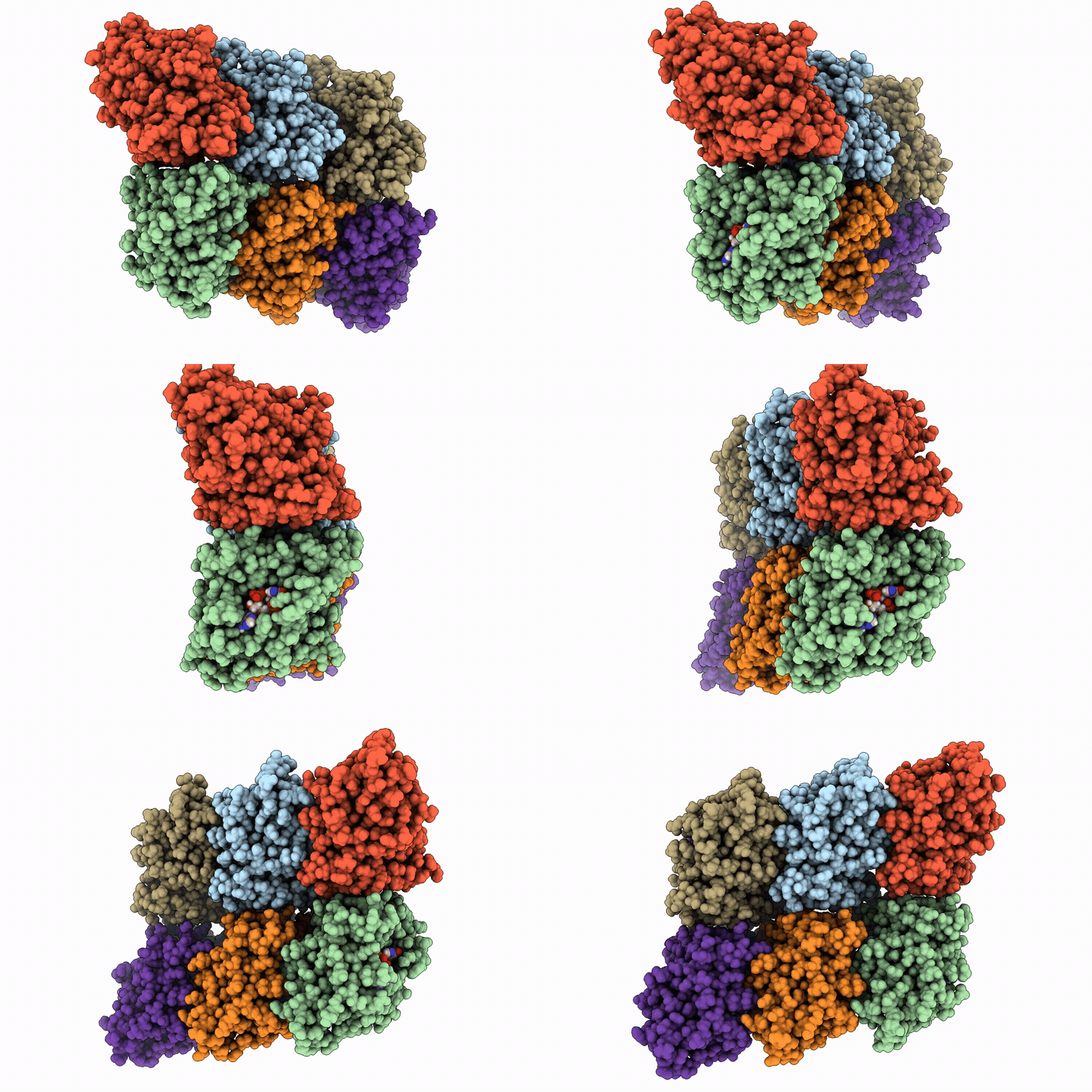
9OM7 image
Deposition Date 2025-05-13
Release Date 2026-04-01
Last Version Date 2026-04-22
Entry Detail
PDB ID:
9OM7
Title:
BtCap14 SAVED domain + 2',3'-cGAMP
Biological Source:
Source Organism(s):
Expression System(s):
Method Details:
Experimental Method:
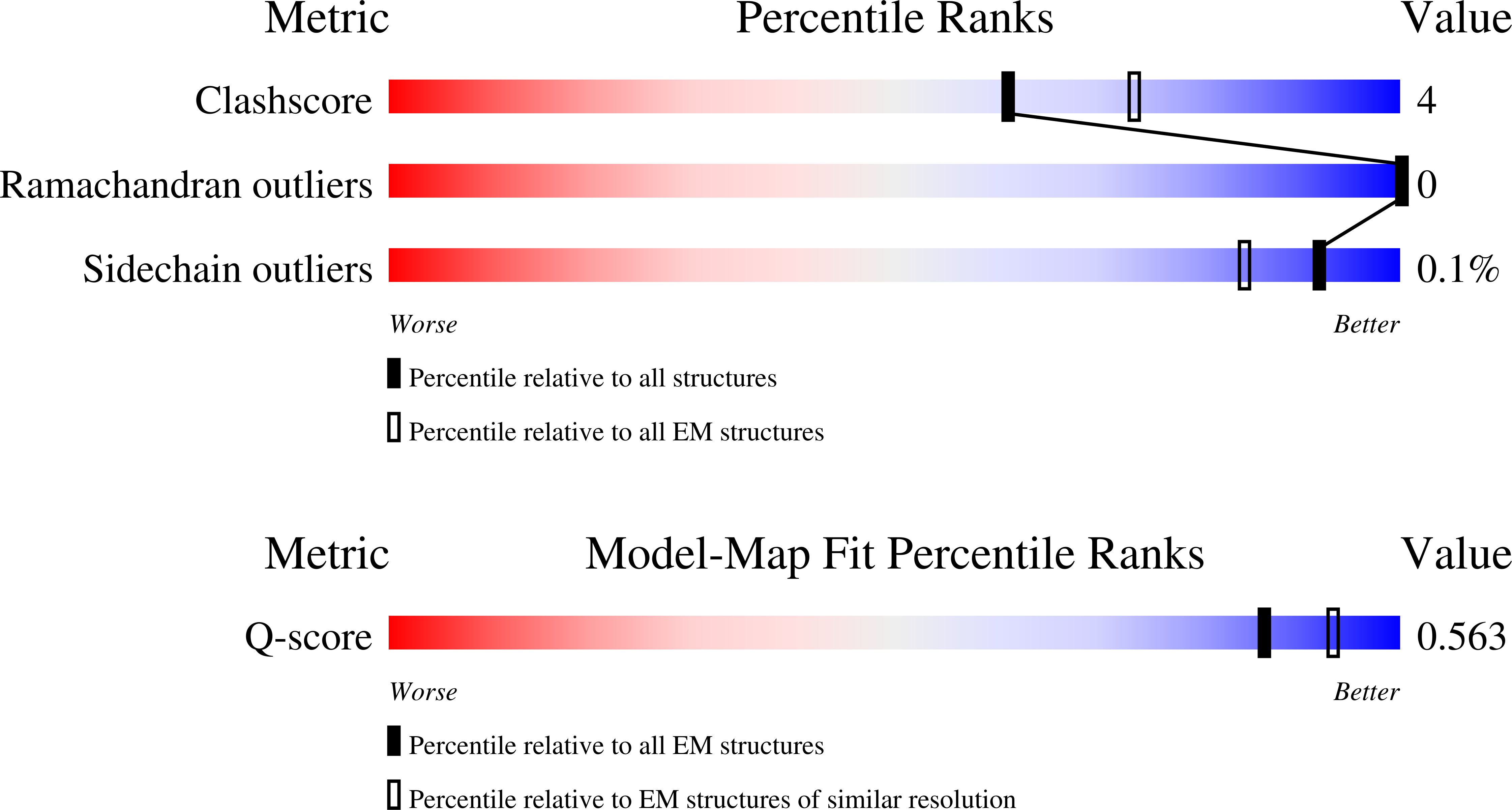
Resolution:
3.30 Å
Aggregation State:
PARTICLE
Reconstruction Method:
SINGLE PARTICLE
Macromolecular Entities
Structures with similar UniProt ID
Protein Blast
Polymer Type:polypeptide(L)
Molecule:SAVED domain-containing prote
Gene (Uniprot):FLM80_14620
Chain IDs:A (auth: F), B (auth: E), C (auth: B), D, E (auth: A), F (auth: C)
Chain Length:376
Number of Molecules:6
Biological Source:Bacillus thuringiensis
Ligand Molecules
Primary Citation
Bacterial 2',3'-cGAMP activates a SAVED effector to form membrane-disrupting filaments and restrict phage replication.
Cell Host Microbe 34 720 ? (2026)
PMID: 41903528 DOI: 10.1016/j.chom.2026.03.004

Abstact

Mammalian cells initiate antiviral signaling when cyclic GMP-AMP synthase (cGAS) detects cytoplasmic DNA and synthesizes 2',3'-cyclic GMP-AMP (2',3'-cGAMP), which activates stimulator of interferon genes (STING). Similarly, bacteria use cyclic oligonucleotide-based antiphage signaling systems (CBASS) to detect phage using ancestral cGAS/DncV-like nucleotidyltransferases (CD-NTases), but they are not known to use 2',3'-cGAMP. Here, we discover a bacterial CD-NTase that produces 2',3'-cGAMP to activate a Saf-2TM-SMODS-associated fused to various effector domains (SAVED) effector (CD-NTase-associated protein 14 [Cap14]), which initiates membrane disruption to restrict phage replication. Cryo-electron microscopy (cryo-EM) reveals that Cap14 binds 2',3'-cGAMP to form a filament, while electrophysiology suggests that cGAMP activates membrane disruption. Swapping the Cap14 transmembrane domain with a nuclease domain yields a functional chimera that exclusively responds to 2',3'-cGAMP. We hypothesize that other predicted transmembrane effectors in CBASS operons disrupt membranes, and we confirm this by showing that bacterial STING homologs with transmembrane domains restrict phage through membrane disruption. These findings expand our understanding of cGAS-STING-like pathways in bacterial immunity.

Legend

Protein

Chemical

Disease

Primary Citation of related structures
Feedback Form
Name
Email
Institute
Feedback