

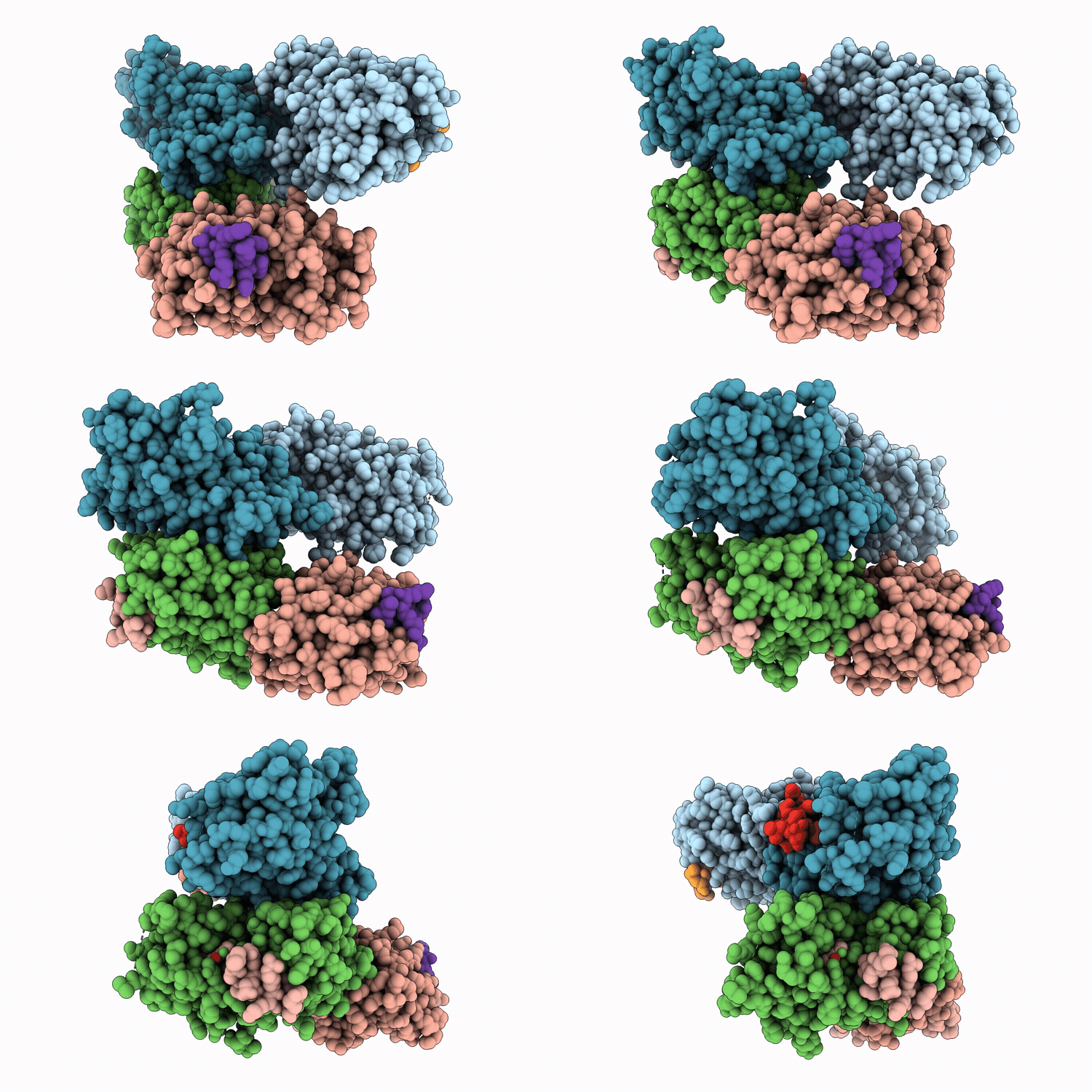
9OLC image
Deposition Date 2025-05-12
Release Date 2026-04-22
Last Version Date 2026-08-26
Entry Detail
PDB ID:
9OLC
Keywords:
Title:
Crystal structure of PPARg ligand-binding domain in complex with NCoR1 peptide and FTX-6746
Biological Source:
Source Organism(s):
Homo sapiens (Taxon ID: 9606)
Expression System(s):
Method Details:
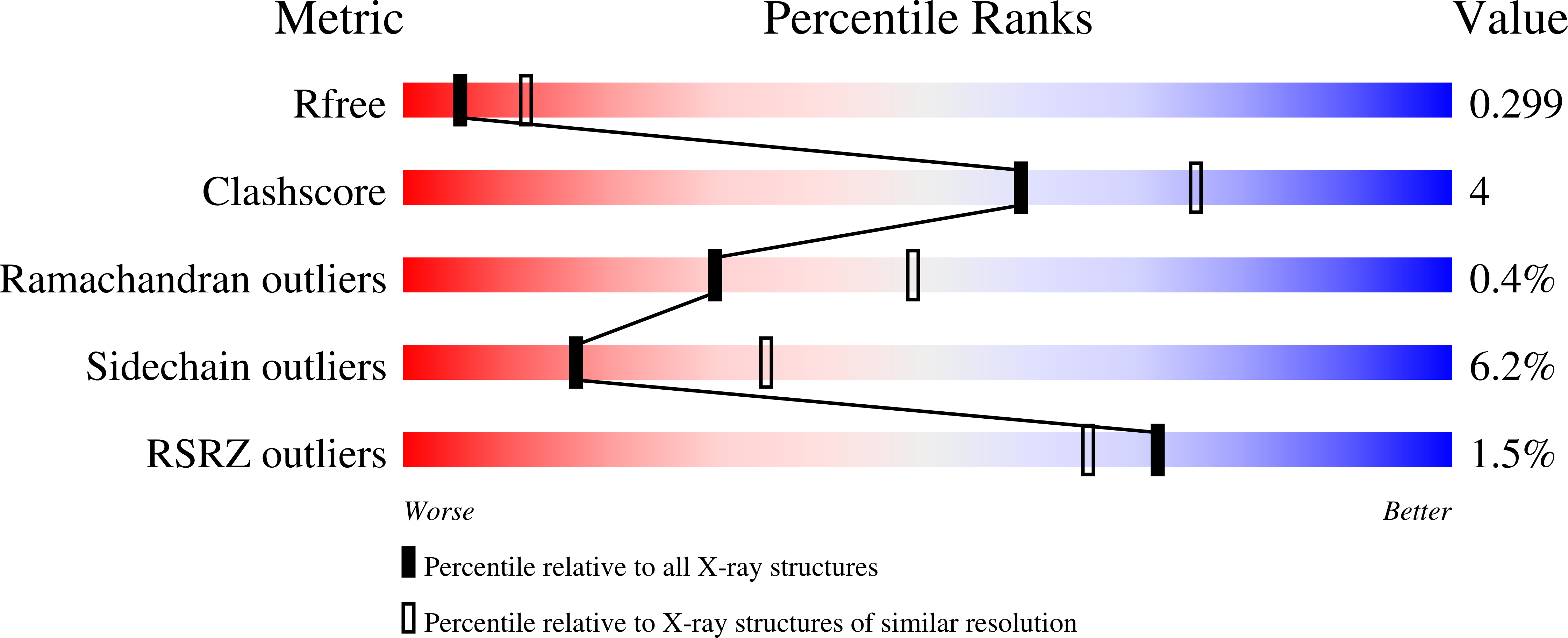
Experimental Method:
Resolution:
2.83 Å
R-Value Free:
0.29
R-Value Work:
0.23
Space Group:
P 1
Macromolecular Entities
Polymer Type:polypeptide(L)
Molecule:Peroxisome proliferator-activ
Gene (Uniprot):PPARG
Chain IDs:A, B, C, D
Chain Length:0
Number of Molecules:4
Biological Source:Homo sapiens
Polymer Type:polypeptide(L)
Molecule:Nuclear receptor corepressor
Gene (Uniprot):NCOR1
Chain IDs:E, F, G, H
Chain Length:0
Number of Molecules:4
Biological Source:Homo sapiens
Ligand Molecules
Primary Citation
Covalent PPAR gamma inverse agonism by FX-909 reveals mechanistic insights into therapeutic targeting of PPAR gamma /RXR alpha-activated urothelial carcinoma.
Cell Chem Biol 33 837 847.e14 (2026)
PMID: 42208535 DOI: 10.1016/j.chembiol.2026.04.017

Abstact

We investigated the conformational mechanisms underlying PPARgamma activation in muscle-invasive urothelial carcinoma (MIUC) and sought to develop covalent inverse agonists to therapeutically reinforce a repressive state. The integration of mutational, structural, and biochemical analyses of PPARgamma and RXRalpha guided the discovery of FX-909, a first-in-class clinical PPARgamma inverse agonist that enforces a repressive conformational state, even in highly activated biological contexts. FX-909 is a potent, highly selective, and powerful suppressor of PPARgamma transcriptional activity through the enhancement of PPARgamma-nuclear co-repressor (NCOR) binding affinity. Treatment with FX-909 resulted in selective growth inhibition in PPARgamma-activated MIUC cell lines and durable regressions in xenograft models of MIUC. FX-909 is capable of recapitulating PPARG genetic knockout phenotypes in vivo and is currently in clinical development for the treatment of intractable MIUC.

Legend

Protein

Chemical

Disease

Primary Citation of related structures
Feedback Form
Name
Email
Institute
Feedback