

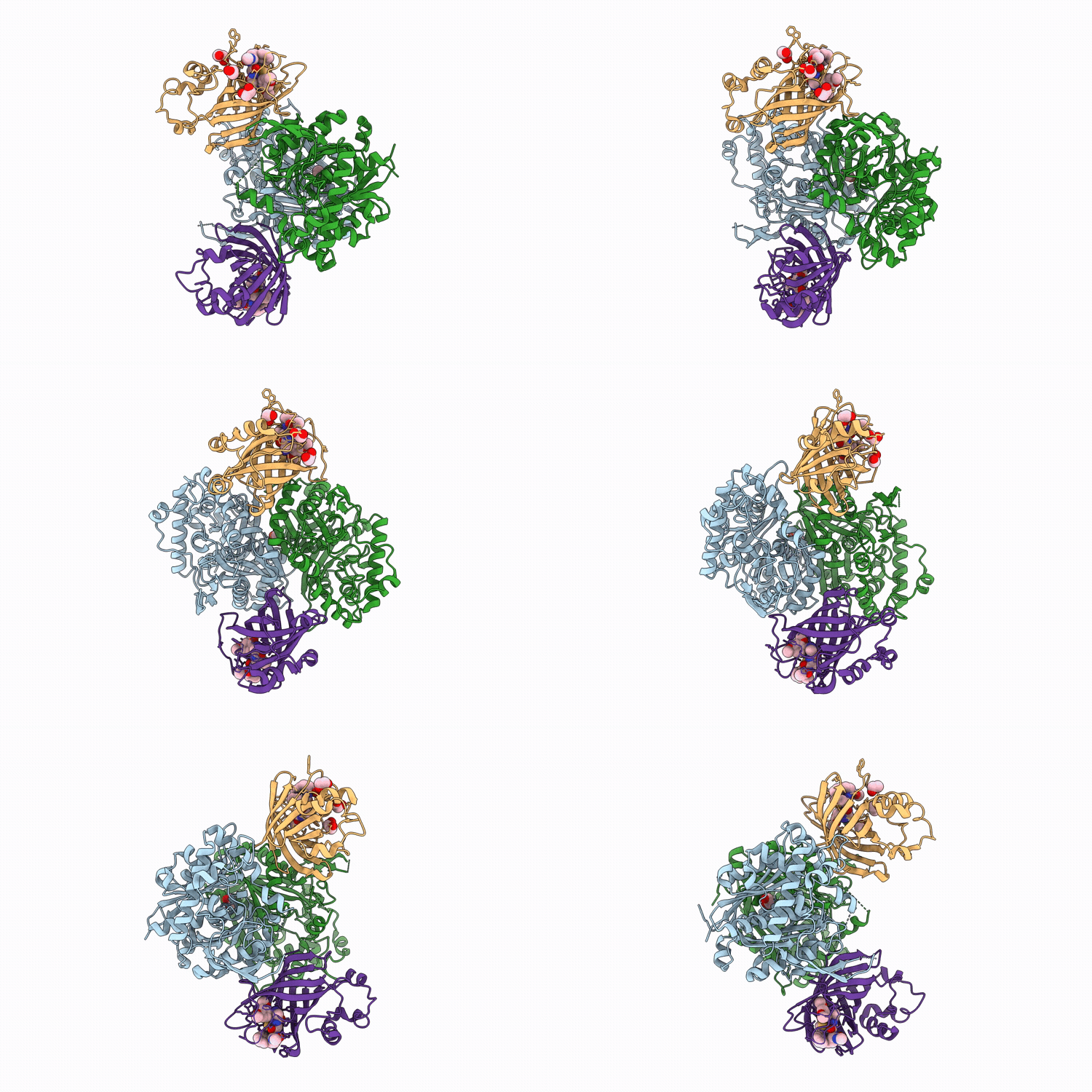
9OK4 image
Deposition Date 2025-05-09
Release Date 2026-04-15
Last Version Date 2026-04-22
Entry Detail
PDB ID:
9OK4
Title:
GID4 in complex with CLEO4-88 and ACAA1
Biological Source:
Source Organism(s):
Homo sapiens (Taxon ID: 9606)
Expression System(s):
Method Details:
Experimental Method:
Resolution:
2.28 Å
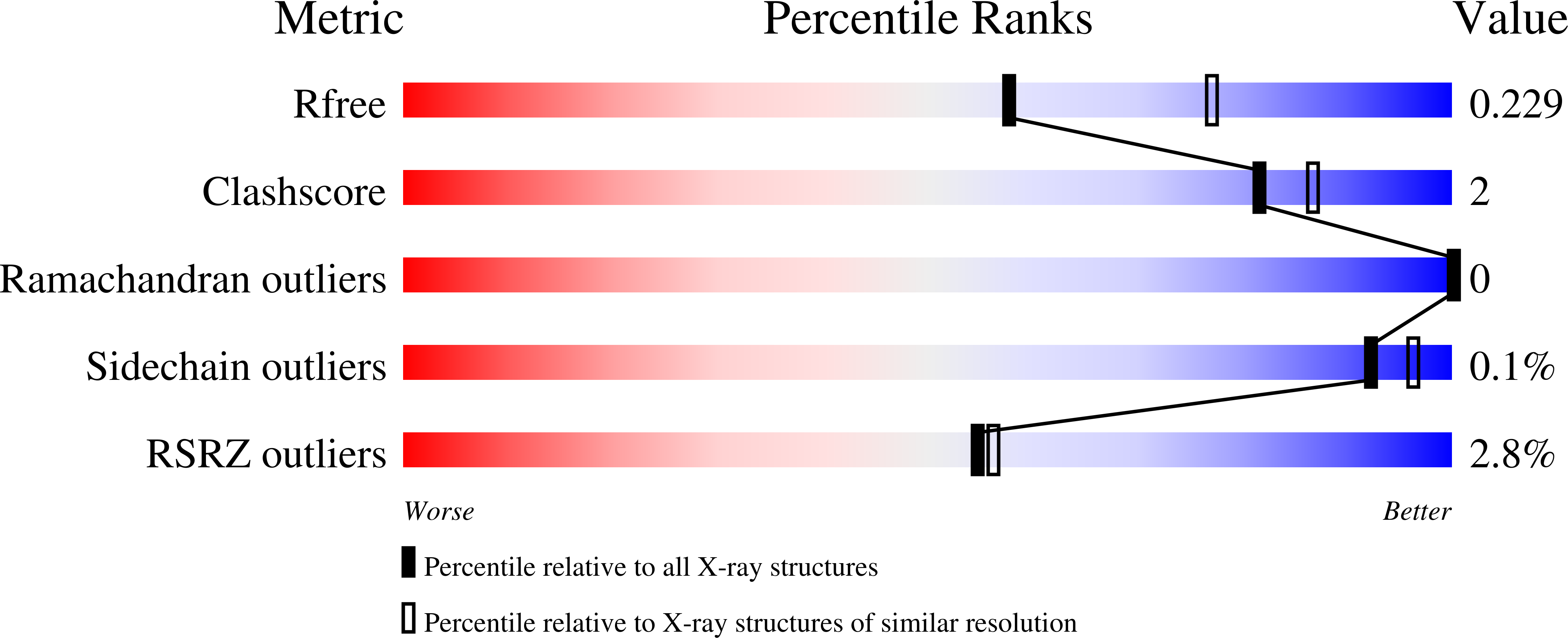
R-Value Free:
0.22
R-Value Work:
0.18
R-Value Observed:
0.19
Space Group:
P 21 21 21
Macromolecular Entities
Structures with similar UniProt ID
Protein Blast
Polymer Type:polypeptide(L)
Molecule:3-ketoacyl-CoA thiolase, pero
Gene (Uniprot):ACAA1
Chain IDs:A, D (auth: B)
Chain Length:418
Number of Molecules:2
Biological Source:Homo sapiens
Structures with similar UniProt ID
Protein Blast
Polymer Type:polypeptide(L)
Molecule:Glucose-induced degradation p
Gene (Uniprot):GID4
Chain IDs:B (auth: C), C (auth: D)
Chain Length:167
Number of Molecules:2
Biological Source:Homo sapiens
Primary Citation
The molecular glue CLEO4-88 inhibits the ACAA1 thiolase by induced binding to GID4.
Nat.Chem.Biol. ? ? ? (2026)
PMID: 41957281 DOI: 10.1038/s41589-026-02183-4

Abstact

Molecular glues promote protein-protein interactions by enhancing the surface complementarity between proteins. Those that recruit an E3 ubiquitin ligase to a target can elicit ubiquitination and subsequent destruction of the target protein-a mechanism that underpins the field of targeted protein degradation (TPD). Here we explored whether small-molecule binders to the CTLH E3 ligase subunit GID4 could act as molecular glues. We discovered that CLEO4-88 functions as a molecular glue (EC(50) = 12.5 nM) to promote the interaction of GID4 with the peroxisomal thiolase ACAA1 in vitro and in cellulo. An atomic structure of the ternary complex revealed an allosteric mechanism whereby CLEO4-88 binds solely to GID4 and induces a conformational change conducive to binding ACAA1. Biochemical analysis demonstrated that, while ACAA1 cannot be recruited by GID4 to a CTLH holoenzyme for ubiquitination, ternary complex formation inhibits ACAA1 thiolase activity, thus demonstrating potential utility beyond TPD.

Legend

Protein

Chemical

Disease

Primary Citation of related structures
Feedback Form
Name
Email
Institute
Feedback