

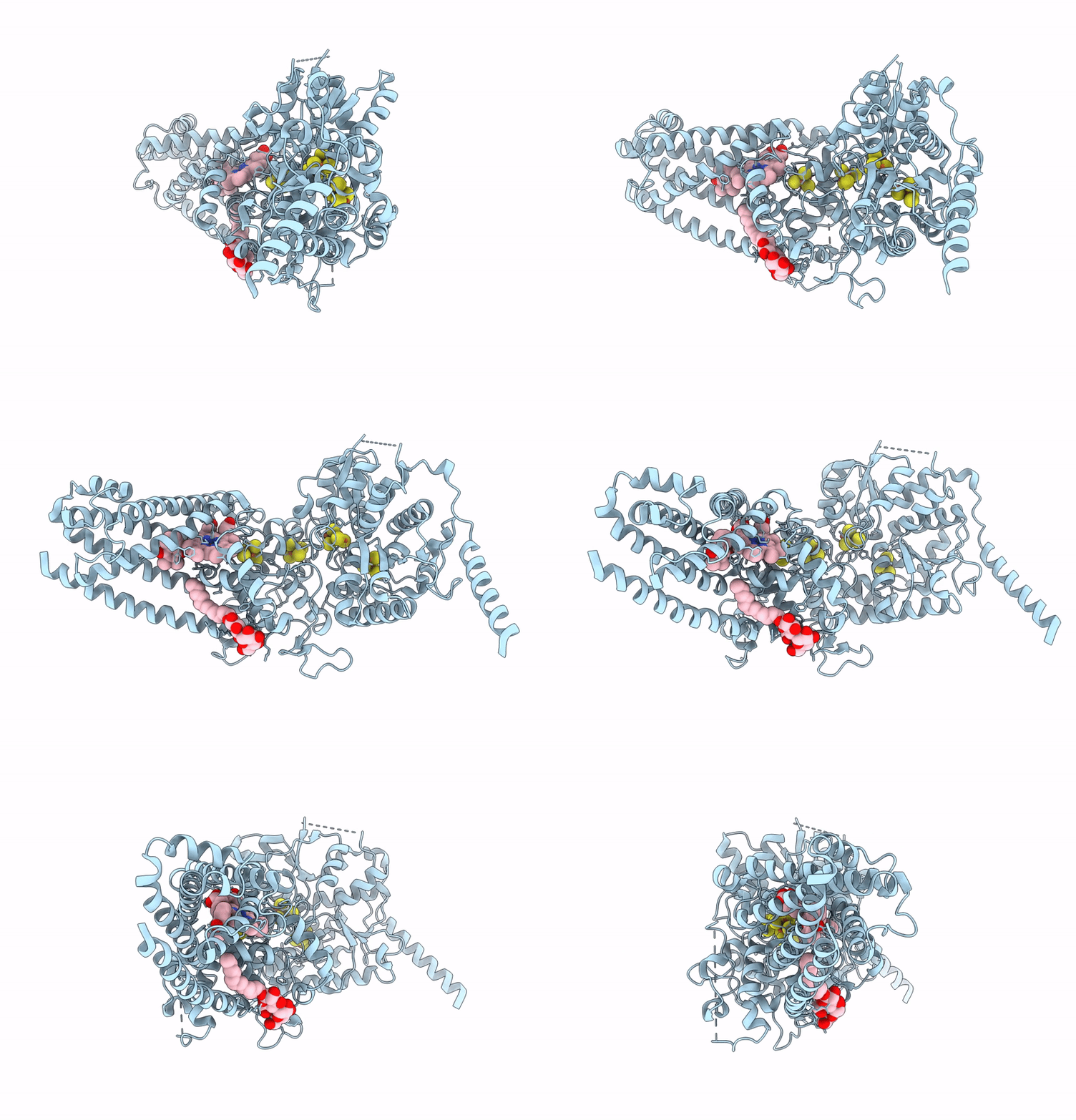
9OJN image
Deposition Date 2025-05-08
Release Date 2025-05-21
Last Version Date 2026-04-29
Entry Detail
PDB ID:
9OJN
Keywords:
Title:
Structure of Mycobacterium smegmatis EtfD
Biological Source:
Source Organism(s):
Method Details:
Experimental Method:
Resolution:
3.20 Å
Aggregation State:
PARTICLE
Reconstruction Method:
SINGLE PARTICLE
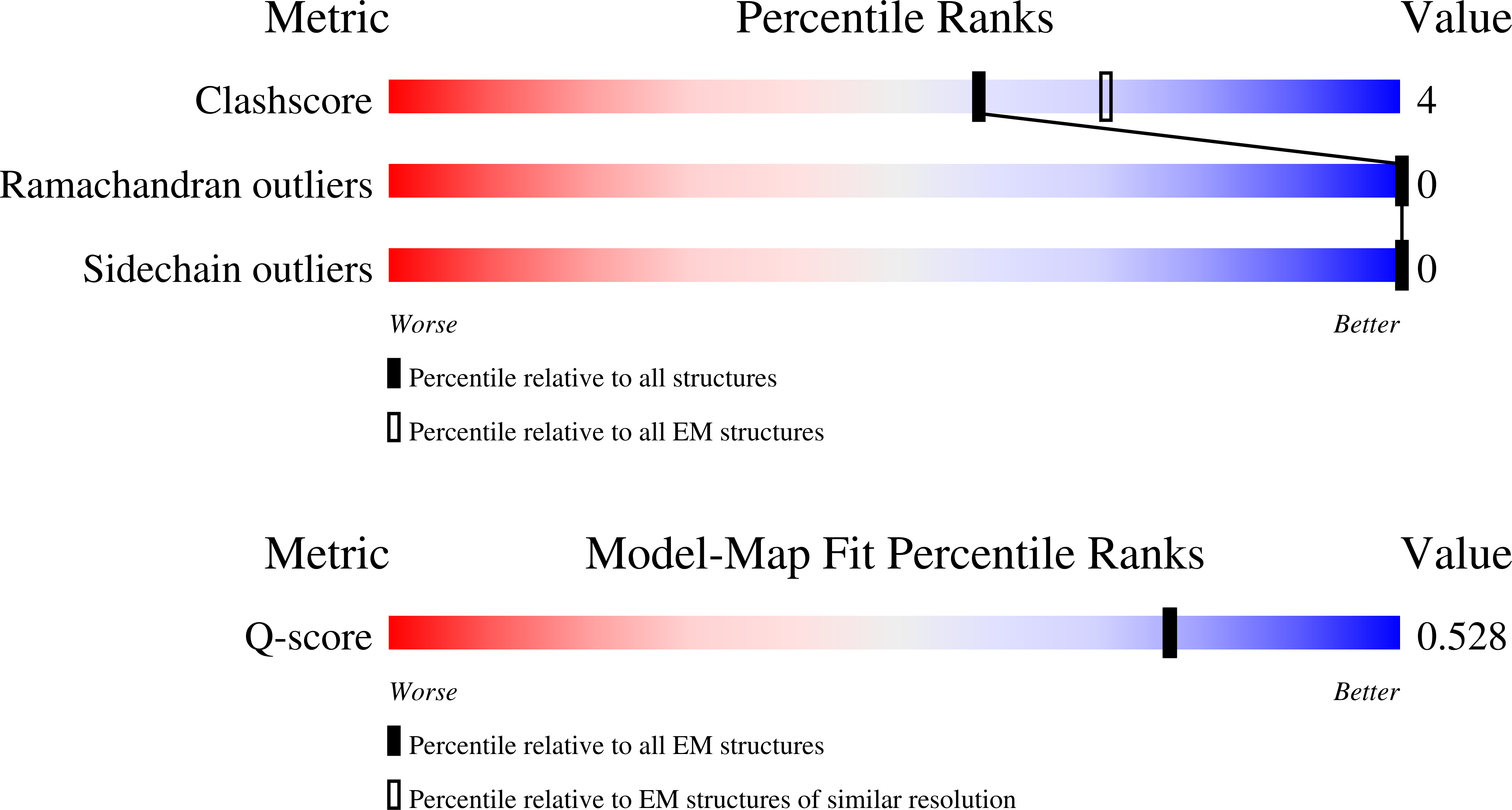
Macromolecular Entities
Structures with similar UniProt ID
Protein Blast
Polymer Type:polypeptide(L)
Molecule:Iron-sulfur-binding reductase
Gene (Uniprot):MSMEI_0673
Chain IDs:A
Chain Length:1042
Number of Molecules:1
Biological Source:Mycolicibacterium smegmatis MC2 155
Primary Citation
Structural basis for EtfD-mediated coupling of beta-oxidation and the respiratory chain in mycobacteria.
Embo J. 45 2785 2807 (2026)
PMID: 41844842 DOI: 10.1038/s44318-026-00726-y

Abstact

Targeting beta-oxidation has been proposed as a strategy for shortening tuberculosis (TB) treatment by killing non-replicating Mycobacterium tuberculosis within granulomas where the pathogen relies on host-derived lipids. The protein EtfD is thought to couple beta-oxidation of fatty acids with the respiratory chain in mycobacteria. However, the structure of EtfD is not known and, as the presumed link between two complex processes, its activity has been difficult to measure, impeding its exploitation as a drug target. Here we show that Mycobacterium smegmatis, a fast growing and nonpathogenic model for M. tuberculosis, relies on EtfD for extracting energy from beta-oxidation. The electron cryomicroscopy structure of M. smegmatis EtfD reveals an unusual linear [3Fe-4S] cluster that has not been seen in other protein structures, and suggests how EtfD transfers electrons from beta-oxidation to the respiratory chain. We devised an assay that couples EtfD activity to a fluorescent readout of proton pumping by the respiratory chain, which can be used to identify compounds that block mycobacteria from using beta-oxidation to power oxidative phosphorylation.

Legend

Protein

Chemical

Disease

Primary Citation of related structures
Feedback Form
Name
Email
Institute
Feedback