

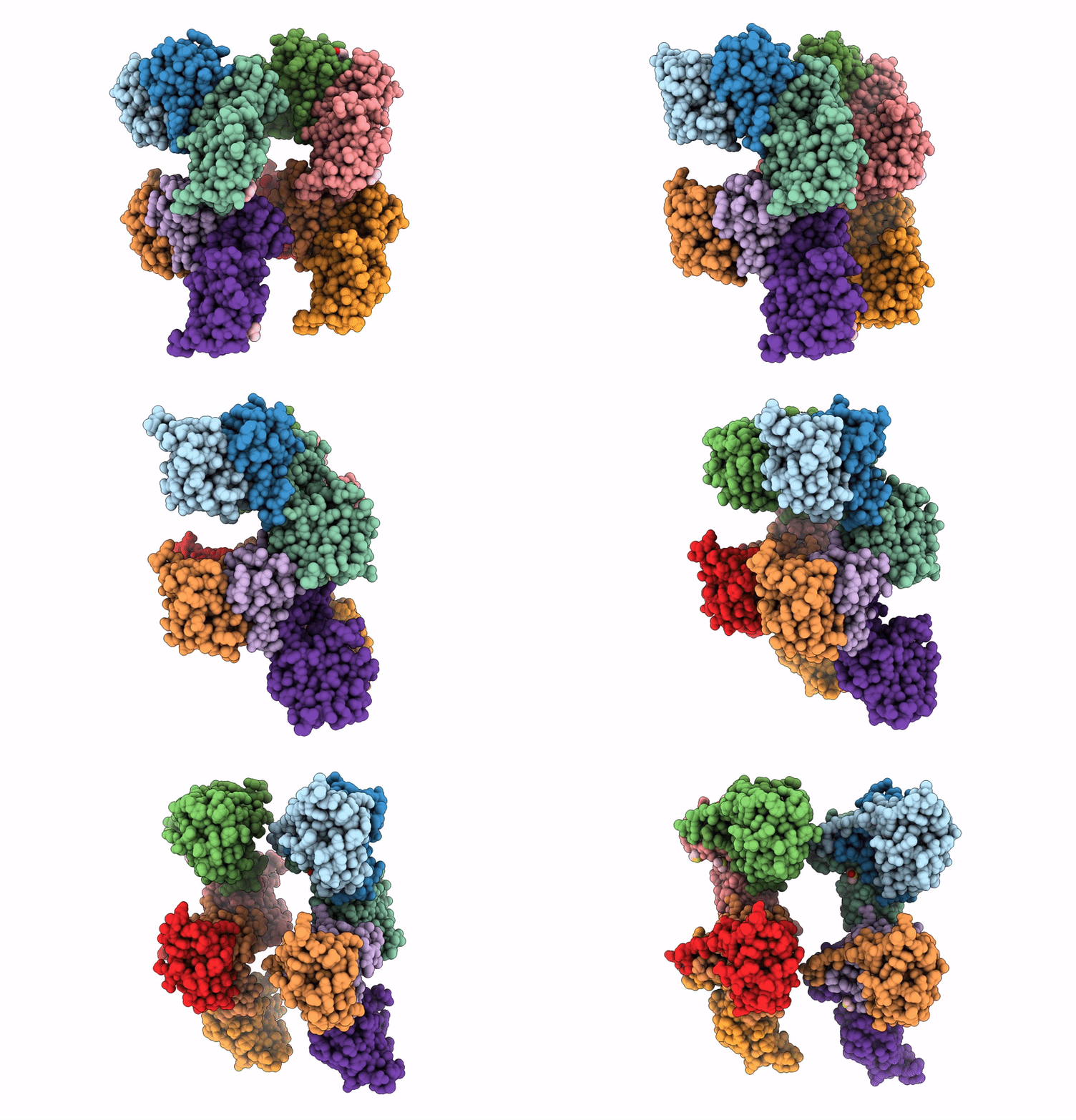
9OIO image
Deposition Date 2025-05-06
Release Date 2025-07-09
Last Version Date 2025-07-09
Entry Detail
PDB ID:
9OIO
Title:
The von Hippel Lindau-ElonginB-ElonginC (VCB) complex with fragments 9 and 14
Biological Source:
Source Organism(s):
Homo sapiens (Taxon ID: 9606)
Expression System(s):
Method Details:
Experimental Method:
Resolution:
2.30 Å
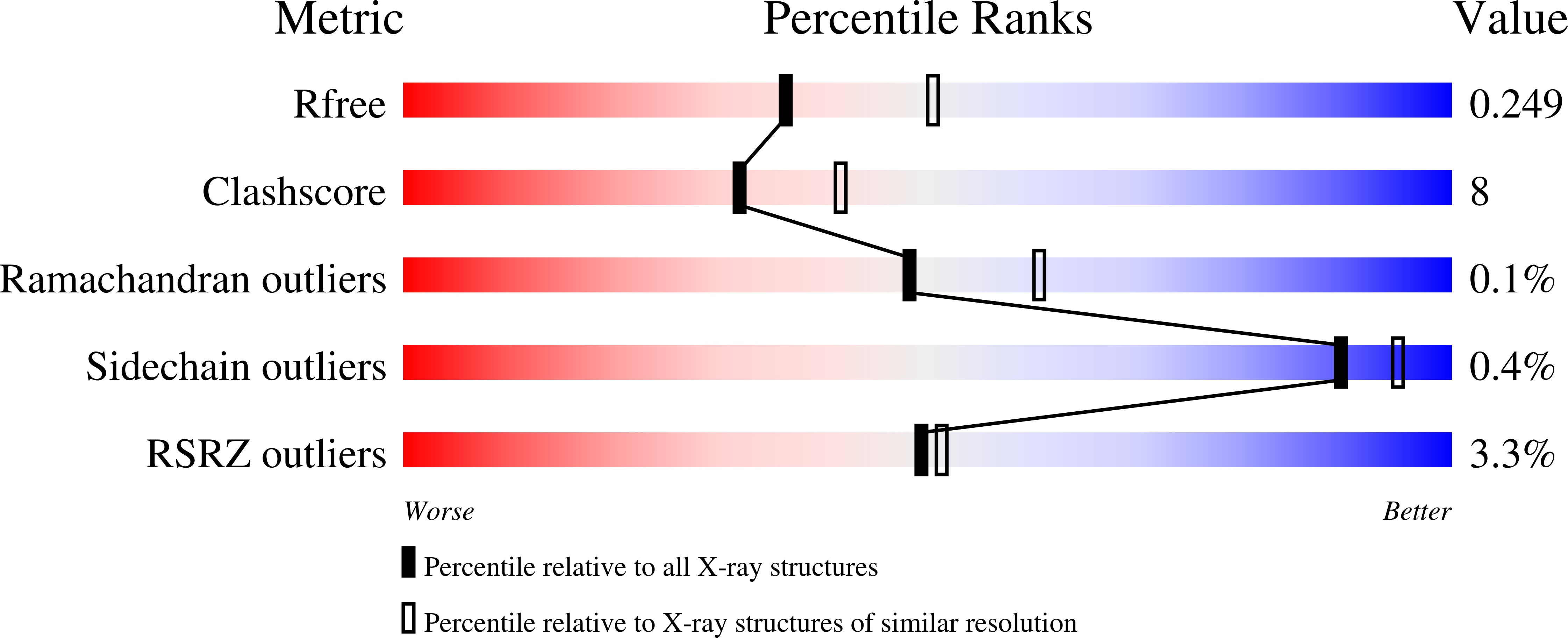
R-Value Free:
0.24
R-Value Work:
0.21
R-Value Observed:
0.21
Space Group:
P 41 2 2
Macromolecular Entities
Structures with similar UniProt ID
Protein Blast
Polymer Type:polypeptide(L)
Molecule:Elongin-B
Gene (Uniprot):ELOB
Chain IDs:A, D, G, J
Chain Length:104
Number of Molecules:4
Biological Source:Homo sapiens
Structures with similar UniProt ID
Protein Blast
Polymer Type:polypeptide(L)
Molecule:Elongin-C
Gene (Uniprot):ELOC
Chain IDs:B, E, H, K
Chain Length:98
Number of Molecules:4
Biological Source:Homo sapiens
Structures with similar UniProt ID
Protein Blast
Polymer Type:polypeptide(L)
Molecule:von Hippel-Lindau disease tum
Gene (Uniprot):VHL
Chain IDs:C, F, L
Chain Length:180
Number of Molecules:3
Biological Source:Homo sapiens
Structures with similar UniProt ID
Protein Blast
Polymer Type:polypeptide(L)
Molecule:von Hippel-Lindau disease tum
Gene (Uniprot):VHL
Chain IDs:I
Chain Length:180
Number of Molecules:1
Biological Source:Homo sapiens
Modified Residue
Compound ID Chain ID Parent Comp ID Details 2D Image
CAS C CYS modified residue
Primary Citation
NMR-Based Fragment Screen of the von Hippel-Lindau Elongin C&B Complex.
Acs Med.Chem.Lett. 16 1648 1654 (2025)
PMID: 40832550 DOI: 10.1021/acsmedchemlett.5c00316

Abstact

von Hippel-Lindau (VHL) is an E3 ligase that has been widely exploited for the development of PROTACs to induce degradation of disease-associated target proteins. Nearly all VHL-recruiting PROTACs contain a hydroxyproline moiety based on the endogenous peptide substrate that occupies the HIF1α-binding site of VHL. However, the development of orally bioavailable PROTACs with hydroxyproline-based VHL ligands remains a significant hurdle, due to both the hydroxyproline and the peptidic nature of the VHL ligand. Here, we describe an NMR-based fragment screen against the VHL-Elongin C-Elongin B (VCB) complex. Several hits were shown by X-ray crystallography to bind to the HIF1α active site in VHL of the VCB complex, which opens the possibility for the discovery of new nonhydroxyproline-based VHL ligands for use in VHL-recruiting PROTACs.

Legend

Protein

Chemical

Disease

Primary Citation of related structures
Feedback Form
Name
Email
Institute
Feedback