

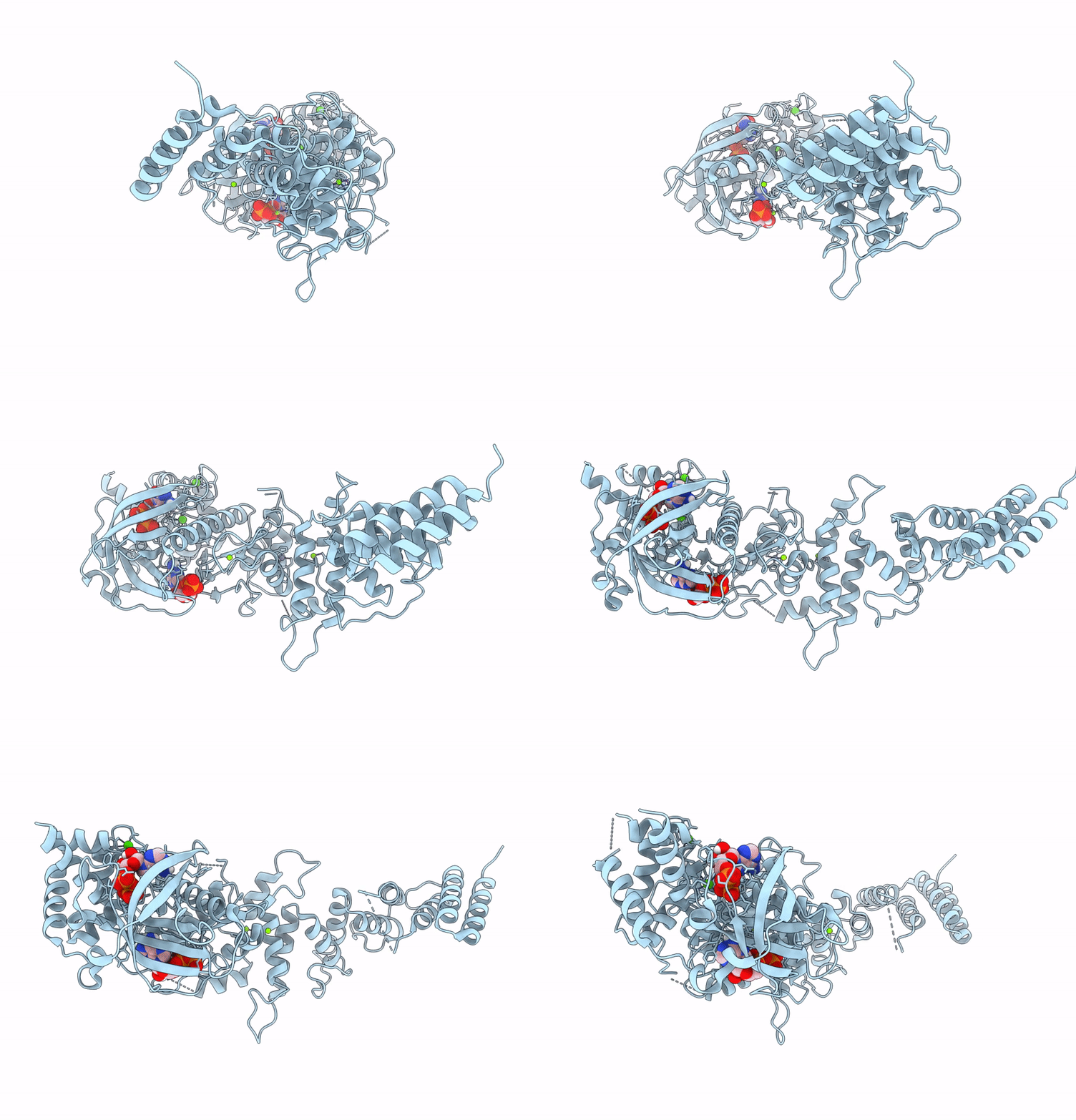
9OCW image
Deposition Date 2025-04-25
Release Date 2026-03-04
Last Version Date 2026-03-04
Entry Detail
PDB ID:
9OCW
Keywords:
Title:
A constitutively active construct of eukaryotic elongation factor 2 kinase
Biological Source:
Source Organism(s):
Homo sapiens (Taxon ID: 9606)
Expression System(s):
Method Details:
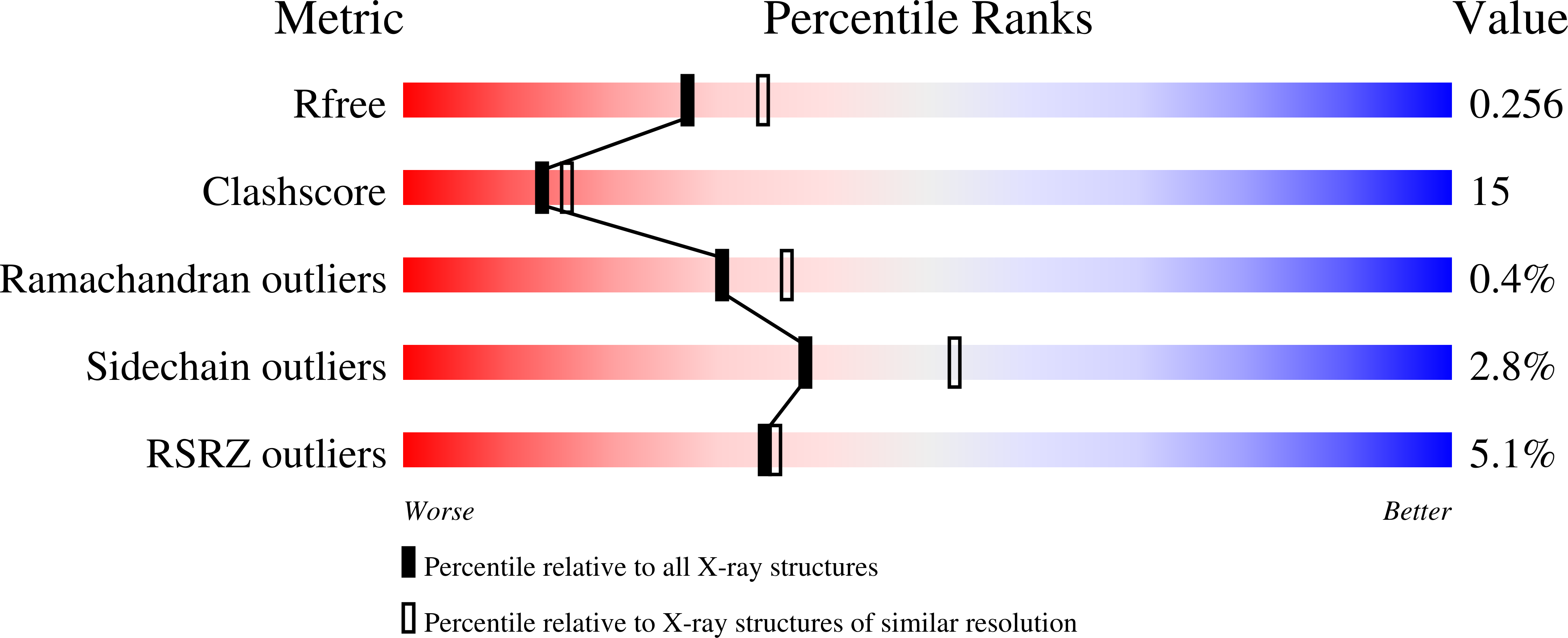
Experimental Method:
Resolution:
2.27 Å
R-Value Free:
0.25
R-Value Work:
0.20
R-Value Observed:
0.20
Space Group:
P 1 21 1
Macromolecular Entities
Protein Blast
Polymer Type:polypeptide(L)
Molecule:Calmodulin-1,Eukaryotic elong
Gene (Uniprot):EEF2K, CALM1
Chain IDs:A
Chain Length:605
Number of Molecules:1
Biological Source:Homo sapiens
Modified Residue
Compound ID Chain ID Parent Comp ID Details 2D Image
PHD A ASP modified residue
TPO A THR modified residue
Primary Citation
The critical role of the C-terminal lobe of calmodulin in activating eukaryotic elongation factor 2 kinase.
J. Biol. Chem. 301 110650 110650 (2025)
PMID: 40885389 DOI: 10.1016/j.jbc.2025.110650

Abstact

Eukaryotic elongation factor 2 kinase (eEF-2K), a member of the alpha-kinase family, modulates translational rates by phosphorylating eEF-2, a GTPase that facilitates the translocation of the nascent chain on the ribosome during the elongation phase of protein synthesis. eEF-2K is regulated by diverse cellular cues, many of which sensitize it to the Ca(2+)-effector protein calmodulin (CaM). CaM, which binds and allosterically activates eEF-2K in the presence of Ca(2+), contains two structural "lobes," each with a pair of Ca(2+)-binding EF hands. Using kinetic analysis, we demonstrate that the isolated C-terminal lobe of CaM (CaM(C)) is sufficient to engage and fully activate eEF-2K in a Ca(2+)-dependent fashion. Genetically fusing CaM(C) to the N terminus of eEF-2K, upstream of its critical CaM-targeting motif via a flexible 2-glycine linker, results in a chimeric species (CaM(C) is linked to N-truncated eEF-2K [C-LiNK]) that is constitutively active independent of external CaM and Ca(2+). A structure of the C-LiNK functional core reveals no substantial deviation in the overall conformations of the structural modules and orientations of key catalytic-site residues relative to the heterodimeric complex between full-length CaM and eEF-2K. These observations demonstrate that, in contrast to other CaM-regulated kinases, CaM(C) alone is sufficient to activate eEF-2K fully. The proximity effect of CaM(C) in the context of C-LiNK removes the requirement for external Ca(2+), whose apparent role is to enhance the CaM affinity of eEF-2K and drive kinase activation. Further, the responsiveness of eEF-2K to regulatory stimuli in cells appears to be lost in C-LiNK, presumably due to its permanently "on" state.

Legend

Protein

Chemical

Disease

Primary Citation of related structures
Feedback Form
Name
Email
Institute
Feedback