

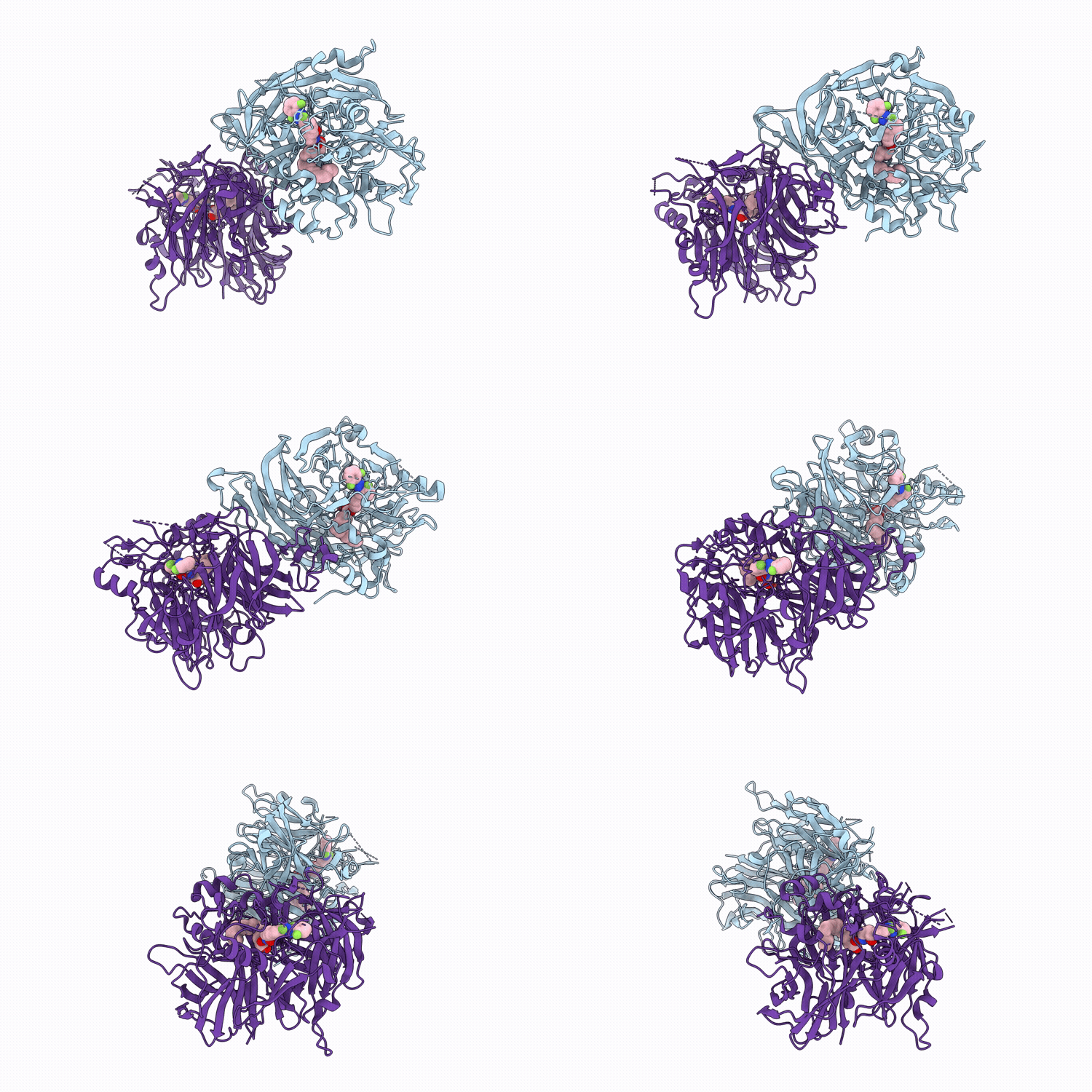
9OA5 image
Deposition Date 2025-04-19
Release Date 2026-05-27
Last Version Date 2026-05-27
Entry Detail
PDB ID:
9OA5
Keywords:
Title:
Crystal structure of bovine RPE65 in complex with an emixustat azolog
Biological Source:
Source Organism(s):
Bos taurus (Taxon ID: 9913)
Method Details:
Experimental Method:
Resolution:
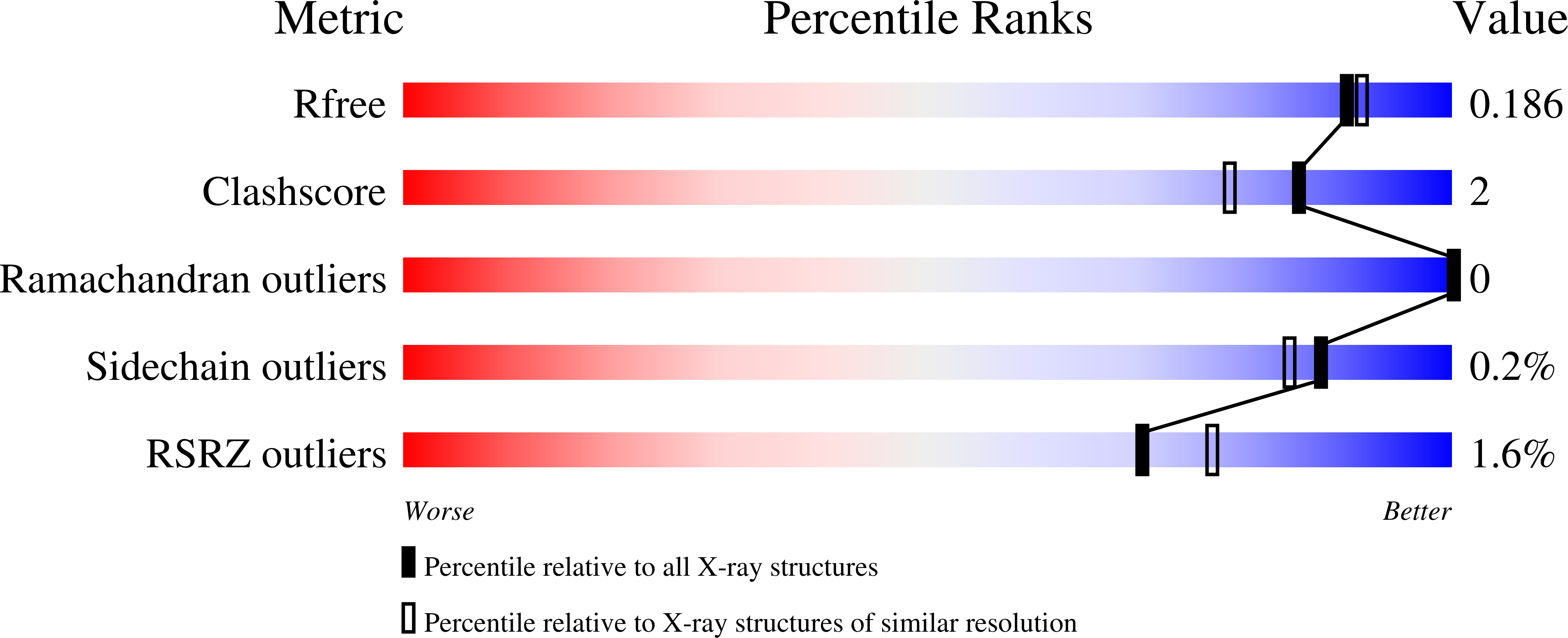
1.75 Å
R-Value Free:
0.18
R-Value Work:
0.14
Space Group:
P 65
Macromolecular Entities
Structures with similar UniProt ID
Protein Blast
Polymer Type:polypeptide(L)
Molecule:Retinoid isomerohydrolase
Gene (Uniprot):RPE65
Chain IDs:A, B
Chain Length:533
Number of Molecules:2
Biological Source:Bos taurus
Primary Citation
Light-Activated RPE65 Inhibitors Enable On-Demand Visual Cycle Control.
J.Am.Chem.Soc. ? ? ? (2026)
PMID: 42156327 DOI: 10.1021/jacs.6c02962

Abstact

Light initiates visual perception, but it also exacerbates a subset of blinding diseases in which visual (retinoid) cycle metabolic intermediates contribute to pathophysiology. Small molecule visual cycle modulators (VCMs) have demonstrated efficacy in preclinical models, but have been limited clinically by chronic, indiscriminate visual cycle suppression leading to side effects including night blindness in human subjects. Here, we demonstrate VCMs that are activated via a Z-->E photoisomerization of an azobenzene-containing VCM by visible light within the eye. One such VCM photoswitch, (Z)-9, is a weak inhibitor of the visual cycle isomerohydrolase, RPE65, that affords potent, rapid, and on-demand inhibition when photoisomerized to the E-configuration by visible light. (E)-9 protects the retina from visual cycle toxicity and, after oral administration, shows a shorter pharmacodynamic duration than emixustat as measured by electroretinography. These results establish posterior-segment photopharmacology and outline a blueprint for light-activated therapies that mitigate daytime toxicity while sparing night vision.

Legend

Protein

Chemical

Disease

Primary Citation of related structures
Feedback Form
Name
Email
Institute
Feedback